







Introduction
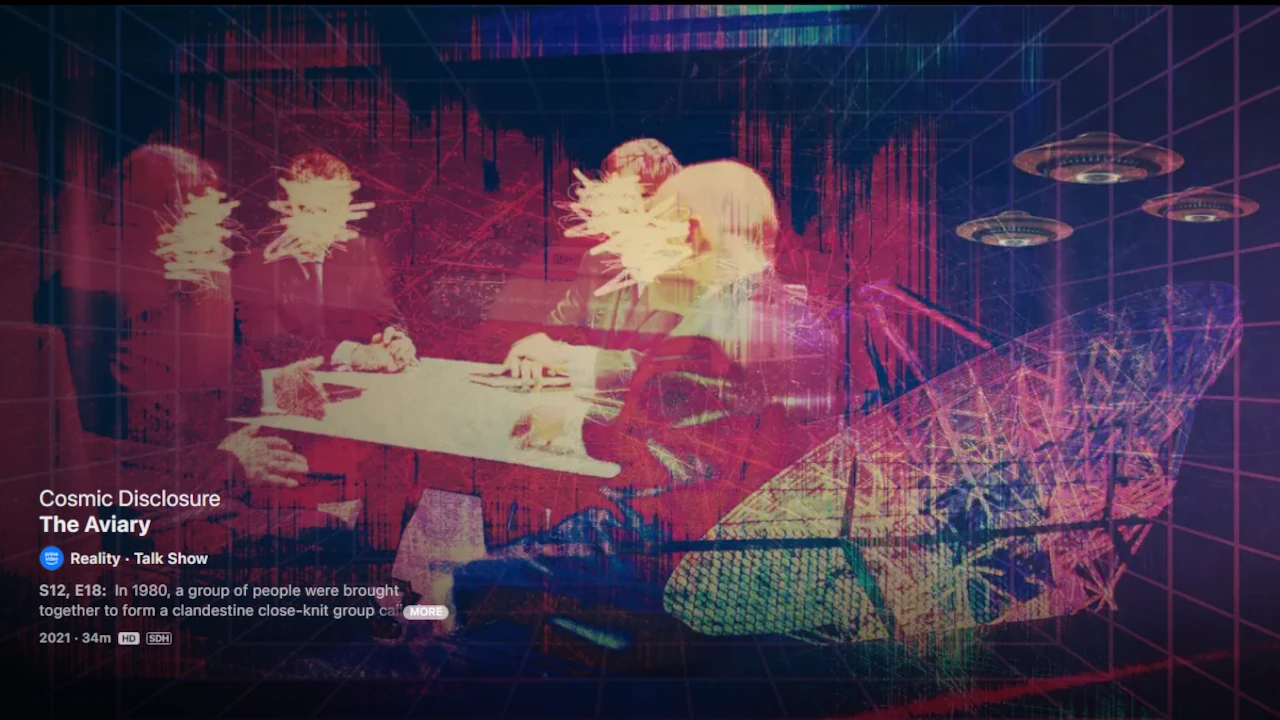
The Aviary is a term in modern UFO lore describing an alleged informal network of U.S. intelligence, military, and contractor-adjacent figures—plus a small number of civilian intermediaries—said to have influenced public UFO narratives through selective disclosure, rumor management, and credibility signaling. The group is most often associated with the late Cold War period (especially the 1980s), when UFO mythology intertwined with counterintelligence concerns, classified aerospace programs, and a rapidly expanding popular media landscape. “The Aviary” is described variously as a clandestine coordination cell, a loose social circle, a nickname applied retroactively to people who happened to know one another, or a folk label that compresses many different contacts into one conspiratorial frame.
In ufology discourse, the Aviary is “famous” less for any single documented act than for its alleged method: bird-themed codenames, controlled ambiguity, and the strategic use of trusted messengers to move extraordinary claims into the public sphere while blurring responsibility for accuracy. Critics argue that the Aviary model explains why some UFO narratives remain permanently unresolved: they are structured to be compelling, source-adjacent, and endlessly deniable.
Background
The Aviary concept emerged within a broader late-20th-century U.S. environment shaped by secrecy culture, psychological operations doctrine, and public fascination with intelligence agencies. During the Cold War, UFO reports overlapped with sensitive topics: stealth aircraft testing, electronic warfare, foreign surveillance, and protected facilities. This overlap created fertile ground for rumor ecosystems where classified realities and imaginative interpretations could be intentionally or unintentionally entangled.
Within that context, ufology developed its own “insider economy”—a hierarchy of access in which status often came from proximity to alleged government knowledge rather than from verifiable documentation. The Aviary legend sits at the center of this economy: a named explanation for how “insider” claims could be generated, shaped, and transmitted without a paper trail.
Ufology Career
Although not a public organization with membership rolls, official statements, or a consistent self-description, the Aviary functions in ufology as an “actor” with recognizable patterns attributed to it:
- Selective leaking: distributing compelling fragments (names, locations, program hints) that encourage inference without confirming specifics.
- Credibility laundering: moving claims through respected scientists, military officers, or well-known researchers to increase believability.
- Plausible deniability: ensuring that claims arrive as secondhand briefings, off-the-record meetings, or unattributed documents.
- Narrative steering: encouraging certain themes (e.g., underground facilities, recovered craft, covert treaties) while discouraging others.
Alleged Membership and Bird Codenames (brief list; disputed)
Lists vary widely; names below are commonly cited in “Aviary” discussions, often with disagreement about whether the person was a core participant, peripheral contact, or simply later associated by researchers. Reported codenames are likewise inconsistent across sources.
- OWL — Hal Puthoff
- FALCON — Richard Doty
- PENGUIN — John B. Alexander
- PELICAN — Ron Pandolfi
- BLUEJAY — Christopher “Kit” Green
- CONDOR — Robert Collins
- SPARROW (sometimes suggested) — William Moore
- WOODPECKER (sometimes suggested) — Jaime Shandera
- HERON (sometimes suggested) — Dale Graff
- BUZZARD (sometimes suggested) — Gordon Novel
- RAVEN / NIGHTINGALE (variously assigned) — often attributed in some lists to Jack Verona; other lists assign “RAVEN” differently
- SEAGULL / HAWK / CHICKADEE / CHICKEN LITTLE — appear on some extended lists with varying proposed identities
Early Work (1970s–mid 1980s)
The Aviary narrative is most commonly anchored in the early 1980s, when UFO interest surged alongside defense secrecy and the rise of UFO media. In this era, accounts frequently connect “Aviary-style” influence to a cluster of rumors and storylines—especially those involving sensitive bases, alleged communications intercepts, and claims of underground non-human activity. The most prominent “origin story” in critical UFO literature ties influence operations and “insider briefings” to the shaping of particular mythologies that spread rapidly through conferences, newsletters, and later television.
Prominence (Mid 1980s–late 1990s)
The Aviary concept became a recognizable explanatory model inside ufology: when an extraordinary claim appeared with insider flavor but weak sourcing, it could be attributed to an Aviary-like pipeline. By the 1990s, “Aviary” talk expanded beyond a small alleged circle and became a catch-all for intelligence-adjacent influence, overlapping in public imagination with MJ-12 lore, black budget speculation, and “breakaway” aerospace narratives.
Later Work (2000s–Present
In later decades, the Aviary label persisted as a cultural artifact even as the alleged original network aged, denied, fragmented, or was reinterpreted. Modern “disclosure era” debates revived Aviary references as commentators argued over whether new waves of insiders, media figures, and government programs represented genuine transparency, managed disclosure, or a new iteration of narrative control. The Aviary has thus remained relevant as a framework—used both by skeptics and believers—to interpret the recurring pattern of claims that are dramatic, source-adjacent, and difficult to verify.
Major Contributions
- Myth-engine template: The Aviary story provides a durable model for how UFO narratives can be seeded and sustained without decisive proof.
- Authority aesthetics: The “bird codename” motif functions as a branding mechanism that signals clandestine authenticity to audiences.
- Network logic in ufology: The Aviary concept helped ufology shift from case-centric debates to pipeline-centric debates (who briefed whom, and why).
Notable Cases
The Aviary is most frequently discussed in connection with:
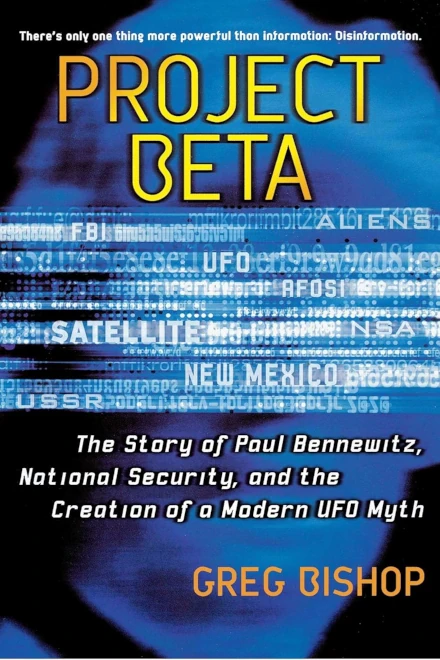
- Claims and controversies surrounding Paul Bennewitz, alleged disinformation efforts, and the amplification of “Dulce base” and underground narratives.
- MJ-12 era document mythology and the broader ecosystem of purported leaks, briefings, and insider documents.
- Conference circuits and media dissemination patterns in which extraordinary claims gained traction through perceived insider proximity.
Views and Hypotheses
Because the Aviary is not a doctrinal organization, “its views” are inferred from attributed behaviors and reported themes. Competing interpretations include:
- Influence-operation hypothesis: The Aviary was an informal perception-management network designed to mislead, distract, or contain sensitive realities.
- Security-containment hypothesis: The group functioned as a “pressure valve,” feeding limited narratives to protect truly classified programs from exposure.
- Loose social circle hypothesis: “The Aviary” is an over-narrated label for a mundane set of acquaintances who occasionally discussed UFO topics.
- Mythic construct hypothesis: The Aviary is primarily an explanatory myth—useful inside ufology regardless of whether a coherent group existed.
Criticism and Controversies
The Aviary is controversial for structural reasons: it is defined by secrecy, contested testimony, and the absence of shared documentation. Major criticisms include:
- Elastic membership: Lists expand or contract depending on the storyteller, making “the Aviary” difficult to falsify.
- Attribution drift: Unrelated intelligence-adjacent UFO activity is often retroactively assigned to the Aviary narrative.
- Self-sealing logic: Lack of evidence can be reframed as evidence of secrecy, insulating the claim from normal historical methods.
- Damage claims: Critics argue that disinformation dynamics—whether intentional or emergent—have harmed individuals and degraded the epistemic health of ufology.
Media and Influence
The Aviary’s influence is amplified by media incentives. Bird codenames, secret meetings, and insider briefings are inherently story-shaped and easily serialized. Over time, the Aviary became a narrative device used to connect disparate elements—documents, interviews, rumors, and personalities—into a single intelligible plot. This has made it a recurrent reference point in books and documentaries focused on UFO disinformation and the sociology of belief.
Legacy
The Aviary endures as one of ufology’s most consequential meta-narratives: a shorthand for the proposition that UFO culture is not merely a passive response to sightings, but an arena where information may be curated, engineered, and strategically released. Whether understood as a real network, a partially real network later mythologized, or a purely symbolic construct, “The Aviary” remains a central interpretive lens for debates about disclosure, deception, and the manufacture of UFO authority.