Introduction
Jacques Vallée is a French-born computer scientist and long-running ufologist known for treating UFO reports as a complex sociotechnical and cultural phenomenon rather than a straightforward question of extraterrestrial visitation. Across decades of writing and investigation, he advanced a style of “case-driven” ufology that emphasizes consistency of witness testimony, patterns across time, and the role of narratives, hoaxes, media feedback loops, and belief contagion in shaping what observers report.
Background
Trained in science and engineering, Vallée developed a professional identity as an empirically minded investigator operating adjacent to—rather than inside—formal academia on UFO matters. This dual identity (technical professional + independent researcher) became central to his influence: he frequently argued that UFO research fails when it becomes purely ideological (either “believers” or “debunkers”) and succeeds only when it treats each report as an evidentiary record subject to error, distortion, and social amplification.
Ufology Career
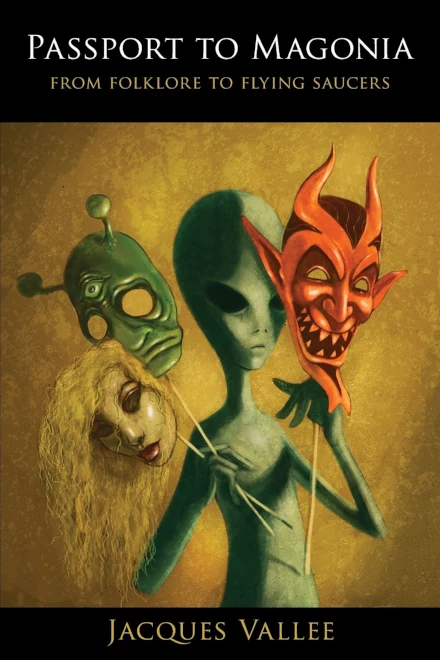
Vallée’s ufology career is defined by two persistent themes: (1) the inadequacy of a single simplistic explanation for the diversity of reports, and (2) the importance of longitudinal pattern analysis across centuries of human testimony. He became well known for comparing modern UFO encounters to historical accounts of apparitions, faerie lore, angels, “airships,” and other anomalous visitations, asserting that the “phenomenon” behaves like an adaptive narrative ecology.
Early Work (Year–Year)
1950s–1960s: Early interest was fueled by European sighting waves and the emergence of modern UFO culture. During this period, Vallée absorbed both pro-ETH arguments and the limitations of purely astronomical explanations. He gravitated toward structured cataloging of cases and methodological discipline: identifying what was observed, under what conditions, and how testimony evolved over time.
Prominence (Year–Year)
1970s–1990s: Vallée’s prominence expanded through books that challenged UFO orthodoxy. He became associated with “high-strangeness” ufology—cases involving absurdity, symbolism, repeated motifs, and psychological effects—while also highlighting how hoaxes and contactee movements can mimic genuine anomalies. His writing style combined skepticism toward sensational claims with insistence that some reports remain unresolved and culturally significant.
Later Work (Year–Year)
2000s–present: Vallée continued publishing, consulting, and engaging with contemporary UAP discourse, often emphasizing that modern “disclosure” narratives risk recreating earlier cycles of mythmaking. His later posture remains consistent: anomalies may be real, but explanations tend to be socially engineered, misperceived, or strategically shaped long before the public sees them.
Major Contributions
- Folklore-analytic approach: Systematic comparison between UFO encounter motifs and pre-modern visitation lore.
- Control-system framing: The idea that the phenomenon influences belief and culture—intentionally or emergently—rather than merely “arriving.”
- Case-file discipline: Emphasis on timelines, witness separation, signal vs. noise, and the epidemiology of rumors and hoaxes.
Notable Cases
Vallée is frequently associated with close-encounter and “high strangeness” case clusters rather than a single signature incident. He is often cited for synthesizing patterns across the classic postwar era (1940s–1970s) as well as for stressing that “strangeness” features (absurd messages, symbolic artifacts, contradictory details) recur across geography and time.
Views and Hypotheses
Vallée has argued that the extraterrestrial hypothesis is insufficient as a universal explanation. He proposed that UFO experiences may involve an intelligence that is neither purely physical nor purely psychological, producing staged events that shape perception and social belief. He has also consistently warned that governments, media, and subcultures can manufacture “false clarity” around a mystery for strategic or ideological reasons.
Criticism and Controversies
Critics argue that Vallée’s “interdimensional” or “control system” framing can be difficult to falsify and risks becoming an interpretive umbrella that explains everything and nothing. Skeptics contend that many high-strangeness cases are better explained by misperception, confabulation, sleep phenomena, and cultural priming. Supporters counter that Vallée’s core value is not a single conclusion but a methodological insistence on pattern recognition, historical continuity, and caution against narrative capture.
Media and Influence
Vallée’s influence is outsized relative to his on-screen presence because his books became a reference library for later generations of investigators, including those who frame UAP as a multidisciplinary puzzle (technology, psychology, folklore, intelligence operations, and sociology). He is often treated as a “researcher’s researcher,” cited by both believers and skeptics who respect his refusal to settle on easy answers.
Legacy
Jacques Vallée’s legacy in ufology is the normalization of two ideas: (1) that UFO reports cannot be understood without cultural context and history, and (2) that the phenomenon’s impact on belief systems may be as important as whatever physical stimulus initiates an encounter report. His work remains foundational for any ufology tradition that rejects simple “aliens in nuts-and-bolts craft” as the default explanation.