Introduction
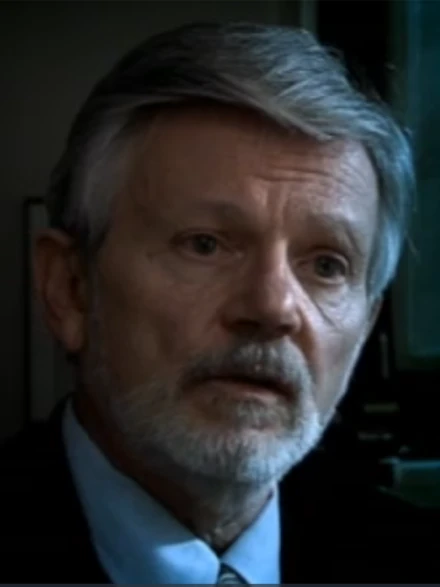
Christopher “Kit” Green is a physician and neuroscientist whose name recurs in modern UFO/UAP history as a rare hybrid figure: a credentialed biomedical expert with alleged intelligence-community proximity who also maintained long-running relationships with civilian UFO researchers. Unlike public-facing ufologists defined by field investigations, organizations, and media brands, Christopher “Kit” Green is primarily remembered as an adviser, evaluator, and connective node—someone who could translate technical claims into medical/physiological framing and, in the process, shape how certain UFO narratives were interpreted within elite or semi-elite circles.
Background
Christopher “Kit” Green is widely described as having deep expertise in brain science, neuroimaging, and forensic medical topics. In mainstream professional contexts, his work is associated with clinical MRI, psychiatry/radiology-adjacent practice, and neurophysiology. In UFO history, these credentials became the basis for a unique kind of authority: not “I saw the craft,” but “I can interpret what exposure, imagery, trauma, or biological claims might imply.”
The “Kit” persona in ufology is also shaped by institutional ambiguity. His name appears in accounts that place him near government or intelligence activity, while his academic/medical identity appears in conventional bios. This duality—part mainstream clinician-scientist, part anomalous-phenomena consultant—helped create his long-lasting reputation as a hidden-in-plain-sight “expert witness” for UFO-adjacent circles.
Ufology Career
Christopher “Kit” Green is not best understood as a case-file collector or MUFON-style investigator. His role is more accurately described as expert consultation within overlapping networks of UFO researchers, patrons, and media-adjacent figures. In these networks, he is commonly presented as someone asked to evaluate extraordinary claims with medical or neurobiological implications—whether alleged injury from encounters, perceived cognitive effects, or the authenticity of purported biological evidence.
Because much of this activity is described as private—briefings, letters, memos, closed screenings, or informal consultations—his UFO “career” is inherently difficult to reconstruct in a clean public timeline. The result is a legacy built largely from references, anecdotes, and a small number of circulated documents attributed to him.
Early Work (1970–1989)
In the early period of his career, Christopher “Kit” Green is typically portrayed as building his medical and neurophysiology credentials while also entering environments where national-security concerns intersected with unconventional research questions. In UFO retellings, this era is described as the foundational stage where he became “the kind of person” who could be approached about anomalous claims without treating them as mere pop culture—because he understood classified environments, technical ambiguity, and the reality that institutions often do investigate strange things quietly.
Prominence (1990–2012)
This period is commonly associated with Christopher “Kit” Green becoming a recognized name inside high-strangeness networks, including circles that blended UFO claims with broader paranormal topics. His prominence in ufology is not measured by TV fame but by social centrality: being repeatedly referenced by other insiders as someone consulted, someone briefed, or someone whose opinion mattered.
One of the best-known controversies linked to him in UAP lore is the recurring claim that he assessed or endorsed aspects of the infamous “Alien Autopsy” film narrative—an episode that illustrates the essential structure of his ufology imprint: high-impact claims, mediated through private screenings and secondhand reporting, amplified by the fact that a biomedical expert was allegedly involved.
Later Work (2013–present
In later years, Christopher “Kit” Green remains a frequently invoked “insider reference” in disclosure-era conversations—often cited in debates about alleged physiological effects of UAP encounters, the credibility of certain evidence pipelines, and whether parts of the UFO ecosystem function as sincere inquiry, narrative theater, or managed ambiguity. His continued relevance derives from the persistent need for technical translators in UAP culture: people who can speak both “credentialed science” and “anomalous claim language.”
Major Contributions
- Medical/biological framing of UAP claims: helped popularize the idea that UAP narratives can be evaluated through physiology, neuroimaging, and biomedical plausibility rather than only through sightings.
- Network connectivity: functioned (in many accounts) as a behind-the-scenes adviser connecting researchers, patrons, and institutional-adjacent conversations.
- “Insider expert” archetype: became a template character in modern ufology—the credentialed clinician who allegedly saw what the public did not.
Notable Cases
“Alien Autopsy” controversy: Christopher “Kit” Green is repeatedly referenced in UAP media discussions about alleged briefings and evaluations related to the film—an enduring, disputed touchstone that continues to resurface whenever “biological evidence” narratives are debated.
UAP injury/physiology narratives: He is often cited in connection with the broader theme that encounters may correlate with neurological or physiological effects, and that medical experts may have been consulted privately about these reports.
Views and Hypotheses
Because Christopher “Kit” Green is primarily an “as-referenced” figure rather than a constant public commentator, his views are frequently inferred from fragments: that anomalous claims should be approached with technical seriousness, that human perception and memory can be unreliable under stress, and that biomedical effects—if real—require careful differential diagnosis against mundane exposures and psychological drivers.
In UFO culture, he is sometimes portrayed as simultaneously open to anomaly and cautious about conclusions, a stance that makes him useful to multiple camps: believers cite his openness; skeptics cite his scientific framing and the absence of decisive public proof.
Criticism and Controversies
The core controversy is evidentiary: Christopher “Kit” Green is often invoked to add authority to extraordinary stories that remain unverified. Critics argue that credentialed proximity can function as a social proof mechanism—“a doctor saw it, therefore it’s real”—even when the underlying material is inaccessible or weak. Supporters argue that confidential evaluations are a normal feature of sensitive topics, and that public absence of proof does not imply private absence of evidence.
A second controversy is the “gatekeeper” narrative: some portray him as protecting institutional boundaries and managing disclosure; others see him as simply a consultant pulled into a chaotic ecosystem of claims.
Media and Influence
Christopher “Kit” Green has high influence inside UAP discourse despite relatively limited mainstream fame because he is repeatedly referenced by other prominent figures. In modern UAP media, his name functions as a credibility token—invoked to imply that a story crossed a threshold into technical/official attention. This is precisely why he remains polarizing: the same dynamic that amplifies his influence also amplifies skepticism toward how his name is used.
Legacy
Christopher “Kit” Green endures as a symbol of the “hidden expert layer” of ufology: the clinicians, scientists, and analysts who allegedly reviewed, interpreted, or triaged extraordinary claims out of public view. Whether future releases validate any specific storylines associated with him or not, his role in UAP lore illustrates a central feature of the field: authority often travels through networks and whispers more than through peer-reviewed publication, creating enduring legends that are difficult to confirm or fully dismiss.