Introduction
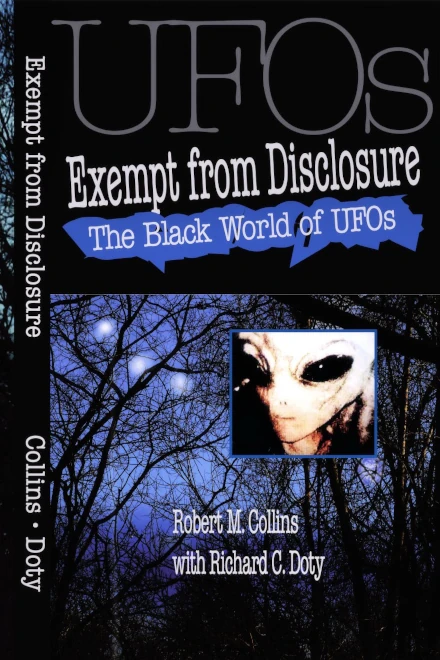
Capt. Robert (“Bob”) Collins, frequently labeled “CONDOR” in UFO subculture, is a polarizing figure whose significance comes less from conventional case-investigation work and more from insider-network mythology: claims that a loose constellation of defense/intelligence-adjacent individuals selectively managed, leaked, shaped, or redirected UFO narratives. Collins is repeatedly named in “Aviary” lists and reconstructions as an alleged participant or emblematic node—an archetype of the “retired intelligence insider” who straddles classified-world plausibility and civilian-UFO storytelling.
Background
Collins is widely described in UFO literature and online profiles as a retired U.S. Air Force captain with an intelligence and/or Foreign Technology Division–adjacent career footprint. In this framing, his technical background and proximity to classified environments are treated as the foundation for both his credibility among believers and the skepticism directed at him by critics who view “Aviary” stories as a hybrid of real bureaucratic actors and folklore accretion. Publicly accessible biographical claims commonly emphasize education in physics/mathematics, a career in intelligence analysis, and continued involvement in UFO-related discourse after military service.
Ufology Career
Unlike field investigators whose reputations are built through cataloging sightings or leading organizations, Collins’ “ufology career” is best understood as narrative participation. He appears in the record of UFO culture as a figure who speaks in the register of intelligence tradecraft—program compartments, gatekeepers, controlled releases, and selective briefings. This posture naturally positions him inside debates about disinformation: to supporters, he is an “insider who knows”; to detractors, he is an example of how intelligence-linked personas can catalyze or steer belief systems without producing verifiable, independently replicable evidence.
Early Work (1970–1984)
In the mythology that later formed around him, Collins’ “early” phase is not primarily ufological but institutional: the period in which he is said to have accumulated the technical and security-world familiarity that later made his UFO-adjacent claims legible to the community. UFO writers frequently situate the origins of his alleged UFO contacts and “insider awareness” within defense intelligence ecosystems where unconventional subjects could be discussed under threat-analysis umbrellas, whether or not those subjects were treated as literal extraterrestrial visitation.
Prominence (1985–1999)
Collins’ prominence in UFO discourse is repeatedly tied to two overlapping currents. First is his linkage—by multiple authors—to the broader “Aviary” storyline, a late–Cold War to early–post–Cold War meta-narrative in which bird-codenamed insiders purportedly shaped the UFO subculture. Second is the enduring gravity of UFO Cover-Up? Live (1988), a television event that became a symbolic hinge: a moment many believers remember as a quasi-disclosure while many skeptics remember as a spectacle vulnerable to manipulation. In numerous retellings, Collins’ name appears as either an alleged participant, a behind-the-scenes presence, or a figure whose later identity became fused to “Condor” as a role.
Later Work (2000–present
In the 2000s and beyond, Collins is best characterized as a commentator and narrative amplifier inside the UFO information ecosystem. He is frequently referenced in connection with disputes over leaked documents, alleged briefings, and “inside sources,” including the long tail of MJ-12-era arguments and the later Serpo-era controversy cycle. As the internet became the dominant arena for UFO discourse, Collins’ footprint is often described as moving with it: from broadcast-era lore into online debates where authority is performed through claims of access and familiarity with classified culture.
Major Contributions
- CONDOR as a durable identity token: Whether literal, symbolic, or contested, “Condor” became a shorthand reference for the “intelligence insider” archetype inside UFO culture.
- Black-program narrative scaffolding: Through writings and interviews, Collins helped popularize a worldview in which UFO secrecy is explained via compartmentalization, special access programs, and controlled narratives.
- Community impact through discourse: His role is less “case-solving” and more “sense-making”—providing frames, interpretations, and claims that influenced how portions of the community interpret events and documents.
Notable Cases
Collins is not most famous for a single classic sighting investigation. His “cases” are meta-events and storylines:
- UFO Cover-Up? Live (1988): A recurring reference point in discussions of staged disclosure vs. disinformation theater.
- MJ-12-related discourse: Frequently discussed as part of the broader community ecosystem that treated MJ-12 claims as central explanatory infrastructure.
- Serpo-era controversy: Often named among voices who commented on or were pulled into debates over the provenance and purpose of sensational “leaks.”
Views and Hypotheses
Collins is typically framed as advancing a model in which the UFO phenomenon is entangled with a hidden technical-intelligence world: advanced aerospace, reverse-engineering rumors, compartmented projects, and a long-term management strategy for public perception. This perspective leans heavily on institutional plausibility (how secrecy systems operate) as the explanatory engine, and treats public UFO history as downstream of classified policy battles, inter-agency friction, and selective narrative releases.
Criticism and Controversies
Criticism centers on epistemology and incentives. Skeptics argue that insider-coded storytelling can function as an authority hack: the narrative feels credible because it matches how classified systems are imagined, not because it is independently verifiable. A second line of criticism is reputational adjacency—Collins’ repeated appearance in “Aviary” and disinformation discussions leads detractors to treat him as part of a tradition of UFO narrative manipulation (whether intentional or emergent). Supporters counter that the absence of hard proof is an expected feature of genuinely compartmented subjects, and that coherent insider narratives should be evaluated as partial windows rather than courtroom evidence.
Media and Influence
Collins’ influence is strongest in the “insider discourse” lane: talk radio, online essays, and long-form interviews where stories of secrecy, retrievals, and program boundaries are the primary content. A notable example is his appearance on major UFO talk platforms, including Coast to Coast AM-style programming, which helped embed his name into the broader folklore infrastructure of late-20th/early-21st-century ufology.
Legacy
Within UAP culture, Collins endures as an emblem of a particular era and style: the post–Cold War transition in which UFO discourse became saturated with claims about special access programs, reverse engineering, and disinformation campaigns. For believers, “Condor” is a signal that the UFO subject had institutional depth. For skeptics, he is a case study in how intelligence-adjacent personas can become myth-anchors—names that remain influential even when the underlying claims remain disputed. Either way, the “CONDOR” tag has proven remarkably durable as a reference point in the evolving story of UFO secrecy narratives.