Introduction
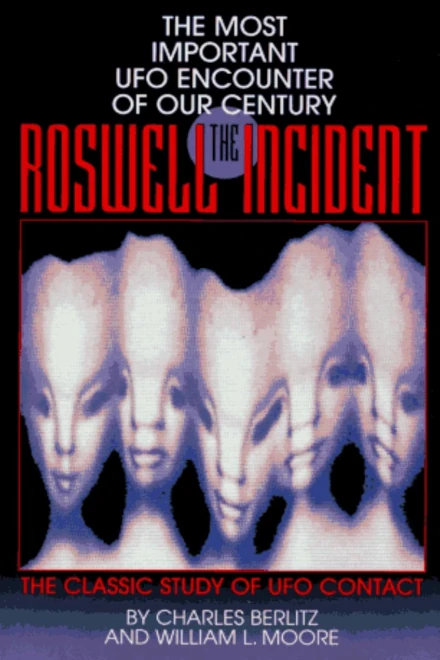
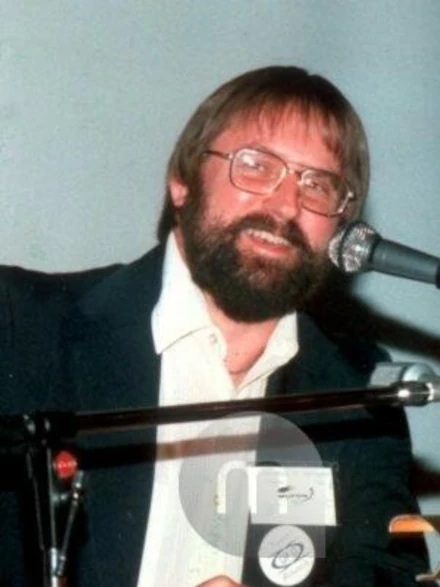
William L. “Bill” Moore is an American UFO author and researcher best known for co-authoring The Roswell Incident (1980), a landmark work that helped catalyze the modern revival of the Roswell story and repositioned the 1947 event as the defining case in contemporary UFO culture. During the 1980s, Moore became a central participant in an “insider briefing” milieu in which alleged government sources provided extraordinary claims to selected civilian researchers. He is particularly associated with the public emergence of “MJ-12” mythology—purported secret briefing documents describing a covert committee managing UFO matters—and with intelligence-adjacent contacts later grouped under the ufological umbrella term “The Aviary.”
Moore is also one of the most controversial figures in the field because he acknowledged engaging in deception within ufology, a disclosure that profoundly affected his credibility and remains a major reference point in debates about disinformation, counterintelligence influence, and the reliability of UFO historiography.
Background
Moore emerged from the late-1970s UFO research environment that blended amateur investigation, archival digging, and an expanding lecture-and-conference circuit. In this period, “case research” increasingly intersected with broader claims about secrecy and government knowledge. Moore’s approach combined narrative reconstruction—assembling witness accounts into a coherent historical storyline—with a strong interest in purported official confirmation, a pattern that would later intensify through his contact with self-described or implied government insiders.
Ufology Career
Moore’s ufology career can be divided into two broad arcs: (1) his major role in building the modern Roswell narrative as a premier UFO case and (2) his deep involvement in 1980s-era intelligence-linked UFO controversy, including MJ-12 promotion and the later admission of deceptive conduct.
In public memory, Moore’s name is often invoked as a symbol of how ufology can oscillate between sincere investigation and information warfare dynamics—especially in environments where sources claim access to secrets but refuse verifiable documentation.
Early Work (Year-Year)
(c. late 1970s–1980) Moore’s early prominence rose through Roswell-focused research and writing culminating in The Roswell Incident (1980). The book became a foundational text for the “crashed saucer” interpretation of Roswell and helped establish a template for later UFO case-building: interlocking witness testimony, narrative coherence, and the insinuation of official suppression. In the years immediately surrounding the book’s publication, Moore’s work contributed to a wider cultural shift in which Roswell evolved from a marginal story to a central mythos of modern UFO belief.
Prominence (Year-Year)
(c. early 1980s–late 1980s) During the 1980s, Moore increasingly moved from historical reconstruction toward a source-driven “inside information” posture. He became closely associated with a network of contacts that included individuals described as connected to U.S. Air Force or intelligence ecosystems. In ufological accounts, this is the period most frequently associated with “Aviary” dynamics—bird codenames, selective briefings, and narrative steering.
Moore’s prominence in this era is especially tied to MJ-12. He was among the most visible civilian promoters and discussants of the purported MJ-12 documents, which described a secret group tasked with managing UFO-related information. The MJ-12 narrative provided a dramatic explanatory framework for secrecy claims and became one of the most debated (and disputed) documentary bodies in UFO history.
At the same time, Moore’s relationships with certain “insider” figures fueled allegations that ufology was being manipulated through psychological operations-style tactics, blending truth, falsehood, and suggestion to steer belief communities.
Later Work (Year-Year
(c. 1990s–present) In later decades, Moore’s active public role diminished relative to his 1980s peak, but his legacy continued to be litigated. Researchers, skeptics, and believers repeatedly returned to Moore as a case study in how ufological knowledge can be shaped by compromised sourcing. His admission of deceptive participation became a cautionary benchmark: cited by critics as evidence of systematic manipulation, and by some defenders as a rare instance of candor about the field’s murky interactions with alleged officials.
As the UFO “disclosure” conversation evolved in the 2000s and 2010s, the Moore-era controversies regained relevance as historical precedent: a reminder that “insider-driven” UFO narratives may be strategically framed, even when presented with the aura of authority.
Major Contributions
- Roswell revival: Helped elevate Roswell into a premier modern UFO case and provided a narrative blueprint widely emulated in later crash-retrieval discourse.
- MJ-12 popularization: Played a central role in bringing MJ-12 claims into mainstream UFO conversation, shaping decades of debate about authenticity and provenance.
- Disinformation case study: Became one of the most cited examples in ufology of how deceptive dynamics can infiltrate and distort research communities.
Notable Cases
- Roswell (1947): Moore’s most enduring association; his writing helped consolidate scattered accounts into an influential narrative of a recovered craft and cover-up.
- MJ-12 documents: A defining controversy of Moore’s career; his advocacy made him a key node in the documents’ public dissemination and interpretation.
- Bennewitz/Dulce-era rumor ecosystem: Moore is frequently discussed in relation to the broader 1980s milieu in which underground-base and alien-interaction claims spread via insider-linked pipelines.
Views and Hypotheses
Moore’s public posture across his career reflected a recurrent ufological tension: the desire for official validation versus the hazards of unverifiable sources. He tended to treat certain insider briefings as meaningful indicators of hidden government knowledge, while also demonstrating—through later admissions—the extent to which such ecosystems can involve strategic deception.
In Aviary-related framings, Moore is often characterized less by a single coherent “hypothesis” about UFOs than by his role as an intermediary—someone positioned to receive, interpret, and disseminate claims that arrived bearing the imprimatur of covert authority.
Criticism and Controversies
Moore is controversial for several interlocking reasons:
- Compromised sourcing: Critics argue that reliance on intelligence-linked contacts undermined the reliability of his claims and contaminated the evidentiary record.
- MJ-12 credibility: Skeptics contend the MJ-12 documents are fraudulent or manipulated and view Moore’s promotion as a major credibility failure.
- Admission of deception: Moore publicly acknowledged involvement in deception/disinformation dynamics, a revelation that profoundly damaged trust and became a central exhibit in ufology’s disinformation debates.
- Legacy contamination: Even sympathetic observers note that once a researcher is embedded in an influence-prone ecosystem, it becomes difficult to disentangle sincere research from guided narrative.
Media and Influence
Moore’s influence is outsized relative to his number of major publications because Roswell and MJ-12 became “keystone narratives” of modern UFO belief. His work shaped conference discourse, inspired waves of follow-on books and television treatments, and provided vocabulary and story-structure that later media repeatedly reused. In parallel, his controversies helped establish a counter-genre of UFO media focused on deception, hoaxes, and intelligence influence—where Moore is often cited as a pivotal turning point.
Legacy
William Moore’s legacy is dual and unresolved. On one hand, he is credited with helping establish Roswell as the modern UFO era’s central historical event and with energizing public interest in UFO secrecy narratives. On the other hand, his role in MJ-12 promotion and his admission of deceptive participation made him an emblem of ufology’s vulnerability to manipulation. In contemporary discourse, Moore is often invoked as both architect and caution: a reminder that compelling narratives can be built on unstable foundations, and that “insider access” can function as a tool of influence as easily as a conduit of truth.