Introduction
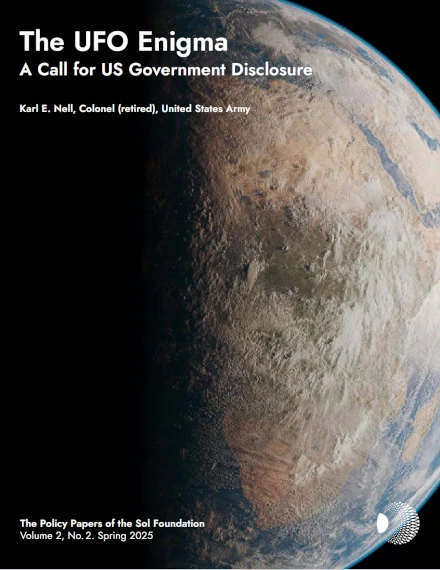
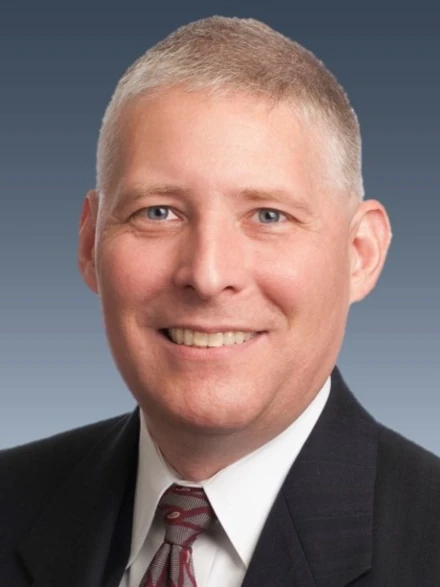
Karl E. Nell is a retired United States Army colonel and aerospace-sector executive who became a prominent figure in contemporary ufology during the post-2017 resurgence of UAP (unidentified anomalous phenomena) attention. Within disclosure-era discourse, he is best known for public statements asserting the reality of non-human intelligence, for endorsing the credibility of whistleblower-style allegations, and for advocating “controlled disclosure” through institutional governance and congressional oversight.
Background
Nell’s public biography typically emphasizes a dual track of military leadership and high-technology industry roles, presenting him as a systems-minded operator comfortable with classified environments, defense acquisition, and organizational transformation. In ufology contexts, this résumé functions as a credibility amplifier: supporters cite it as evidence he understands the bureaucracy and technical cultures surrounding UAP, while critics argue that résumé-based authority does not substitute for independently verifiable evidence.
Ufology Career
Nell’s ufology career is best characterized as policy-forward and institutional rather than field-investigative. He did not rise through the classic UFO research pipeline of sightings databases and case investigation; instead, he became visible through insider-adjacent claims, conference appearances, and formal publications that frame UAP as a governance, transparency, and oversight challenge. His association with The Sol Foundation places him within an ecosystem that combines academics, former officials, and curated public programming aimed at legitimizing UAP discourse.
Early Work (1990s–2010s)
Prior to public UAP notoriety, Nell’s professional identity was anchored in conventional defense and aerospace work: leadership roles, technology programs, and corporate strategy in organizations tied to national security. In later UAP narratives, this period is treated as formative—supplying the institutional fluency and networks that disclosure-era audiences interpret as prerequisites for informed commentary about classified programs and congressional processes.
Prominence (2021–2024)
Nell’s prominence accelerated as disclosure-era debates centered on alleged special access programs, the credibility of insiders, and legislative oversight. He became widely quoted in UAP circles after public statements supportive of whistleblower credibility and after appearances in high-visibility interview formats that framed his position as unusually direct for a senior retired officer. During this period, Nell was increasingly associated with the idea that disclosure should be managed—structured, paced, and bounded by governance to reduce institutional instability while still expanding public knowledge.
Later Work (2024–present)
In later work, Nell’s public role solidified around institution-building and agenda-setting: participating in Sol symposia, contributing to policy-oriented publications, and reinforcing a narrative in which UAP is treated as a legitimate subject for congressional inquiry, public accountability, and interdisciplinary research. His messaging frequently blends two registers: (1) process language about oversight, classification, and reporting systems, and (2) unusually expansive claims about non-human intelligence interacting with humanity—an argumentative combination that makes him simultaneously influential and polarizing.
Major Contributions
- Helped popularize “controlled disclosure” as a governance strategy in disclosure-era UAP discourse, emphasizing institutional pacing and oversight mechanisms.
- Functioned as a high-credibility endorsement node for whistleblower-aligned narratives by publicly supporting the credibility of key disclosure-era figures.
- Contributed to Sol’s legitimacy project by presenting UAP as a serious policy-and-oversight issue rather than solely a cultural curiosity or tabloid subject.
Notable Cases
Nell is not primarily associated with a single classic UAP incident (e.g., a well-documented, sensor-rich case that he personally investigated). Instead, his “notable cases” are meta-level: claims about programs, oversight failures, and the credibility of insiders who describe alleged recovery and reverse-engineering narratives. In practice, his standing in the community is tied to whether audiences treat these program-level claims as plausible and whether future disclosures substantiate or undermine them.
Views and Hypotheses
Nell’s public posture typically combines institutional realism with extraordinary conclusions. On one hand, he emphasizes governance: UAP disclosure should be handled via accountable pathways, formal reporting, and congressional oversight. On the other hand, he has made direct statements consistent with the hypothesis that non-human intelligence is present and interacting with humanity. He tends to present these positions as compatible: extraordinary claims demand better governance, not less, because poor governance produces rumor cycles, public distrust, and institutional vulnerability.
Criticism and Controversies
Nell’s critics focus on the evidentiary gap between high-level assertions and publicly verifiable documentation. They argue that strong claims—especially about non-human intelligence—require strong, independently examinable evidence, and that institutional status can create a “credibility halo” that short-circuits skepticism. Supporters counter that classification regimes limit what can be shown publicly and that credible insiders speaking openly is itself a signal of unusual institutional strain. As a result, Nell occupies a contested position: he is treated either as a rare, disciplined advocate for responsible disclosure or as an authority figure whose certainty exceeds what the public record can currently support.
Media and Influence
Nell has become a recurring reference in disclosure-era media ecosystems, appearing in interviews, conference programming, and online commentary that frames him as one of the more direct retired senior officers willing to make sweeping claims. His influence is amplified by the way modern ufology operates: short quotations and high-status endorsements travel rapidly through podcasts and social platforms, shaping perceptions even when underlying evidence remains inaccessible to the public.
Legacy
Nell’s legacy in ufology will likely depend on what disclosure-era oversight ultimately produces. If future documentation, testimony, or declassification validates the broad contours of the claims he endorses, he may be remembered as an early, disciplined advocate for structured transparency. If such validation fails to materialize, he may be remembered as an emblem of the disclosure era’s central tension: the collision between institutional credibility and the public’s inability to independently audit extraordinary assertions.