Introduction
Eric Davis is a physicist whose name appears repeatedly in late-20th and early-21st century ufology narratives linking advanced propulsion speculation, government advisory rumor, and disclosure-era media cycles. In the UAP ecosystem, he is treated as a technically fluent “insider-adjacent” figure, and he is associated with The Sol Foundation through its advisory board.
Background
Davis is typically introduced in ufology contexts through his physics credentials and through accounts that place him near defense- and intelligence-adjacent conversations about anomalous aerospace phenomena. This dual identity—scientist plus alleged proximity to secrecy—forms the core of his ufological significance.
Ufology Career
Davis’s ufology impact is less about public field investigation and more about reputation as a consultant, analyst, and technical explainer within circles where UAP stories intersect with classified-program claims. His name functions as a citation node in the ecosystem: invoked to support claims of serious behind-the-scenes research.
Early Work (Year–Year)
In ufology reception, Davis’s early phase is characterized by his emergence as a technical commentator on exotic propulsion and spacetime manipulation concepts. These themes aligned naturally with UFO subcultures interested in “how the craft works” and in the possibility of suppressed technology.
Prominence (Year–Year)
Prominence grew as UAP discourse became increasingly tied to policy debates, intelligence rumors, and a renewed mainstream media cycle. Davis’s perceived proximity to government-linked conversations elevated him as a recurring reference for those arguing that the phenomenon is real, technical, and long studied in secrecy.
Later Work (Year–Year)
Later visibility includes association with newer legitimacy-focused institutions and panels. Through Sol affiliation, his name helps bridge older “program lore” with a modern attempt to institutionalize UAP discourse in academically respectable settings.
Major Contributions
- Provided technical vocabulary and speculative physics framing widely reused in advanced-propulsion UFO narratives.
- Served as a persistent “insider-adjacent” reference point within disclosure-era conversations.
- Contributed to the cross-pollination between exotic physics speculation and UAP policy discourse via advisory roles.
Notable Cases
Davis is often connected in public rumor to alleged briefings and classified-material claims rather than to a single, well-documented, investigator-led case. In ufology, his “cases” are frequently meta-level: stories about programs, documents, and purported insider knowledge.
Views and Hypotheses
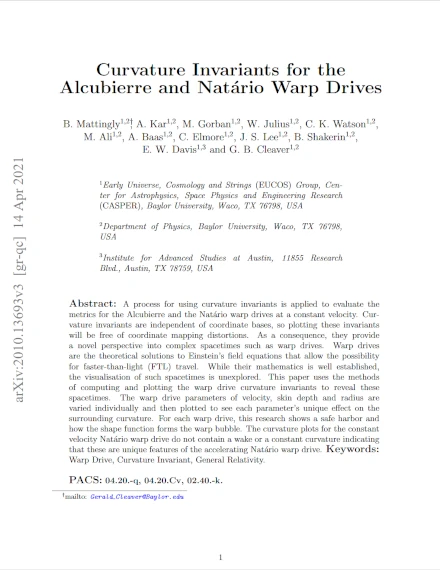
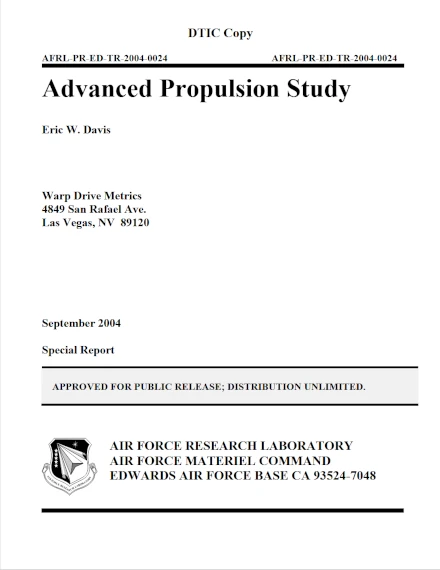
In public-facing technical writing cited by UAP audiences, Davis is associated with warp metrics, exotic energy requirements, and speculative propulsion. In ufology reception, these ideas are interpreted either as legitimate theoretical exploration or as suggestive breadcrumbs pointing to hidden engineering work.
Criticism and Controversies
Criticism focuses on the evidentiary gap between the stature his name carries and the limited public ability to validate many claims attributed to him. Supporters argue that secrecy constraints explain the ambiguity; skeptics argue that the ambiguity is precisely the problem.
Media and Influence
Davis’s influence is often indirect: he is cited by journalists, podcasters, and UAP advocates as a technical authority and as an implied link between officialdom and the UFO world. This “citation power” makes him a durable character in modern UAP narrative networks.
Legacy
Davis’s legacy in ufology will likely rest on whether disclosure-era investigations substantiate the program-lore claims in which he is frequently invoked. Regardless of outcomes, he remains a central technical-symbolic figure in the modern “UAP as advanced technology” storyline.