Introduction
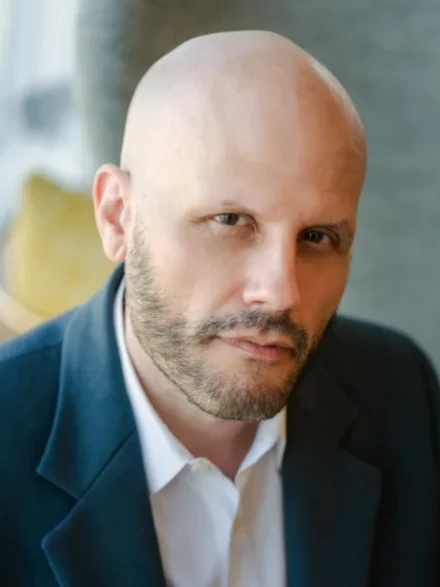
Peter Skafish is an anthropologist and organizer who became a central figure in modern ufology-adjacent institution-building through his role as co-founder and executive director of The Sol Foundation. Within UAP discourse, he is known for framing the topic as a complex problem of evidence, governance, stigma, and knowledge-production rather than a purely technical puzzle.
Background
Skafish’s professional identity is rooted in the human sciences and public intellectual work. This background informs his emphasis on institutions, epistemic norms, and the cultural dynamics that structure what can be said, studied, funded, and published.
Ufology Career
Skafish’s involvement in ufology is primarily institutional and discursive. Rather than conducting classic UFO case investigations, he focuses on building venues where researchers, officials, and scholars can coordinate frameworks for study, disclosure policy, and public communication.
Early Work (Year–Year)
In early phases of UAP engagement, Skafish’s contribution is best characterized as “translation”: adapting academic language and governance concepts to a public domain saturated with rumor, secrecy narratives, and polarized belief communities.
Prominence (Year–Year)
Skafish rose in prominence alongside the broader “post-2017” UAP attention cycle, helping to legitimize a strand of discourse that seeks academically respectable structures—conferences, symposia, and research agendas—while distancing from sensationalism.
Later Work (Year–Year)
Later work centers on Sol’s growth: recruiting participants, shaping symposium topics, and crafting public-facing narratives that present UAP as a serious issue for governance, defense, science, and culture. He frequently emphasizes careful language and interdisciplinary cooperation.
Major Contributions
- Co-created an institutional template for “serious UAP study” emphasizing legitimacy, governance, and multidisciplinary methods.
- Advanced a sociological lens on UAP: stigma, secrecy, and incentives as drivers of both public belief and expert silence.
- Helped curate academic participation in a highly contested public topic.
Notable Cases
Skafish is not principally associated with a single canonical UFO “case.” His influence is linked to Sol’s convenings and to the broader attempt to organize the UAP topic as a legitimate research and policy domain.
Views and Hypotheses
He generally treats UAP as an “epistemic object” whose meaning shifts across institutions—military, science, media, and subcultures. The central challenge, in this framing, is not only what UAP are, but how reliable knowledge about them can be produced amid secrecy and stigma.
Criticism and Controversies
Critics sometimes view Sol-style institutionalization as reputation laundering—creating prestige around claims that remain empirically unresolved. Supporters see it as the only viable pathway to improve data quality and reduce performative polarization.
Media and Influence
Skafish’s influence is strongest in shaping the tone and structure of elite-facing UAP discourse: conferences, panels, and long-form conversations emphasizing governance and research design over dramatic case claims.
Legacy
Skafish’s long-term legacy in ufology will likely be measured by whether Sol and similar initiatives successfully normalize rigorous inquiry, improve evidentiary standards, and produce durable institutions rather than a transient media cycle.