Introduction
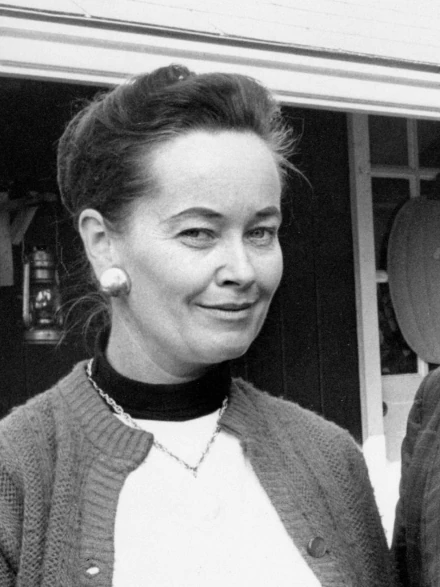
Lorraine Warren was an American paranormal investigator and claimed clairvoyant whose relevance to ufology comes through “high strangeness” crossover: entity reports, missing-time style narratives, and the broader interpretation that UFO experiences may be spiritually mediated. Her public identity helped shape how many audiences interpret UFOs not as technology mysteries but as morally charged encounters.
Background
Lorraine’s role in the Warren partnership emphasized sensitivity/intuition, impressionistic diagnosis of locations, and spiritual classification of phenomena. This lens is influential in UFO culture because it provides a ready-made interpretive framework for ambiguous experiences that lack hard evidence.
Ufology Career
Her ufology footprint is indirect but significant in cultural terms: the Warrens’ approach contributed to the “paranormal unification” model, where UFOs, ghosts, and entities are expressions of a single underlying reality.
Early Work (Year-Year)
Early public work established the Warren method: case intake, site visits, narrative reconstruction, and religious framing. UFO elements appear intermittently within broader paranormal storytelling.
Prominence (Year-Year)
Prominence expanded as the Warren brand became a media engine. Lorraine’s persona as a sensitive/clairvoyant added dramatic authority to case narratives, influencing how paranormal media later cast “experts.”
Later Work (Year-Year
In later years, Lorraine became the more publicly visible “keeper of the cases,” sustaining brand continuity. Her legacy in UFO-adjacent culture is the persistence of spiritually framed interpretations.
Major Contributions
- Strengthened the paranormal-UFO crossover genre and its interpretive vocabulary.
- Helped standardize the “expert sensitive” archetype in anomaly media.
- Expanded the audience for “high strangeness” beyond nuts-and-bolts UFO interest.
Notable Cases
Warren-linked cases are mostly haunting/demonology narratives, but their cultural treatment often overlaps with UFO entity motifs and broader anomalous-encounter structures.
Views and Hypotheses
Common Warren-associated position: many anomalous experiences are spiritually deceptive; UFO interpretations that treat entities as benign “space visitors” are considered dangerously naive.
Criticism and Controversies
Critics challenge the evidentiary basis of clairvoyant claims and argue that media incentives distort case narratives. Skeptics also object to the fusion of disparate phenomena under a single spiritual explanation.
Media and Influence
Lorraine’s influence is inseparable from media: books, lectures, interviews, and later dramatizations that made Warren-style case storytelling the default paranormal template.
Legacy
Her ufology-adjacent legacy is the persistence of a spiritualized framework for UFO/entity narratives—an approach that remains highly influential in paranormal crossover communities.