Introduction
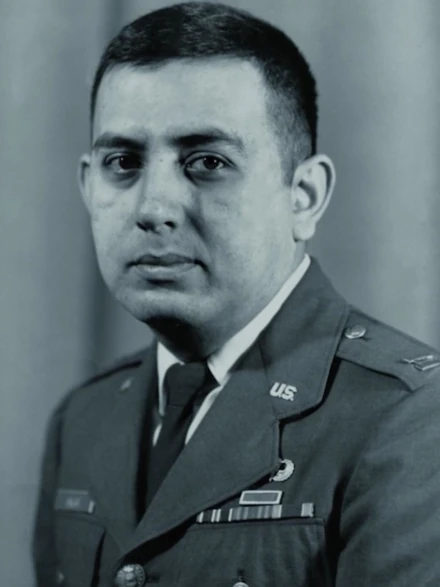
Robert Salas is a former U.S. Air Force officer best known for his role in one of the most frequently cited “UFOs and nukes” narratives: the claim that an unidentified aerial phenomenon coincided with the disabling of multiple nuclear missiles at Malmstrom Air Force Base in 1967. Salas’ importance to ufology lies in the strategic setting of his testimony. Nuclear weapons infrastructure is treated by many UAP advocates as a context where misperception should be least tolerated and where anomalies, if real, could imply serious national security implications.
Background
Salas served in the Cold War missile enterprise, an environment defined by high procedural control, redundancy, and secrecy. The missile community’s emphasis on logging, accountability, and chain-of-command reporting shapes how his testimony is received: supporters argue that this context raises credibility; skeptics argue it also raises the possibility that ordinary technical events can be misunderstood when filtered through rumor or incomplete information.
Ufology Career
Salas’ public ufology career began when he moved from private recollection to public disclosure, becoming a recurring speaker on the conference circuit and a frequent interview subject in documentaries and podcasts. Unlike generalist investigators, Salas is a witness-advocate: his authority is anchored to one strategic event and its implications for secrecy, public accountability, and the possibility of nonhuman technology.
Early Work (1967-1975)
The foundational period is the incident timeframe and the immediate aftermath in which military personnel processed what occurred through internal channels. In this phase, the UFO dimension exists as informal knowledge and rumor, while official documentation—where available—typically uses noncommittal language and focuses on technical status and security reporting.
Prominence (1990-2010)
Salas rose to prominence as the “UFOs and nukes” theme matured into a core disclosure argument. In this period, his account became paired with other missile-site testimonies, creating a pattern claim: not a single odd event, but repeated encounters with strategic infrastructure.
Later Work (2011-2025
In the modern UAP era, Salas remains a frequently referenced witness. His story functions as a rhetorical anchor for those arguing that UAP are not merely misidentified aircraft but a persistent phenomenon interacting with national security systems. As UAP reporting entered more official discussion spaces, his testimony also became a target for renewed skeptical scrutiny.
Major Contributions
- High-stakes testimony: Placed UAP discourse in direct contact with nuclear command-and-control concerns.
- Pattern formation: Helped consolidate “UFOs and nukes” as a dominant modern narrative cluster.
- Disclosure pressure: Sustained public interest in government documentation and transparency about historical UAP events.
Notable Cases
Malmstrom AFB missile shutdown (1967): The signature case associated with Salas. The core claim is that unusual aerial activity was observed around the time multiple missiles went offline, suggesting interference by a nonconventional agent. This remains debated due to documentation limits and competing interpretations.
Views and Hypotheses
Salas generally interprets the event as evidence that a technologically advanced unknown actor can penetrate or influence strategic weapons systems. He tends to treat secrecy behavior and incomplete public records as consistent with a sensitive phenomenon rather than as evidence that the account is mistaken.
Criticism and Controversies
Critics argue that missile anomalies can arise from technical faults, maintenance issues, or system design vulnerabilities, and that witness recollection can be shaped by later UFO narratives. The controversy persists because definitive technical records are limited and because the “UFO” interpretation depends heavily on testimony and contextual inference.
Media and Influence
Salas has been featured across “UFOs and nukes” documentaries, podcasts, and conference circuits. His influence is amplified by the strategic theme: nuclear weapons serve as a symbolic and practical marker of human power, making any alleged interaction by an unknown intelligence culturally electrifying.
Legacy
Robert Salas is a central witness figure in modern ufology’s most consequential claim category: UAP interactions with nuclear forces. Whether his interpretation is ultimately accepted or revised, his testimony remains a cornerstone in the historical argument for deeper UAP transparency.