An Encyclopedia and Go to Source for All Things UAP

UAP Personalities

Gallaudet, Timothy

TL;DR Claim(s) to Fame

  • U.S. Navy rear admiral who became a prominent public voice calling for serious UAP transparency.
  • Frames UAP as a data-driven maritime/aerospace domain awareness issue rather than a fringe topic.
  • Advocates standardized military reporting and scientific analysis of multi-sensor UAP incidents.
  • Media contributor discussing national-security, airspace safety, and stigma reduction around UAP.

Introduction

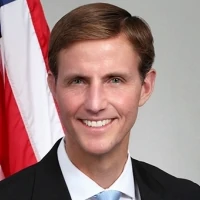
Tim Gallaudet is a retired U.S. Navy rear admiral, oceanographer, and former senior leader within U.S. naval and ocean-science organizations who has become a prominent public advocate for improved institutional transparency and rigorous analysis regarding Unidentified Anomalous Phenomena (UAP). Within ufology-adjacent discourse, he is frequently cited as a high-credibility “insider” voice emphasizing standardized reporting, multi-sensor corroboration, and the reduction of stigma surrounding anomalous encounters.

Background

Gallaudet built a career in naval operations and oceanography, working at the intersection of defense, environmental intelligence, and maritime domain awareness. His public credibility in UAP discussions is grounded in his senior rank, leadership roles, and familiarity with military data ecosystems, including the handling of operational reports and sensor-derived information.

Ufology Career

Rather than emerging from traditional civilian UFO organizations, Gallaudet’s role in the modern UAP landscape is shaped by post-2017 policy and media developments that elevated UAP as a defense and aviation-safety concern. His “ufology career” largely consists of public commentary, advocacy, and support for institutional reforms that treat UAP as an empirical reporting category.

Early Work (c. 1990–2016)

During this period, Gallaudet’s primary work focused on naval leadership and oceanographic programs, developing expertise in operational risk, environmental intelligence, and large-scale data interpretation. This phase is often referenced to contextualize his later insistence on data quality, sensor corroboration, and disciplined analytic standards.

Prominence (c. 2017–2022)

As UAP gained mainstream traction, Gallaudet became increasingly visible in discussions advocating structured reporting channels and credible inquiry. He emphasized that the presence of multiple sensors, trained observers, and repeatability concerns should drive methodical investigation rather than dismissal.

Later Work (c. 2023–present)

In later work, he has continued media engagement and public-facing advocacy, often focusing on policy transparency, institutional accountability, and the societal value of de-stigmatizing anomalous reports. His role is frequently framed as bridging the gap between defense institutions and public scientific curiosity.

Major Contributions

  • Normalization of UAP reporting: Promotes the view that pilots and operators should report anomalies without career penalty.
  • Data-first framing: Encourages analysis anchored in sensor fusion, chain-of-custody discipline, and operational context.
  • Policy visibility: Supports clearer pathways for oversight, transparency, and public communication.

Notable Cases

Gallaudet is most associated with the broader wave of U.S. military UAP reporting and the institutional reforms surrounding it, rather than a single signature civilian case. In public commentary, he typically highlights multi-sensor military encounters as the highest evidentiary category deserving priority study.

Views and Hypotheses

He generally avoids definitive claims about origins, focusing instead on uncertainty management: UAP represent unresolved observations that may include misidentifications, advanced technologies, or other explanations. His emphasis is on disciplined inquiry, transparency, and operational safety.

Criticism and Controversies

Critics sometimes characterize institutional advocates as amplifying speculation through media visibility, while supporters argue that the core issue is improved reporting and data access rather than sensationalism. Gallaudet’s stance tends to be cautious and process-focused, which both limits and shapes controversy around his public role.

Media and Influence

Gallaudet’s influence comes through interviews, panels, and commentary that interpret UAP as an organizational and scientific challenge. He is often positioned as a credentialed voice reinforcing the legitimacy of reporting and the need for transparent mechanisms of oversight.

Legacy

Within modern UAP discourse, Gallaudet is likely to be remembered as part of the cohort of credentialed former officials who helped shift the conversation from fringe culture to institutional procedure, emphasizing that credible anomalies should be documented, analyzed, and reported without stigma.

Gallaudet, Timothy

robert.francis.jr 1 Comment(s)
This is a topic for discussing Tim Gallaudet to improve his Article and add any missing interviews, podcasts and documentaries in the Media section.
Quote