Introduction
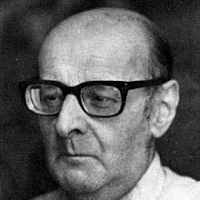
Jacques Bergier was a French writer and intellectual figure who shaped European “mysteries” culture in ways that overlap strongly with ufology. He mattered less as a UFO case investigator and more as a worldview architect: encouraging readers to treat anomalies, hidden history, and unconventional ideas as a legitimate domain of curiosity. For UAPedia, Bergier fits as a major cultural influence on how UFO-adjacent thinking spread in Europe.
Background
Bergier moved through postwar French intellectual and publishing environments that valued big ideas, provocative synthesis, and boundary-challenging narratives. He was comfortable blending science-flavored discussion with esoteric themes, which helped attract readers who wanted “serious wonder” rather than pure fantasy.
Ufology career
Bergier’s ufology role is adjacency and framing. He helped build an audience that sees UFOs as part of a broader hidden-reality puzzle rather than a narrow aviation mystery. That framing influences later generations of writers who treat UFOs, occultism, secret history, and high strangeness as one connected narrative map.
Early work (Year–Year)
1950s–1960s: He rose in prominence as postwar audiences sought new explanations and alternative narratives that challenged official histories. During this era, “mysteries publishing” became a cultural force, and Bergier helped define its tone: bold claims, suggestive connections, and science-tinged speculation.
Prominence (Year–Year)
1960s–1970s: Bergier became a pillar of French/European anomaly literature. His prominence came from influence on reading culture and publishing trends rather than from headline investigations.
Later work (Year–Year)
1970s–1980s: His work remained influential through citations, reprints, and the long life of “fantastic realism” as a style. Even readers who never identify as ufologists often absorb UFO-adjacent assumptions through these cultural channels.
Major contributions
He contributed a narrative framework where UFOs are one clue among many, and where orthodox explanations may be incomplete. This “big picture” style made it easier for UFO ideas to travel alongside occult and Fortean themes. He also helped legitimate curiosity itself as a stance—treating mystery as something to investigate rather than ridicule.
Notable cases
Bergier is not defined by one UFO incident. His “notable” impact is a body of synthesis and the influence it had on European anomaly culture.
Views and hypotheses
He is associated with the idea that reality contains genuine anomalies that deserve attention, and that official narratives may omit important possibilities. His work often invites readers to suspend certainty and explore alternative interpretations.
Criticism and controversies (if notable)
Critics argue that blending speculation with fact can mislead readers and inflate weak claims into big conclusions. Supporters argue that synthesis writing is valuable when it sparks investigation and preserves unconventional ideas that might otherwise be ignored. The controversy is essentially about epistemic boundaries: inspiration versus rigor.
Media and influence
Bergier influenced European anomaly publishing and helped create a cultural space where UFO interest could feel intellectually stylish rather than purely fringe. His influence persists through later authors and the continuing popularity of “hidden history” and “mysteries” media.
Selected works
He is best remembered through major writings and collaborations documented in standard biographies, often grouped under the “fantastic realism” umbrella.
Legacy
Jacques Bergier remains a key European cultural architect of UFO-adjacent thought—important not because he proved anything, but because he helped shape how millions learned to think about the unexplained.