Introduction
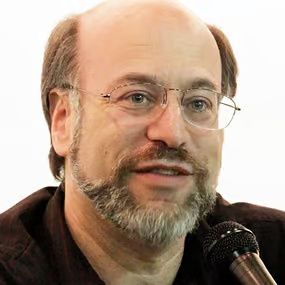
Loyd Auerbach is a parapsychologist and investigator whose work sits in the wider anomalous phenomena world where UFO topics often overlap with hauntings, psi claims, and other extraordinary experiences. In this ecosystem, he is typically positioned as a “method-first” voice—someone who emphasizes documentation, careful interpretation, and avoiding conclusions beyond the evidence.
Background
Auerbach is commonly described as a parapsychologist, author, and lecturer. His credibility in the paranormal community often comes from long-term involvement and a consistent emphasis on investigation process: what can be measured, what can be verified, and how to avoid common traps like confirmation bias and storytelling inflation.
Ufology career
Auerbach’s relationship to ufology is indirect but significant. Many UFO experiences are reported alongside other anomalous claims, and communities investigating one often investigate others. His contribution in the UFO-adjacent space is primarily methodological: encouraging investigators and audiences to separate (1) the witness experience, (2) the interpretation, and (3) the evidence that supports the interpretation.
Early work (Year–Year)
1980s–1990s: Built a public-facing profile through investigation work, writing, and lecturing. In this stage, investigators often become known for their stance: sensational certainty versus careful uncertainty. Auerbach’s reputation tends toward the latter.
Prominence (Year–Year)
1990s–2010s: Established as a stable name in paranormal investigation culture. During the rise of television paranormal entertainment, method-first voices became especially important as a counterbalance to “anything goes” conclusions and highly produced narratives.
Later work (Year–Year)
2010s–present: Continues public-facing work through lectures, consulting, and community roles. In many anomalous research communities, longevity and consistency are themselves influential: they create a standards baseline that newer investigators can adopt or react against.
Major contributions
Auerbach’s primary contribution is reinforcing standards—how to investigate, how to document, and how to speak responsibly about uncertainty. In UFO-adjacent culture, this can mean emphasizing witness care and accurate record-keeping while resisting the urge to “solve” an experience with an unearned conclusion.
Notable cases
He is generally not defined by one signature UFO case. His reputation is built more on broad participation and guidance across many investigations, often emphasizing consistent process rather than headline-grabbing conclusions.
Views and hypotheses
He is often associated with cautious framing: acknowledge the mystery, collect data, check alternative explanations, and avoid turning a single data point into a sweeping theory. This stance can frustrate audiences seeking certainty but is central to responsible investigation.
Criticism and controversies (if notable)
Method-first investigators are sometimes criticized by stronger belief communities for being “too skeptical,” and by skeptics for engaging the topic at all. The controversy is usually positional rather than personal: where to place the burden of proof and how to treat ambiguous evidence.
Media and influence
His influence comes through books, lectures, and community presence. In the broader “unexplained” ecosystem, such figures help shape norms—what kinds of claims are acceptable, what standards are expected, and how to treat witnesses ethically.
Selected works
Auerbach has authored multiple books and articles across parapsychology and paranormal investigation topics, commonly listed in public profiles and bibliographies.
Legacy
Auerbach’s legacy is that of a long-running, method-first voice in anomalous research—valued by audiences who want careful thinking rather than pure entertainment.