TL;DR Claim(s) to Fame
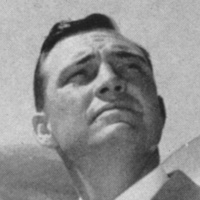
Kenneth Arnold was an American aviator whose June 24, 1947 report is widely treated as the first modern-era UFO sighting to explode into national media. His account is central to ufology history not only because of what he claimed to see, but because it helped trigger a cascade: widespread public attention, a wave of new reports, and the emergence of “flying saucer” as a cultural label.
Arnold was a pilot and businessman. His credibility as an aviation professional mattered because early UFO coverage often revolved around the perceived reliability of witnesses. In the immediate postwar period, aviation competence carried special weight, and the public was primed for airborne mysteries.
After his sighting, Arnold was drawn into the early flying-saucer moment as a public figure. He became involved in talking about other reports and was sometimes pulled into informal investigative roles. In early ufology history, this “first witness becomes investigator” pattern is common: the initial media spotlight makes the witness a hub for further stories.
1947: Arnold reported seeing nine objects near Mount Rainier. Media coverage of his description contributed to the birth of the “flying saucer” label and helped create a framework for how later witnesses described fast, unusual aerial objects.
1947–early 1950s: Arnold remained a first-wave figure as the phenomenon gained momentum. During this time, he is frequently referenced in connection with early report networks and the chaotic, rumor-rich environment where sensational claims, hoaxes, sincere sightings, and misunderstandings mixed together.
1950s onward: His legacy became primarily historical. Over time, Arnold’s report is treated as a foundational “start here” chapter: when authors explain the modern UFO era, they often begin with Arnold and then trace how public interest exploded afterward.
Arnold’s main contribution is catalytic. His report helped establish a modern template: credible witness + dramatic aerial description + media amplification + social contagion of reporting. In this sense, his importance is less about proving a particular explanation and more about marking the moment when UFOs became a sustained public phenomenon.
Mount Rainier sighting (1947) is his defining case. He is also linked historically to the Maury Island incident context, another early story that contributed to the atmosphere of confusion, intensity, and attention around flying-saucer claims in 1947.
Arnold is often portrayed as a sincere witness describing a puzzling observation. In many retellings, the “what were they?” question remains open, with interpretation debates focusing on perception, speed estimation, viewing angles, and how journalistic phrasing shaped the “saucer” concept.
Controversy typically centers on interpretation rather than personal scandal: whether the objects could have been misidentified aircraft, atmospheric effects, or something else. Another debate concerns language—how a description of motion and shape evolved into “saucer” imagery in public imagination.
Arnold’s influence is enormous in narrative history. He appears as a reference point in countless documentaries, books, and articles about “how the modern UFO era began.” His story illustrates how quickly an event can become a cultural phenomenon once media and public psychology interact.
Arnold is primarily known through interviews, reports, and historical documentation rather than a large authored bibliography. His legacy is carried by secondary works that recount and analyze the 1947 wave.
Kenneth Arnold remains one of the most historically pivotal figures in ufology: a single report that helped create the modern UFO era’s language, attention patterns, and social momentum.