Introduction
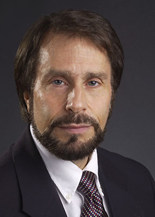
Stuart Appelle was an American psychologist known for engaging UFO- and abduction-related topics through the lens of perception, memory, and experience interpretation. In ufology, his role is most often described as academic-adjacent: he is not primarily a celebrity investigator, but a contributor to discussions about how extraordinary experiences are reported and understood.
Background
Appelle held academic roles and built expertise in psychology, which positioned him to comment on issues relevant to abduction narratives—particularly questions about belief, recall, and how certainty can form around unusual experiences. This background is important because abduction stories often involve altered states, sleep-related experiences, or memory reconstruction—areas where psychology matters.
Ufology career
His ufology involvement is best characterized as analytic. Rather than presenting a single grand theory, he contributed to an ongoing conversation: what can psychology say about anomalous reports, and where are the methodological pitfalls—especially when hypnosis is involved?
Earlys (Year–Year)
1970s–1980s: Built academic credentials and interests relevant to anomalous experience analysis. In this era, psychology increasingly intersected with ufology through debates about eyewitness reliability, false memory concerns, and how narratives form around ambiguous stimuli.
Prominence (Year–Year)
1980s–2000s: Became referenced in communities discussing anomalous experiences and the psychological dimensions of abduction reports. His contribution fits within a broader attempt to bring methodological clarity to a domain often dominated by highly confident personal testimony.
Later work (Year–Year)
2000s–2011: Continued engagement and was later remembered in anomalistic research circles as a serious contributor who treated unusual reports as psychologically meaningful even when their literal interpretation remained disputed.
Major contributions
Appelle helped keep the “psychology of experience” perspective present in abduction discourse. This includes emphasizing that an experience can feel real and be life-changing while still requiring careful analysis before drawing literal conclusions about what occurred.
Notable cases
He is not strongly associated with one famous case; instead, he is linked to the broader abduction research landscape. His “casework,” in effect, is the general body of abduction narratives and the methodological questions they raise.
Views and hypotheses
He is commonly associated with attention to perception and memory processes, especially where hypnosis is used. In abduction research, hypnosis can be seen either as a tool for recall or as a risk factor for suggestion—so contributors in this space often focus on how to avoid contaminating testimony.
Criticism and controversies (if notable)
Debates in this area typically revolve around hypnosis reliability and false memory risk. The controversy is less about one person and more about the field’s methods: what counts as evidence, and how easily narratives can be shaped by expectations.
Media and influence
His influence is stronger within research and discussion communities than mainstream media. Academic-adjacent figures often shape the “quality of conversation” rather than public excitement, pushing for careful framing and uncertainty acknowledgment.
Selected works
His contributions are usually referenced through biographies, community summaries, and anomalistic research discussions rather than a widely known single blockbuster publication.
Legacy
Appelle is remembered as a psychologist who engaged anomalous topics seriously and helped connect ufology-adjacent debates to psychology’s core concerns: perception, memory, and the interpretation of extraordinary experience.