Introduction
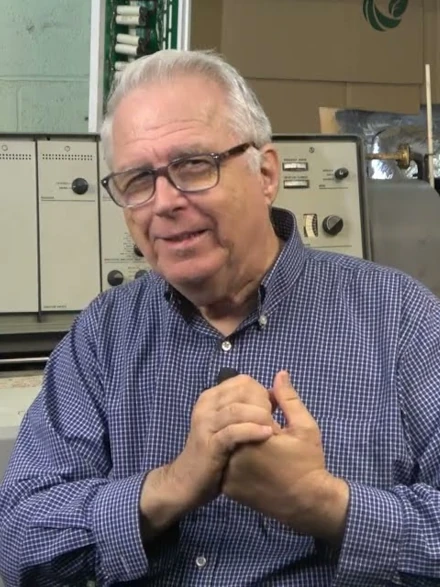
David Alzofon is an author and technology communicator best known in UAP-adjacent circles for advancing a family-linked body of “gravity control” and field-propulsion claims associated with his father, physicist Dr. Frederick Alzofon. While not a traditional case-file ufologist, David’s influence is significant within a modern branch of ufology that treats UAP as an engineering problem: “What propulsion principle would make the reported flight behavior routine?” His work combines historical narrative, proposed physical mechanisms, and advocacy for dissemination—arguing that a single underlying physics framework can explain multiple hallmark UAP characteristics, from axial symmetry and wingless flight to high acceleration without visible control surfaces.
Background
David Alzofon’s public biography spans writing, editorial work, and technology industry experience alongside a long-running involvement in speculative propulsion research communities. In his UAP-related identity, he is primarily presented as a steward and editor: interpreting, organizing, and extending his father’s technical claims into books and interviews designed for broad audiences. This “translator” role—bridging dense physics assertions, personal history, and UAP folklore—has shaped how his ideas spread, often through long-form interviews and conference-adjacent media rather than academic journals.
Ufology Career
David’s ufology relevance is centered on propulsion theory rather than investigation of sightings. He argues that recurring UAP descriptors—disc/cylinder/orb geometries, hovering with little noise, abrupt accelerations, and unusual “wobble” behaviors—are best understood as surface manifestations of a field-based propulsion architecture. In his framing, the UFO phenomenon becomes a set of engineering clues pointing toward one technological family. This approach places him in the “breakthrough propulsion” wing of ufology, where evidence is often treated as inferential: craft behavior implies mechanism, and mechanism implies specific experimental pathways.
Early Work (1980–2010)
In the early phase, David Alzofon’s role is typically described as internal and developmental: learning the conceptual system attributed to his father, attempting to translate it into intelligible narrative, and assembling materials and arguments for eventual publication. This period is less defined by public ufology presence and more by background preparation—forming a coherent storyline that links (a) particle-level assumptions about gravity, (b) proposed laboratory mechanisms for altering gravitational coupling, and (c) the observable flight “riddles” in UFO reports.
Prominence (2011–2018)
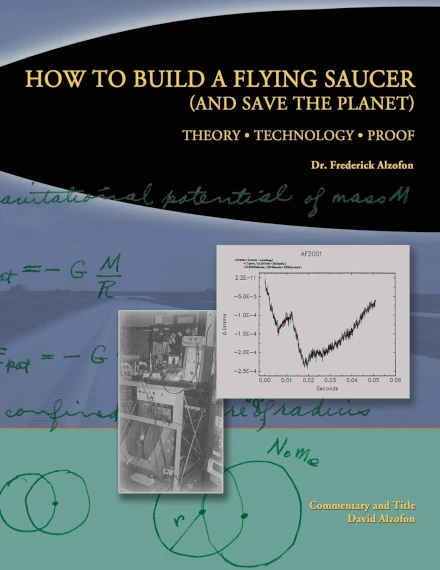
David Alzofon became more visible as an author and public explainer, culminating in a cluster of publications that established the core Alzofon “catalog” in UAP/alt-propulsion circles. These works typically blend (1) narrative history and motivation (“why this matters now”), (2) a proposed physical mechanism for gravity/inertia control, and (3) interpretive claims that the mechanism neatly matches UAP behavior. This era also marks the start of more sustained public engagement through interviews and communities focused on advanced propulsion discourse.
Later Work (2019–present
In the later phase, David’s profile grows via the interview ecosystem and propulsion-oriented communities that increasingly orbit the UAP topic. He continues to frame gravity control as both an explanatory key for UAP and a practical technology pathway with environmental and spaceflight implications. This period is also where critique intensifies: as his claims circulate more widely, skeptics focus on experimental reproducibility, measurement artifacts, and the absence of mainstream validation. The result is a polarized reception: supporters see a rare “complete” theory-to-device storyline; critics see an overconfident narrative that outruns proof.
Major Contributions
- Propulsion-first synthesis of ufology: reframing UAP reports as engineering evidence for a single “field drive” class of technology.
- Editorial/curatorial continuity: preserving, organizing, and extending the Alzofon family gravity-control narrative into a coherent public package.
- Popularization pipeline: pushing the ideas through books and long-form interviews that function as a de facto “alternative curriculum” for gravity-control believers.
Notable Cases
David Alzofon is not defined by one flagship sighting investigation. Instead, his “cases” are thematic bundles: the recurring observational motifs of UAP flight (axial symmetry, wingless craft, hovering, sudden acceleration, luminous effects, apparent g-force immunity) used as a composite target that his proposed mechanism claims to explain. In his presentation style, these motifs are treated as diagnostic signatures of field propulsion rather than as separate mysteries requiring separate explanations.
Views and Hypotheses
David Alzofon’s core hypothesis is that gravity/inertia can be engineered—altered in magnitude or coupling through controlled manipulation of matter at a deep physical level—and that such control enables the principal behaviors attributed to UAP. He commonly emphasizes that UFO shapes and behaviors are not arbitrary: axial symmetry is presented as a technological necessity, and reported “wobble/tilt/rotation” behaviors are treated as operational characteristics of field generation and stabilization. In this worldview, propulsion is not reaction mass ejection but an interaction with a surrounding field environment, producing lift and translation through engineered gradients or coupling changes.
Criticism and Controversies
The controversy surrounding David Alzofon is primarily evidentiary. Skeptics argue that claims of gravity/inertia control demand reproducible, instrumented demonstrations under rigorous controls; without that, the narrative risks becoming “physics-flavored” mythology. Critics also note that many experimental domains invoked by gravity-control advocates are prone to subtle artifacts: thermal drift, electromagnetic interference, buoyancy effects, vibration coupling, calibration bias, and analysis flexibility. Supporters counter that institutional inertia and funding barriers suppress high-risk research, and that the Alzofon framework is at least coherent enough to justify serious replication attempts.
Media and Influence
David’s influence is driven by book distribution and the long-form interview circuit. He is frequently positioned as both a technical explainer and a family-legacy advocate, and his appearances often function as a “gateway” for audiences entering gravity-control discourse from the UAP topic. Within alternative propulsion communities, he is treated as a named reference point for a specific mechanism (not merely “antigravity” in the abstract), which increases his memetic durability even among critics.
Legacy
David Alzofon’s legacy—regardless of whether the underlying claims ever gain mainstream validation—is the construction of a complete narrative bridge between ufology and engineering: from “UFOs do impossible things” to “here is the mechanism, here is the history, here is the proposed technology stack.” If future replication fails, his work will likely be cited as a case study in how persuasive synthesis can outpace proof. If any component validates, his role as curator and disseminator of the framework would become historically significant in the alternative propulsion lineage.