Introduction
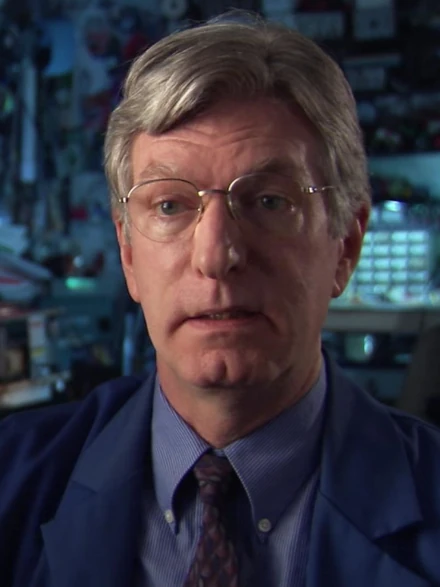
Tom Valone (often listed as Thomas F./Thomas J. Valone, PhD, PE) is an American researcher, editor, and science-communication figure best known for building one of the longest-running “frontier energy” curation platforms through the Integrity Research Institute (IRI). In ufology-adjacent culture, Valone is not primarily a sightings investigator; rather, he is treated as a key technical curator of ideas that enthusiasts connect to UAP performance narratives—especially electrogravitics (high-voltage propulsion claims), “zero-point energy,” and other proposed nonconventional energy/propulsion pathways. His influence comes from organizing information, publishing compilations, and hosting or participating in technical-style presentations that try to translate unusual claims into an engineering and experimental framing.
Background
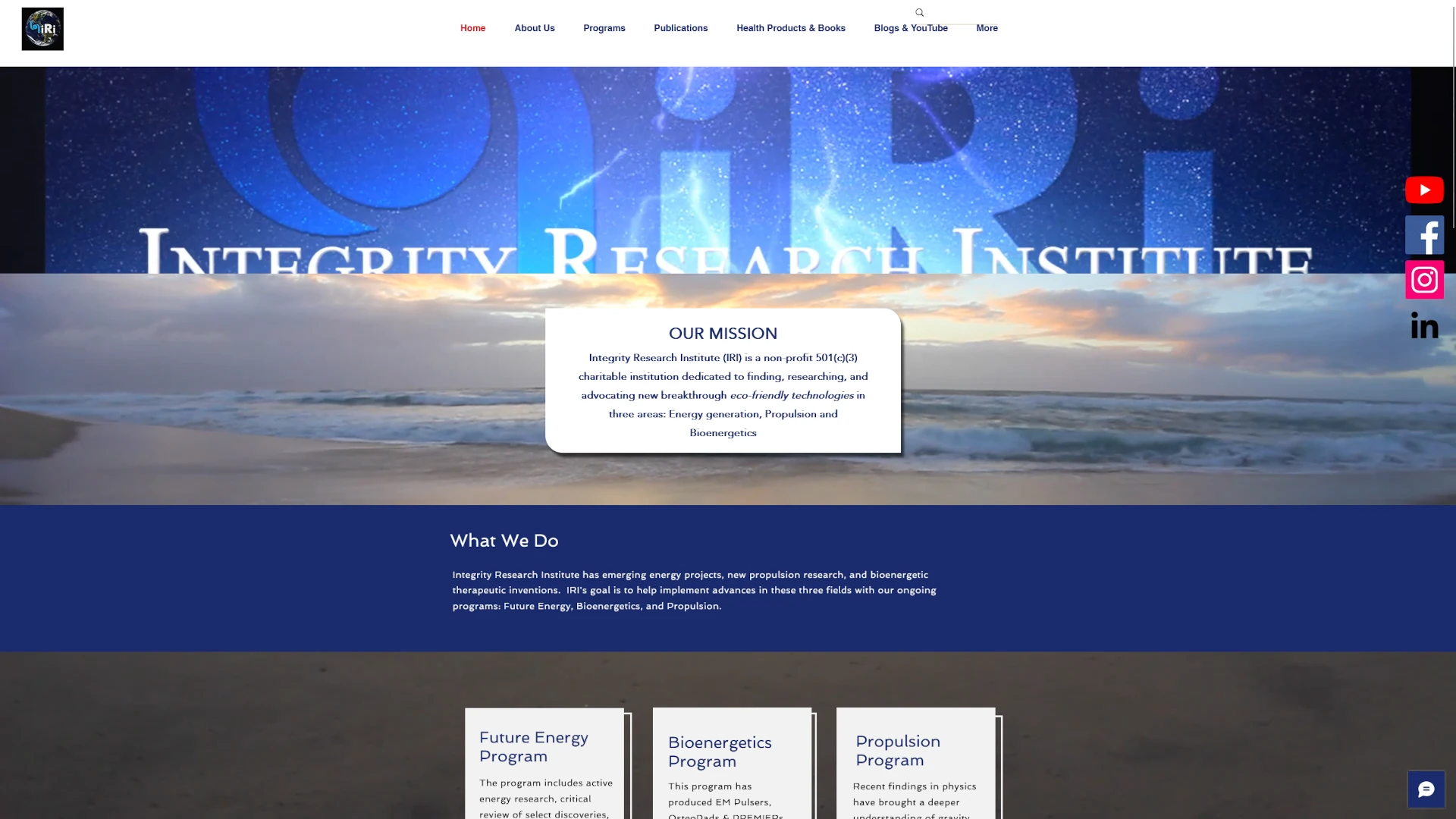
Valone’s public biography is strongly tied to his leadership of the Integrity Research Institute and his editorial role for the Future Energy newsletter/eNews. Across decades, he has positioned IRI as a hub for reporting and commentary on advanced energy, propulsion, and bioenergetic technologies—topics that range from mainstream-adjacent renewable/efficiency work to highly controversial claims that remain outside scientific consensus. A recurrent point of confusion in online searches is name overlap with unrelated academics; Valone’s “alt-propulsion” identity is most consistently anchored to IRI and to his publications on electrogravitics and zero-point energy.
Ufology Career
Valone’s relationship to ufology is indirect but important in the modern UAP landscape. As UAP discourse shifted toward “propulsion-first” explanations—where extraordinary flight behavior implies extraordinary physics—communities began elevating editors and presenters who provide technical narratives for how such capabilities might exist. Valone’s work became especially prominent because electrogravitics and vacuum-energy concepts are frequently invoked as candidate mechanisms for silent hovering, high acceleration, and “field drive” behavior. In this framing, Valone functions as a bridge: curating historical reports and contemporary claims into a continuous storyline that some audiences interpret as a suppressed or underfunded R&D domain.
Early Work (1985–1999)
Valone’s early influence is best understood as a “network-and-newsletter” phase—building a reputation as an information organizer, editor, and technical communicator. During this period, he cultivated the role that would define his later prominence: collecting scattered reports, conference papers, and experimental notes from disparate communities (inventors, small labs, defense-adjacent rumor networks, and alternative science writers) and packaging them into accessible editorial products. This foundation set the stage for his later anthologies and broader media presence.
Prominence (2000–2015)
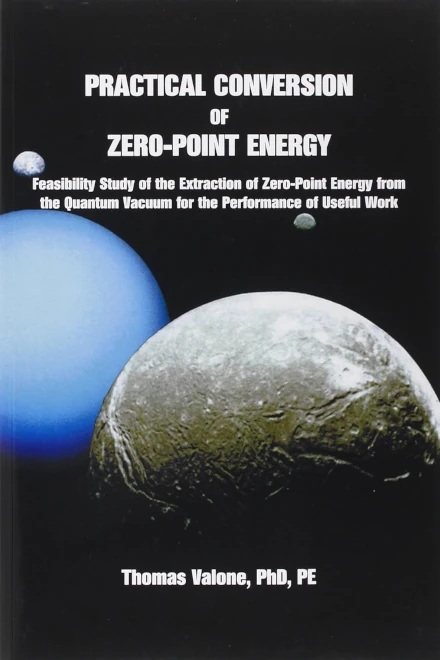
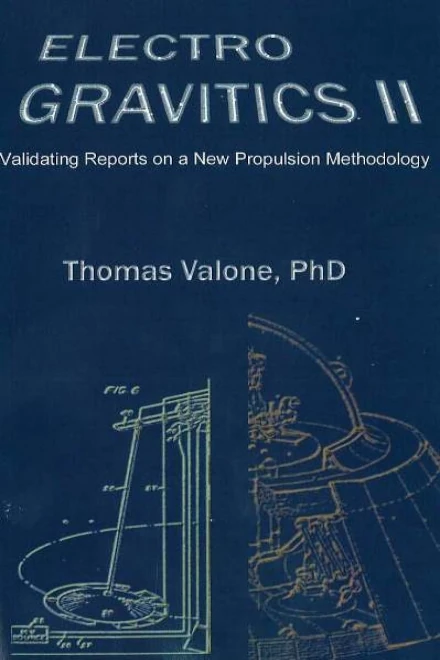
Valone’s prominence accelerated as internet distribution made niche technical content globally shareable. Two publications became signature anchors. First, “Electrogravitics Systems”—an edited compilation—was repeatedly cited as a primer/anthology for claims that high-voltage capacitive systems could produce anomalous thrust beyond conventional aerodynamic explanations. Second, “Zero Point Energy: The Fuel of the Future” helped popularize an accessible narrative around quantum vacuum energy as a potentially harvestable resource. Both works became canonical references in “breakthrough propulsion” circles: used less as definitive proof and more as curated gateways into a contested evidence landscape.
Later Work (2016–present
In later years, Valone’s public-facing role expanded further into conference presentations and interview-driven media. He appears within the Alternative Propulsion Engineering Conference ecosystem as a presenter on electrogravitics and related experimental playbooks, and he remains visible through IRI’s video/library ecosystem. This phase is characterized by a stronger emphasis on “how to test” and “what would constitute evidence,” even as many of the subjects he covers remain controversial. As UAP discussion became more mainstream, Valone’s older materials and frameworks were re-circulated as “precursor” literature for modern disclosure-era speculation about advanced propulsion and energy.
Major Contributions
- Editorial curation infrastructure: building IRI and Future Energy into a sustained pipeline for collecting and disseminating “frontier” energy/propulsion claims.
- Electrogravitics canon formation: helping standardize and preserve a body of electrogravitics references that later UAP-propulsion narratives heavily rely on.
- Accessible synthesis of controversial domains: translating highly technical or fragmentary material into books, summaries, and presentations aimed at engineers, enthusiasts, and media audiences.
Notable Cases
Electrogravitics as a recurring “UFO propulsion” candidate: Valone’s edited work is frequently used as a backbone reference whenever high-voltage capacitor thrust demonstrations (“lifters,” electrohydrodynamics debates, and “electrokinetic” claims) are discussed as potential stepping-stones to field propulsion.
Zero-point energy popularization cycle: Valone’s ZPE framing is often cited in disclosure-adjacent storytelling as a “missing energy source” that could make extraordinary craft feasible. Whether treated as visionary or speculative, it remains one of the most repeated energy narratives in UAP-adjacent media.
Views and Hypotheses
Valone’s public posture is generally “open but technical”: he argues that unconventional claims should be treated as testable hypotheses rather than dismissed purely by stigma, while also emphasizing engineering relevance—measurement integrity, repeatability, and plausible pathways to scaling. Across his published work, he frequently foregrounds three idea clusters: (1) high-voltage field effects and asymmetric geometry as potential thrust mechanisms, (2) the quantum vacuum as an underappreciated physical resource, and (3) biological/bioelectromagnetic interactions as a legitimate applied frontier. His critics view these clusters as too easily blending speculative interpretation with incomplete evidence; his supporters view them as a practical map of underexplored territory.
Criticism and Controversies
Valone’s controversies arise from curation choices more than personal scandal. Skeptical audiences argue that anthologies and newsletters can unintentionally “credibility-launder” weak claims by placing them alongside technical language, diagrams, and institutional references. In propulsion topics, critics emphasize that many reported anomalies can be reproduced by mundane effects (ion wind, thermal drift, vibration, buoyancy, EM interference with sensors) unless experimental controls are exceptionally strict. Supporters counter that mainstream funding rarely targets high-risk ideas, that historical programs may have left genuine leads, and that editorial hubs are necessary for accumulating enough signal to justify rigorous replication campaigns.
Media and Influence
Valone’s influence is primarily media- and document-mediated. He is widely referenced via his books, IRI newsletters, and conference talks, and he appears as an interview subject in alternative energy/propulsion programming. His role resembles that of a “technical narrator” within the alt-propulsion ecosystem: identifying what to pay attention to, proposing test directions, and providing conceptual continuity between older electrogravitics lore, modern UAP speculation, and broader frontier-energy discourse.
Legacy
Tom Valone’s legacy is best described as institutional curation for a controversial domain. Regardless of whether any specific “breakthrough” claim validates under rigorous replication, his platforms helped preserve and organize a body of material that would otherwise be scattered across obscure proceedings, personal archives, and disappearing web pages. In the UAP-adjacent world, that makes him a durable reference point: one of the figures who shaped how “advanced propulsion” is discussed, what historical threads are considered important, and what experimental pathways enthusiasts continue trying to turn into real engineering.