Introduction
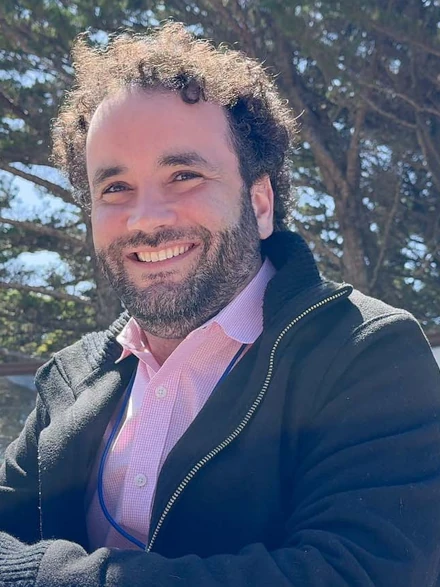
Mark Sokol is an independent researcher and entrepreneur in the modern “breakthrough propulsion” and UAP-adjacent technical subculture. He is best known as the founder of Falcon Space, a self-funded experimental effort that attempts to recreate, test, and iterate on a variety of unconventional propulsion claims—especially those that appear to promise “reactionless” thrust, inertial modification, or weight reduction. Sokol is also closely associated with the community-building side of fringe propulsion work, notably through his role in the Alternative Propulsion Engineering Conference (APEC). Unlike traditional ufologists who focus on witness testimony and case investigation, Sokol’s public identity centers on a single premise: if extraordinary craft performance is real, then the most productive path forward is laboratory experimentation aimed at isolating a physical effect and scaling it into an engineering system.
Background
Sokol is often described as an autodidact with a strong interest in applied physics and engineering. His public-facing work emphasizes workshop-and-lab execution over academic publishing, positioning Falcon Space as a pragmatic, iterative R&D environment. This background profile matters because “breakthrough propulsion” communities frequently divide into two camps: theorists who propose mechanisms and experimenters who attempt to validate them. Sokol has cultivated a reputation as a member of the latter group—an organizer and builder who tries to translate speculative claims into testable apparatus and measurable outcomes.
Ufology Career
Sokol’s relationship to ufology is indirect but influential. He is not primarily a sightings investigator; rather, he treats UAP narratives as motivational context for technological research. His “ufology career” emerges from repeated participation in UAP media and podcast circuits where he discusses UFO reverse engineering, rumored advanced materials, and experimental strategies for identifying anomalous force production. In these contexts, his work is frequently framed as “UFO propulsion research,” and his lab is positioned as a grassroots attempt to explore the physics that enthusiasts believe may underpin extraordinary craft behavior.
Early Work (2010–2018)
Sokol’s early period, as reflected in public community attention, involves the formation of a distinct identity in alternative propulsion circles: a hands-on experimenter oriented toward replicating famous “reactionless” or “field propulsion” claims and sorting strong effects from noise. This stage is characterized by exploratory breadth—evaluating multiple ideas and building the informal network connections that later supported conference formation and larger-scale lab ambitions.
Prominence (2019–2023)
Sokol’s prominence increased as UAP discourse moved further into mainstream awareness and as long-form podcasts became the primary distribution channel for alternative propulsion narratives. During this period, he became widely referenced as the founder of Falcon Space and as a co-founder of APEC, with recurring appearances in UAP-focused interviews. His on-camera lab tours and technical discussions helped crystallize Falcon Space as a recognizable brand: a physical space where controversial ideas are pursued through instrumentation, prototyping, and iterative measurement rather than purely rhetorical debate.
Later Work (2024–present
In the most recent phase, Sokol’s public profile has leaned heavily into two themes: (1) UAP reverse-engineering as an engineering problem, and (2) Dynamic Nuclear Polarization/Orientation as a candidate pathway to anomalous force/weight effects. This later work is often presented as an attempt to connect older “gravity control” claims to a modern experimental methodology—emphasizing reproducibility, chain-of-custody thinking for alleged materials, and laboratory process. At the same time, increased visibility has also increased scrutiny, intensifying debates over experimental controls, measurement artifacts, and how strongly any results can be interpreted.
Major Contributions
- Falcon Space lab platform: establishing a visible, experiment-forward venue for unconventional propulsion testing outside conventional academic/industrial programs.
- Community infrastructure (APEC): helping organize a conference ecosystem where fringe propulsion researchers can present ideas, apparatus, and results.
- DNP/DNO advocacy in propulsion talk: elevating nuclear-spin alignment concepts into a central “candidate mechanism” within UAP-propulsion discussion culture.
Notable Cases
“UFO reverse-engineering” media cycle: Sokol has become strongly associated with the idea that UAP claims can be approached through practical engineering replication. This is less a single historic case than a recurring public narrative: that the technological question can be attacked by building test articles and measuring effects with increasing rigor.
DNP/DNO as a weight/thrust hypothesis: A central “case cluster” in Sokol’s work is the family of claims that nuclear spin polarization/orientation might correlate with measurable macroscopic force anomalies. In the UAP-adjacent ecosystem, this cluster is often treated as a modern route to “inertial modification,” and Sokol’s lab work is presented as an attempt to make these claims experimentally legible.
Alleged anomalous materials testing: Sokol’s broader ecosystem has included interest in purported “UFO materials,” sometimes framed as inputs for propulsion-related analysis. In such cases, notability hinges on provenance and verification rather than on the material’s mystique.
Views and Hypotheses
Sokol’s public-facing worldview is propulsion-first and effect-first: identify a repeatable force anomaly under controlled conditions, then refine the apparatus until the effect can be characterized, scaled, and engineered. His most distinctive hypothesis emphasis is that certain “gravity control” or “weight reduction” claims might be probed through nuclear-spin alignment processes (often discussed under DNP/DNO umbrellas). He typically frames this not as proof of UFO technology, but as an experimental direction that—if validated—could reframe propulsion possibilities and provide a physics bridge to some UAP performance narratives.
Criticism and Controversies
Sokol operates in a domain where criticism is structural and unavoidable. The strongest critiques center on experimental rigor: whether small observed effects can be separated from thermal drift, vibration, buoyancy changes, electromagnetic interference with sensors, scale nonlinearity, or other artifacts that frequently mimic “anomalous thrust” in high-energy lab setups. Another controversy concerns inference: whether association with UAP narratives encourages interpretive overreach, making preliminary or ambiguous results feel confirmatory. Supporters counter that mainstream institutions rarely fund high-risk ideas and that independent labs are necessary to explore neglected corners of the experimental landscape.
Media and Influence
Sokol’s influence is primarily mediated through long-form interviews, lab tours, and conference visibility. His role resembles a hybrid of experimenter and public explainer: he provides a narrative of “hands-on propulsion R&D” that many UAP audiences find compelling, while also shaping which technical ideas become fashionable within the alternative propulsion community. In the modern ecosystem, visibility itself can function as influence—by steering attention, attracting collaborators, and defining the vocabulary used to discuss controversial physics claims.
Legacy
Mark Sokol’s developing legacy is that of a contemporary “garage-to-lab” propulsion figure: someone attempting to formalize fringe propulsion work into an experimental pipeline, complete with a community platform and recurring media presence. Whether his central hypotheses ultimately mature into validated physics or fade under improved controls, his impact on the culture of UAP-adjacent propulsion discussion—especially the emphasis on building apparatus and attempting replication—has already made him a durable reference point in the alternative propulsion landscape.