Introduction
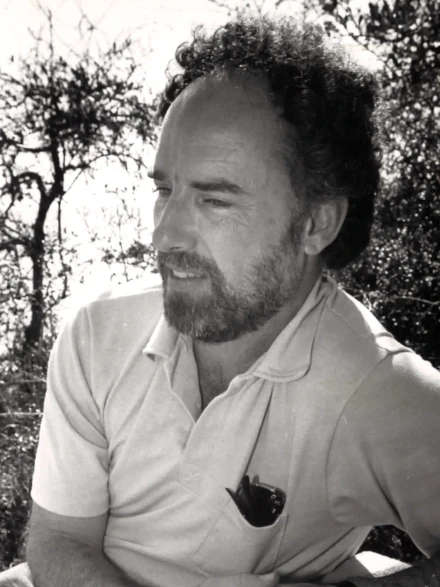
Ed Walters is an American UFO claimant best known for the Gulf Breeze incident(s) of the late 1980s. Walters’ photographs and testimony turned Gulf Breeze, Florida into a modern “UFO hotspot,” fueling books, TV segments, and a national debate about photographic evidence and the sociology of belief.
Background
Walters emerged in an era when consumer cameras, tabloid-style TV, and expanding UFO organizations created a ready pipeline for sensational imagery. Gulf Breeze’s setting—suburban-coastal, visually cinematic, and socially networked—helped transform a localized claim into a national narrative.
Ufology Career
Walters’ role in ufology is primarily that of a producing witness: the person whose photos and story powered an entire wave of interest. Unlike researchers who accumulate multiple cases, Walters is tightly bound to a single flap whose credibility became intensely contested.
Early Work (1987-1988)
The earliest phase involved initial sightings, rapid escalation of claims, and the appearance of photographs that quickly entered UFO media channels. This period created the “Gulf Breeze identity” as a modern photographic case.
Prominence (1988-1992)
At peak prominence, Gulf Breeze was treated as a high-strangeness location and a potential “best evidence” case due to multiple photos and recurring reports. The same publicity also intensified scrutiny, including forensic critiques and hoax hypotheses.
Later Work (1993-present
The later era is defined by legacy conflict: believers cite the case as underappreciated evidence; skeptics cite it as a canonical demonstration of how convincing hoaxes can be when amplified by media ecosystems.
Major Contributions
- Created one of the most famous late-1980s UFO photo narratives in the United States.
- Accelerated public debate on standards for photographic evidence in ufology.
- Provided a long-lasting case study in “flap sociology”: rumor spread, community polarization, and media feedback loops.
Notable Cases
Gulf Breeze UFO incidents: The cluster of claims, photographs, and follow-on sightings associated with Walters and the Gulf Breeze area.
Views and Hypotheses
Walters maintained his images and experiences as genuine. Ufologists variously interpret Gulf Breeze as repeated visitation or a localized hot zone. Skeptical explanations range from deliberate hoaxing to misinterpretation compounded by social contagion.
Criticism and Controversies
Gulf Breeze is emblematic of photographic controversy: image anomalies, chain-of-custody gaps, replication possibility, and the discovery/claim of physical props all became central to debate. The controversy persists because the case sits between “plausible hoax mechanics” and “enduring witness insistence.”
Media and Influence
The case’s influence is disproportionately media-driven: it became a template for how local sightings can become a national story via newspapers, TV, and later internet archives.
Legacy
Ed Walters remains a defining figure in the modern UFO “evidence wars,” where the same case can be presented as landmark proof or landmark fabrication depending on interpretive allegiance.