Introduction
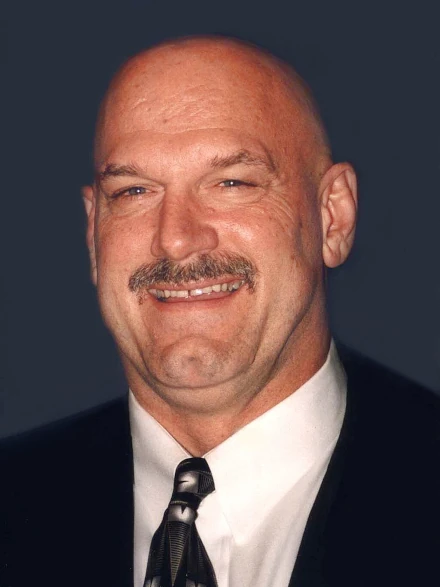
Jesse Ventura is an American public figure—politician, wrestler, actor, and media personality—whose relevance to ufology comes primarily from hosting conspiracy-oriented television. Rather than functioning as an investigator in the classical ufology sense, Ventura’s role is that of a cultural amplifier: presenting UFO-adjacent themes as plausible, suppressed, and worthy of suspicion-driven inquiry.
Background
Ventura’s background in entertainment and politics positioned him as an effective “outsider truth-teller” persona. This persona maps neatly onto UFO culture, where skepticism toward official narratives is often treated as the starting point for inquiry.
Ufology Career
Ventura’s ufology footprint is media-driven: episode narratives, on-screen confrontations with authority, and the packaging of UFO topics within broader conspiratorial frameworks (secret weapons, classified programs, intelligence deception).
Early Work (Year–Year)
2000s: Ventura’s public commentary increasingly overlapped with popular conspiracy culture, setting the stage for a TV format that could include UFO themes as part of a wider “hidden government” narrative.
Prominence (Year–Year)
2009–2012: Peak prominence for ufology audiences through his conspiracy TV series, which featured UFO-adjacent episodes (e.g., Area 51 and paranormal hotspots). The show’s structure—travel, interviews, confrontation, insinuation—mirrored modern “disclosure entertainment.”
Later Work (Year–Year)
2013–present: Ventura remains a referential figure in the genre: clips circulate as “proof-of-suppression” media, and his commentary is often cited by audiences who treat government secrecy as the default explanation for UFO ambiguity.
Major Contributions
- Mainstream amplification: Brought UFO-adjacent themes into broader pop-conspiracy television.
- Rhetorical framing: Reinforced “cover-up” and “miseducation” interpretations of UFO history.
- Gateway effect: Introduced casual audiences to UFO mythology nodes (Area 51, secret bases, hotspots).
Notable Cases
Ventura is not primarily tied to a specific witness case; his “cases” are TV topics—locations and narratives with established UFO lore. His work is best understood as themed storytelling rather than case-file investigation.
Views and Hypotheses
Ventura’s most ufology-relevant stance is suspicion of official narratives: the belief that secrecy and misdirection are structural features of modern governance. In this framing, UFOs can function either as a real hidden program, a cover for other secrets, or a confusion-management tool.
Criticism and Controversies
Critics argue that conspiracy television incentivizes insinuation over evidence and can blur the line between entertainment and factual investigation. Supporters argue the genre functions as an adversarial prompt: forcing public discussion about secrecy even if specific claims remain unverified.
Media and Influence
Ventura’s influence is strongest as a media node: clips, quotes, and episode themes that remain shareable artifacts in UFO/conspiracy ecosystems. He helped cement a style of “UFO investigation” defined by confrontation, secrecy, and narrative implication.
Legacy
Within ufology culture, Ventura’s legacy is not a theory or a dataset, but an aesthetic: the suspicion-driven, location-based, TV-investigation approach that continues to dominate popular UAP media.