Introduction
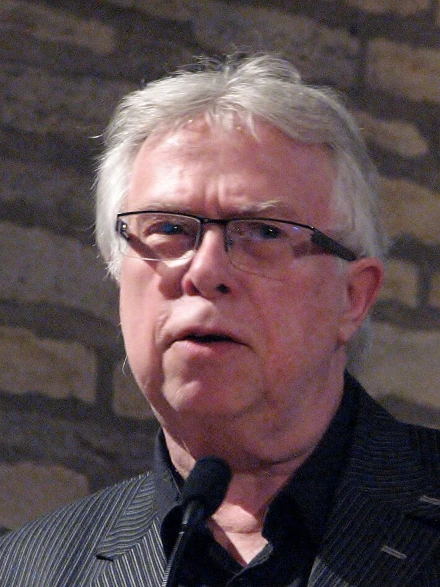
Igor Volke was an Estonian ufologist and anomaly researcher best known for building an organized framework for collecting reports of UFO sightings and related “environmental anomalies.” Unlike many Western ufologists whose careers revolve around international conferences and English-language publishing, Volke’s significance is strongly national: he functioned as Estonia’s primary public interpreter of UFO and anomalous-event reports for decades.
Background
Volke’s professional life outside ufology gave him a grounded “everyman” profile that played well in media: a practical citizen who nonetheless took witness testimony seriously. This hybrid identity—civic professional by day, anomaly registrar by vocation—helped him attract reports from ordinary people who might otherwise avoid stigma.
Ufology Career
Volke’s core contribution was institutional rather than purely interpretive: he aimed to register, classify, and compare cases. He treated UFO reports as part of a larger spectrum including poltergeist-like disturbances, unusual lights, and “place-based” anomalies—suggesting that witnesses often experience clusters of odd events, not isolated sightings.
Early Work (Year–Year)
1960s–1984: Interest developed during the Cold War era, when aviation secrecy, rare atmospheric events, and public curiosity produced recurring sighting narratives. Volke increasingly positioned himself as a collector of accounts, trying to preserve details before rumor and retelling eroded the record.
Prominence (Year–Year)
1985–2000s: The founding of AKRAK marked the beginning of a structured national collection effort. Over time he became a recurring media guest, often asked to contextualize “what people are seeing” and why anomaly reports persist regardless of official skepticism.
Later Work (Year–Year)
2010s–2020s: Volke continued publishing and commenting, often widening scope to “X-files” style environmental anomalies. His later-era work emphasized public education: how to report sightings, what details matter, and why some stories remain unresolved.
Major Contributions
- National registry model: Promoted consistent intake and categorization of anomaly reports.
- Public normalization: Reduced stigma for witnesses by offering a known reporting channel.
- Local-case preservation: Helped retain Estonia-specific case history in books and media archives.
Notable Cases
Volke’s fame rests less on a single “headline case” and more on the cumulative weight of case accumulation. He frequently discussed recurring categories—unusual lights, low-flying silent objects, and location-linked anomalies—often emphasizing that patterns emerge only when many small reports are preserved.
Views and Hypotheses
Volke generally avoided a single definitive explanation, instead presenting a spectrum of possibilities: misidentifications, rare natural phenomena, psychological effects, and a remainder category of “unknowns.” He often implied that the phenomenon is broader than “nuts-and-bolts craft,” given the overlap with other anomaly experiences.
Criticism and Controversies
Skeptics argue that expanding UFO study to include poltergeists and environmental anomalies dilutes rigor and invites suggestion-driven reporting. Supporters argue the opposite: that witnesses report what they experience, and the data should be collected first, theorized second.
Media and Influence
Volke’s media presence made him the default spokesperson for “unexplained phenomena” in Estonia, influencing how the public narrates sightings and where they take their stories. He helped make civilian reporting culturally acceptable even when official explanations were dismissive.
Legacy
Igor Volke’s lasting legacy is infrastructural: he helped build a recognizable national framework for anomaly testimony, ensuring that Estonia’s UFO folklore, witness reports, and modern sightings remain part of a preserved public record.