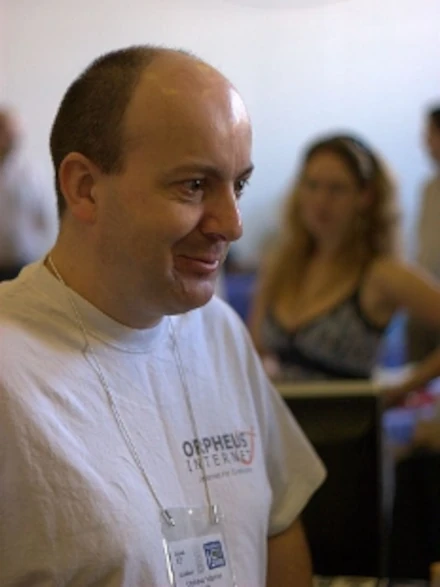
Introduction
Paul Vigay was a British computer consultant whose public notoriety came from crop-circle and UFO-adjacent research. Within the crop-circle subculture, he was repeatedly cited as a technically minded analyst who treated certain formations as structured “signals” rather than casual vandalism.
Background
Vigay’s technical background in computing shaped his public posture: he approached crop-circle geometry as something that could be measured, modeled, and compared. This gave his work a semi-technical aura that appealed to audiences seeking an “engineer’s” validation of anomalous claims.
Ufology Career
Although often categorized as a ufologist, Vigay’s center of gravity was crop-circle interpretation and the belief that some formations implied nonhuman intelligence, hidden messages, or advanced mathematics. His ufology relevance largely derives from the frequent cultural linkage between crop circles and UFO narratives.
Early Work (Year–Year)
1990s–early 2000s: Vigay emerged amid the boom years of crop-circle attention. He developed and shared analytical frameworks and computational tools to describe formation structure, symmetry, and motif recurrence.
Prominence (Year–Year)
Early 2000s–2009: His prominence grew as online communities circulated “decoded” interpretations. Vigay’s work occupied a niche between open-ended pattern analysis and strong claims of intentional, information-bearing design.
Later Work (Year–Year)
2009: Vigay’s sudden death fueled later speculation in fringe communities, with some implying foul play or “silencing,” despite the lack of mainstream corroboration for such narratives.
Major Contributions
- Technical framing: Helped popularize the idea that crop circles could be analyzed like engineered designs.
- Tooling and documentation: Encouraged repeatable measurement, geometric decomposition, and motif comparison.
- Community influence: Became a cited authority for those treating crop circles as anomalous intelligence artifacts.
Notable Cases
Vigay is associated with analysis of complex UK crop formations, especially those presented online as “encoded” or mathematically significant. His notoriety is tied less to single named cases than to recurring analytical claims across multiple formations.
Views and Hypotheses
He leaned toward interpretations that treated some formations as purposeful signals and downplayed purely human prank explanations for select high-complexity designs. He often framed the phenomenon as an information puzzle rather than an eyewitness-driven mystery.
Criticism and Controversies
Critics argue that crop-circle interpretation can become pattern projection: complex geometry does not necessarily imply nonhuman origin, and human circle-makers have repeatedly demonstrated high sophistication. Skeptics also challenge “decoded message” claims as subjective, non-falsifiable, and culturally primed.
Media and Influence
Vigay’s influence spread primarily through online archives, crop-circle forums, and secondary citation by UFO-oriented channels and documentaries. His legacy is strongest in the “technical crop-circle” niche.
Legacy
Paul Vigay remains a recognizable name in crop-circle lore for bringing computational aesthetics and analytic language into a domain dominated by narrative speculation, even as debates over authorship (human vs anomalous) remain unresolved.