Introduction
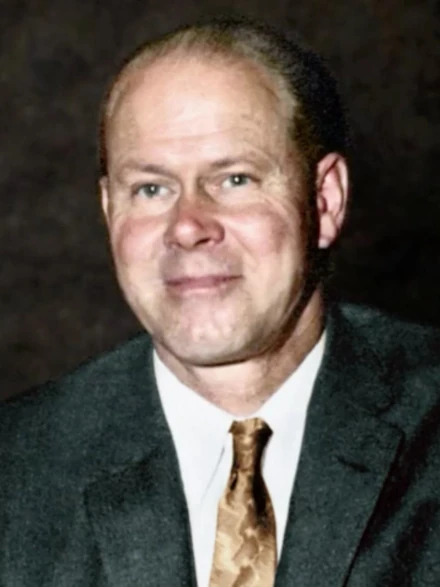
George Van Tassel was a prominent American contactee-era UFO personality whose influence came less from investigative casework and more from a charismatic synthesis of spiritual cosmology, “space brother” narratives, and alternative technology claims. He is most associated with Giant Rock in the Mojave Desert and the Integratron—an iconic dome-like structure he said was designed via extraterrestrial guidance.
Background
Van Tassel’s early life and practical skills—mechanical aptitude, aviation interests, and a strong self-directed confidence—fed into a public persona of the practical visionary: someone who presented extraordinary claims with an inventor’s tone. In the postwar American environment of rockets, secrecy, and popular fascination with “flying saucers,” contactees like Van Tassel offered a hopeful, quasi-religious alternative: benevolent intelligences warning humanity and offering advanced knowledge.
Ufology Career
Van Tassel’s UFO career belongs to the “contactee” tradition rather than modern investigative ufology. He emphasized communication, instruction, and moral or civilizational warnings, positioning himself as an intermediary between humanity and a broader cosmic order. His activities blurred boundaries between UFO belief, new religious movements, and alternative science.
Early Work (Year–Year)
Late 1940s–mid 1950s: Van Tassel became associated with Giant Rock and began articulating contact narratives. He framed his experiences as direct encounters and communications that carried technical and spiritual directives—often involving energy, vibration, and the destiny of humankind.
Prominence (Year–Year)
Mid 1950s–1960s: He reached peak prominence through the Giant Rock Spacecraft Conventions, which drew large crowds and became a cultural node for contactee networks. During this era he promoted the Integratron as a serious engineering-spiritual project, frequently describing it as a functional device rather than symbolic architecture.
Later Work (Year–Year)
1970s: As mainstream UFO culture shifted toward abductions, investigations, and government secrecy narratives, the contactee era’s optimistic tone waned. Van Tassel remained associated with Integratron lore and the enduring mythology of Giant Rock as a “thin place” for anomalous phenomena.
Major Contributions
- Contactee cultural infrastructure: Created major gatherings that helped consolidate the mid-century “space brother” subculture.
- Integratron as UFO icon: One of the most visually enduring “UFO-era structures,” merging sacred-architecture aesthetics with techno-mysticism.
- Popularization of “received technology”: Advanced the template of inventor-prophet receiving designs from nonhuman intelligences.
Notable Cases
Van Tassel is less tied to a single famous “sighting case” and more to an extended narrative: repeated communications, ongoing instructions, and the Integratron project as the “material evidence” of contact. Giant Rock itself became a repeated focal point for stories of lights, landings, and metaphysical encounters within contactee communities.
Views and Hypotheses
His worldview typically combined: (1) benevolent extraterrestrials, (2) spiritual evolution of humanity, and (3) a belief that certain technologies (energy, vibration, rejuvenation) could transform civilization. He often implied that governments and institutions suppressed or failed to recognize transformative knowledge.
Criticism and Controversies
Critics characterize Van Tassel as emblematic of contactee-era credulity: extraordinary claims presented without rigorous verification, plus technology claims lacking reproducible demonstrations. Supporters see him as a sincere visionary who created a durable mythos and community infrastructure that influenced later New Age UFO movements.
Media and Influence
Van Tassel’s influence persists through Integratron tourism, documentaries about contactees, and the ongoing symbolic power of Giant Rock in American UFO geography. He remains a key reference point for historians of ufology tracing the evolution from optimistic contact narratives to later secrecy and abduction paradigms.
Legacy
His legacy is the template of the UFO contactee as builder and organizer: a figure who produced a physical monument (Integratron), assembled mass gatherings, and framed UFO contact as a moral-technical intervention in human history.