Introduction
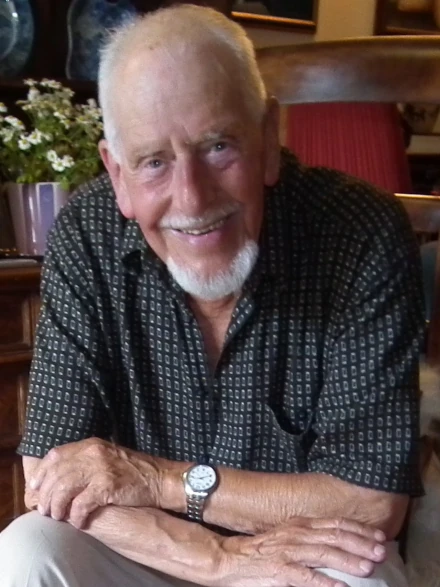
Peter Underwood (1923–2014) was an English author, broadcaster, and parapsychologist whose work helped define popular paranormal investigation in postwar Britain. While he is not primarily identified as a UFO investigator, Underwood is frequently included in the broader “ufology-adjacent” ecosystem because the UFO field historically overlaps with Fortean and psychical-research communities—shared conferences, publishers, magazines, and media platforms that treat anomalous phenomena as a unified subject area. Underwood’s reputation rests on his methodical cataloging of alleged hauntings and his sustained engagement with high-profile cases such as Borley Rectory.
Background
Underwood’s early interest in the paranormal was shaped by formative personal experiences and by exposure to a British cultural milieu where ghost stories, folklore, and psychical research retained strong public appeal. He developed a career that blended publishing, archival work, correspondence with earlier investigators, and on-site inquiry. Over decades he positioned himself as a pragmatic compiler of reports: someone who sought to preserve testimony, locate documentary traces, and map claims onto specific sites, rather than offering purely literary ghost stories.
Ufology Career
Underwood’s “ufology career,” strictly defined, is limited. His relevance to UFO history is chiefly contextual: he operated in an era when bookshops, radio programs, and paranormal societies commonly treated UFOs, ghosts, ESP, and cryptids as neighboring domains. Within that ecosystem, Underwood functioned as a respected elder figure in anomalistics—his presence and credibility lending weight to the broader notion that “unexplained phenomena” merited documentation. Consequently, ufologists and UFO-curious audiences often encountered Underwood through the same cultural channels that circulated UFO narratives.
Early Work (1940s–1970)
Underwood built his reputation through years of correspondence, society involvement, and investigative legwork. He engaged seriously with case histories, tracing witness chains and locating archival references. This long apprenticeship culminated in a distinctive publishing approach: the “gazetteer,” a geographically organized catalog of alleged hauntings that treated sites as entries rather than as isolated stories.
Prominence (1971–1985)
Underwood’s prominence accelerated with the publication of his landmark gazetteer works, which created a repeatable consumer format: a comprehensive, browsable reference for readers interested in visiting locations or comparing recurring motifs. In an era before internet databases, these compilations served as de facto indexes for enthusiasts, journalists, and TV producers. Underwood also became a familiar broadcast voice, translating archives and field notes into accessible narratives for mass audiences.
Later Work (1986–2014)
In his later decades, Underwood continued publishing, revisiting classic cases, and participating in a media environment increasingly shaped by documentaries and “investigation” entertainment. His standing as an authority figure was reinforced by longevity and by the breadth of his compiled material. Even as skeptical critiques of classic haunting narratives grew louder, Underwood’s work retained influence because it preserved witness names, dates, locations, and bibliographic trails—raw material that later critics and believers alike could mine.
Major Contributions
- Gazetteer model for paranormal reference: helped establish location-indexed compendiums as a core genre of paranormal publishing.
- Case-history preservation: maintained chains of testimony and archival references for famous British haunting claims.
- Public-facing psychical research: served as a bridge between specialist societies and mainstream audiences via broadcasting and popular books.
Notable Cases
Borley Rectory: Underwood is strongly associated with the continuing afterlife of this case, treating it as an evolving historical dossier rather than a closed legend.
Regional hauntings across Britain: through his gazetteers he effectively “curated” a national map of the haunted landscape, selecting, summarizing, and normalizing a wide range of claims.
Views and Hypotheses
Underwood generally framed hauntings as matters of testimony, environment, and historical continuity. He favored compilation and site-based comparison over single “silver bullet” explanations, often presenting competing interpretations (folklore, misperception, fraud, psychological factors, or genuine anomaly) while emphasizing the importance of preserving accounts. This approach resembles certain strands of ufology that prioritize case catalogs and repeatable patterns over definitive conclusions.
Criticism and Controversies
Critics have argued that classic haunting literature can amplify unreliable testimony and that gazetteer formats risk granting “reference-book authority” to weak cases. Underwood himself became involved in disputes about sourcing, journalistic quotation, and the boundary between narrative entertainment and evidential rigor—controversies that mirror longstanding debates within ufology about standards of proof, witness reliability, and the role of media sensationalism.
Media and Influence
Underwood’s work influenced publishers, tour operators, and television producers by providing a ready-made index of locations and narratives. His style—part historian, part investigator—helped define the persona of the modern “paranormal researcher” and contributed to the blending of Fortean themes (including UFOs) into a single entertainment-and-inquiry marketplace.
Legacy
Underwood’s enduring legacy is genre-defining: the “haunted Britain” reference tradition owes much to his cataloging model. Even for readers who reject haunting claims, his books are frequently treated as cultural artifacts that document what communities believed, repeated, and visited. In ufology-adjacent contexts, he represents the continuity between mid-century psychical research culture and the later mass-media boom in “unexplained” phenomena programming.