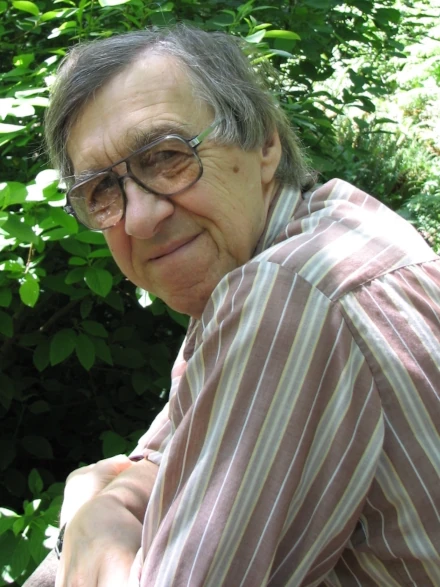
Introduction
Charles T. Tart was an American psychologist and parapsychologist widely known for his foundational work on altered states of consciousness. Although not a conventional UFO case investigator, Tart became influential in UFO-adjacent culture because many UAP narratives—especially abduction and high-strangeness accounts—are mediated through altered states, memory questions, and extraordinary subjective experience.
Background
Tart’s academic work spanned consciousness research, transpersonal psychology, and parapsychology. He helped create language and frameworks for discussing unusual states without immediately reducing them to pathology—an approach that appeals strongly to experiencer communities.
Ufology Career
Tart’s connection to ufology is conceptual. He contributed to a toolkit for interpreting anomalous experiences—sleep paralysis, out-of-body narratives, trance states, and culturally shaped perception—often discussed alongside abduction and contact claims.
Early Work (Year-Year)
Early publications focused on mapping altered states and legitimizing their study as a psychological domain. This work later became foundational for many anomaly-oriented writers seeking a “serious” vocabulary for extraordinary experiences.
Prominence (Year-Year)
Prominence grew as his books became standard references and as “consciousness” frameworks became central in New Age and high-strangeness cultures. Tart’s ideas were frequently adapted into UFO discourse as explanations, amplifiers, or interpretive lenses.
Later Work (Year-Year
Later influence remained strong through citations and integration into transpersonal and paranormal communities. Tart continued to be referenced in debates about whether “anomalous experience” points to external phenomena or to the flexibility of human perception.
Major Contributions
- Defined core language for discussing altered states in a non-dismissive but structured way.
- Provided conceptual bridges between psychology and paranormal/anomaly interpretation.
- Influenced experiencer-centered approaches in UFO-adjacent communities.
Notable Cases
Tart’s notable contributions are less about individual UFO incidents and more about experiments, frameworks, and interpretive models that later UFO writers and experiencer researchers draw upon.
Views and Hypotheses
Tart argued that consciousness is shaped by culture and training, and that altered states may reveal capacities or experiences not captured by ordinary waking cognition. This can be read skeptically (as psychology) or metaphysically (as access to broader reality), which is why he is influential across competing camps.
Criticism and Controversies
Critics contend that parapsychology lacks robust replication and that openness to paranormal interpretations can blur scientific rigor. Supporters argue that excluding anomalous reports a priori is itself unscientific and that subjective experience deserves disciplined study.
Media and Influence
Tart’s influence is persistent in podcasts, books, and online discussion where UAP claims meet consciousness claims. His work gives “intellectual permission” to discuss extraordinary experience in quasi-scientific terms.
Legacy
Tart’s legacy is foundational in consciousness studies and transpersonal psychology, and enduring in high-strangeness cultures where UFO encounters are treated as part of a broader map of extraordinary human experience.