Introduction
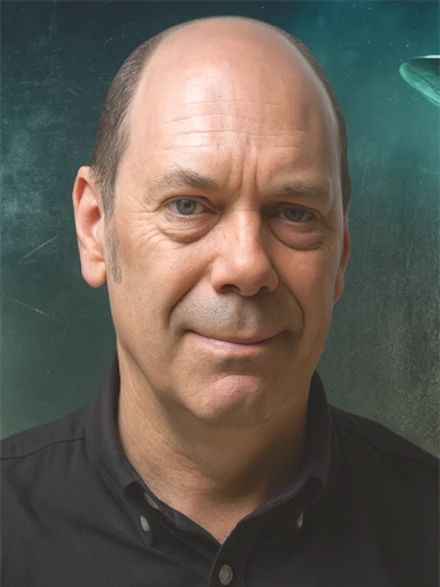
Andy Thomas is a British author and lecturer known for covering UFOs, crop circles, conspiracy theories, and unexplained mysteries in an accessible “big picture” style. He occupies a gateway niche in ufology-adjacent culture: presenting condensed overviews that encourage readers to see hidden connections among phenomena ranging from aerial anomalies to political secrecy narratives.
Background
Thomas’s public profile is built through writing, speaking, and media commentary rather than through primary case investigation. His work often frames itself as a guide for navigating claims—encouraging curiosity while warning against credulity and polarization.
Ufology Career
Within ufology, Thomas is best understood as an integrator and communicator. He surveys classic cases, government secrecy claims, and crop circle debates, presenting them as a coherent “mystery landscape” shaped by cover-ups, misdirection, and contested evidence.
Early Work (Year-Year)
Early work positioned Thomas within the UK mysteries circuit, where crop circles and UFOs often share audiences and explanatory frameworks. He developed an authorial voice oriented toward synthesis and practical discernment.
Prominence (Year-Year)
Prominence increased through widely circulated books that packaged multiple mystery topics for mainstream readers. Thomas’s approach often emphasizes the psychology of belief and the social dynamics of “truth movements,” presenting ufology as both evidence debate and cultural conflict.
Later Work (Year-Year
In later years, Thomas continued producing broad assessments of paranormal and conspiracy culture, extending the same style to newer internet-era claims and social polarization trends.
Major Contributions
- Popularized cross-topic “mysteries overview” books that include UFOs as a central pillar.
- Helped cultivate a middle-ground identity between hard skepticism and maximal belief.
- Supported sustained public interest in UK-based crop circle and UFO discussion scenes.
Notable Cases
Thomas typically highlights well-known UFO cases and government secrecy narratives in summary form, alongside crop circle controversies and broader cover-up motifs, rather than producing a signature single-case investigation.
Views and Hypotheses
Thomas’s messaging often emphasizes that some mysteries may involve genuine anomalies while many claims are distorted by hoaxes, misinterpretations, and psychological contagion. He treats “agenda” narratives as plausible but frequently insists that evidence quality must guide conclusions.
Criticism and Controversies
Critics argue that broad synthesis can over-connect weakly related topics and encourage pattern-seeking. Supporters value the accessibility and the encouragement of critical thinking within a generally open stance.
Media and Influence
Thomas’s influence is strongest through books, talks, and online presence, serving as an on-ramp for readers who want a curated map of anomaly and conspiracy topics.
Legacy
Thomas is likely to be remembered as a prolific communicator whose work helped keep UFO and crop circle discourse visible within the wider “unexplained” entertainment ecosystem.