Introduction
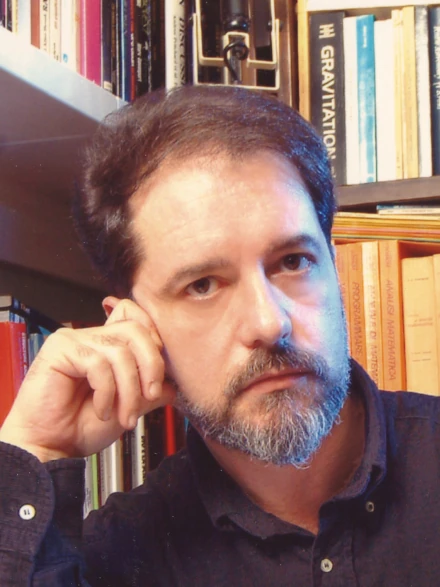
Massimo Teodorani is an Italian astrophysicist associated in public discourse with field investigations of anomalous luminous phenomena, particularly the Hessdalen lights in Norway. Although Hessdalen is not a classic “flying saucer” case category, it occupies an important place in the broader UAP-adjacent landscape as a repeatedly reported, instrumentable anomaly that invites measurement and modeling.
Background
Teodorani’s relevance stems from a scientific framing: treating recurrent anomalous lights as a physical phenomenon amenable to data collection—spectral readings, electromagnetic correlations, imaging, and environmental sampling—rather than as an exclusively witness-driven mystery.
Ufology Career
Within ufology culture, Teodorani is often grouped with “scientific anomaly” researchers—figures who investigate UAP-adjacent observations without necessarily endorsing extraterrestrial explanations. His work is frequently used rhetorically by both sides: believers cite him as credentialed engagement; skeptics emphasize the need for stronger models and reproducibility.
Early Work (Year-Year)
Early attention coalesced around scientific interest in recurring lights and the possibility that environmental conditions could produce unusual plasma-like or electromagnetic effects. Field observation and instrumentation became central to his public identity in this domain.
Prominence (Year-Year)
Teodorani became widely referenced in anomaly communities through the Hessdalen context—particularly where published discussions suggested correlations between observed light events and measurable environmental factors, reinforcing the idea that “something physical” is occurring.
Later Work (Year-Year
Later discussion increasingly included the social dynamics of anomaly research: disputes about credibility, institutional acceptance, and online editorial conflicts. This dimension made Teodorani a symbol within a wider debate about how scientific institutions treat controversial topics.
Major Contributions
- Strengthened the norm of instrumented fieldwork in UAP-adjacent anomaly research.
- Helped frame recurring light phenomena as candidates for physical modeling.
- Contributed to public discourse on the sociology of “forbidden” or disputed research topics.
Notable Cases
Hessdalen lights remain the key “case cluster,” involving repeated reports of luminous phenomena in a defined geographic region and ongoing attempts to measure and explain them using physical hypotheses.
Views and Hypotheses
Teodorani is commonly understood to support the view that at least some anomalous lights may have environmental or plasma-related mechanisms and that careful measurement is required before assigning extraordinary causation. He has emphasized that data should drive interpretation rather than vice versa.
Criticism and Controversies
Critiques often focus on whether datasets are sufficient to discriminate among competing explanations, and on how anomaly research can be over-interpreted by non-specialists. Public controversies also include disputes about editorial framing and representation in skeptical venues.
Media and Influence
Teodorani’s influence is strongest among scientifically-inclined UAP audiences seeking physical-anomaly explanations. His role demonstrates how a “measurable lights” case can become a proxy battlefield between skeptics and believers.
Legacy
Teodorani’s legacy within this space is tied to the notion that not all “UAP” questions are about craft—some are about recurrent natural or geophysical phenomena that, once understood, can reduce the overall “unknown” category.