Introduction
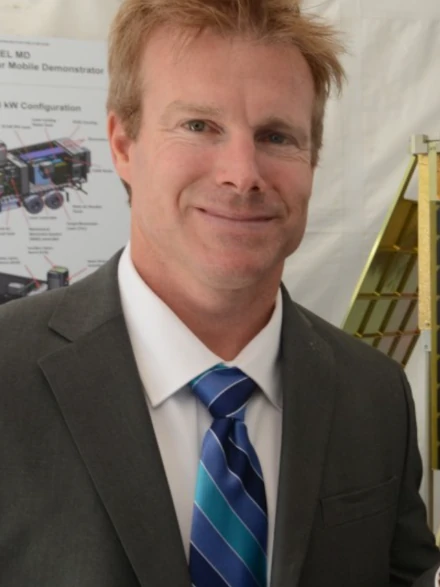
Travis S. Taylor is a scientist, engineer, and author who became a prominent media figure in UAP-adjacent culture through televised investigations of alleged anomalies at Skinwalker Ranch. His public role positions him as a “science forward” interpreter of extraordinary claims, emphasizing instrumentation, controlled tests, and repeatability—while operating in a format shaped by entertainment constraints and audience expectations.
Background
Taylor’s background is commonly presented in terms of technical training and applied research experience, alongside a parallel career writing and media production. This dual track—technical identity plus mass communication—shapes his ufology-adjacent influence: he is treated by supporters as a credentialed validator and by critics as a TV personality operating under narrative incentives.
Ufology Career
Taylor’s ufology relevance is primarily contemporary and media-centered: rather than classic case cataloging, he engages “high-strangeness” claims in a contained location, presenting hypothesis-driven tests, sensor deployments, and incident documentation as an ongoing investigative process.
Early Work (Year-Year)
Before broad UAP notoriety, Taylor’s public footprint included writing and technical commentary. Early media work laid the groundwork for a persona capable of explaining complex ideas to general audiences, a skill later leveraged in anomaly programming.
Prominence (Year-Year)
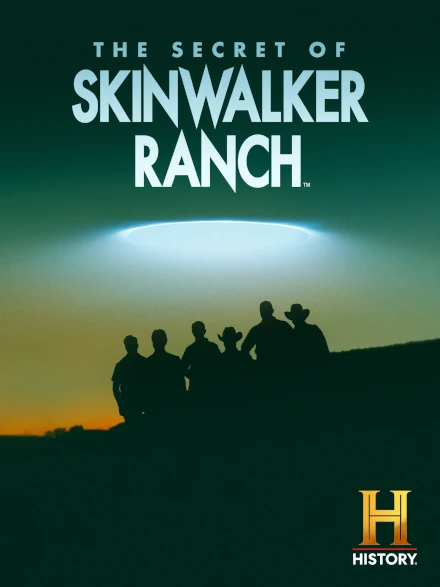
Prominence surged with Skinwalker Ranch programming, where Taylor functioned as the public-facing scientific lead. The show’s structure—episodic experiments, escalating stakes, and recurring “unresolved” events—made Taylor a recognizable figure in the modern UAP entertainment ecosystem.
Later Work (Year-Year
In later phases, Taylor’s influence expanded through interviews, podcasts, and ongoing TV content. His work increasingly contributed to the normalization of “UAP plus” themes, where UAP claims blur into broader paranormal claims (electromagnetic effects, portals, hitchhiker phenomena, etc.).
Major Contributions
- Helped popularize instrumented investigation as an aesthetic within UAP entertainment.
- Bridged credential-signaling with accessible “science talk” for mass audiences.
- Advanced Skinwalker Ranch as a central narrative hub in modern UAP subculture.
Notable Cases
Taylor is primarily associated with the Skinwalker Ranch incident cluster: reports of aerial anomalies, radiation/EM readings, equipment interference, and episodic unusual observations. These are presented as an evolving dataset rather than a single definitive “case solved” outcome.
Views and Hypotheses
Taylor generally frames anomalies as worthy of systematic testing and open-ended hypothesis generation. He often emphasizes that “unknown” does not equal “alien,” while still allowing exotic explanations to remain on the table pending evidence.
Criticism and Controversies
Criticism typically targets the inherent tension between scientific rigor and television storytelling. Skeptics argue that selective editing, lack of independent replication, and the escalation of extraordinary interpretations can undermine the credibility of the investigations.
Media and Influence
Taylor’s influence is amplified by visibility: recurring TV exposure creates a feedback loop in which the show’s framing becomes the default public understanding of the topic. He also influences the “look and feel” of modern anomaly investigation culture: sensors, jargon, and structured tests presented as proof-of-seriousness.
Legacy
Taylor’s legacy within ufology-adjacent culture will likely be tied to the maturation of UAP entertainment into “investigative reality TV,” where science aesthetics and unresolved mystery coexist as a durable format.