Introduction
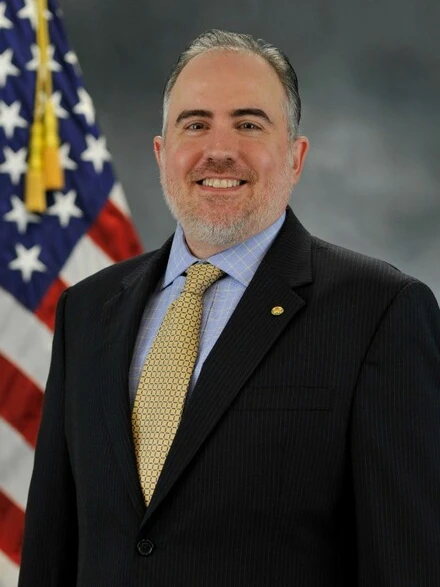
Jay Stratton is a modern UAP-era figure associated with U.S. government investigative and analytical efforts regarding unidentified aerial phenomena. In contrast to classic ufology personalities—writers, field investigators, and organization leaders—Stratton’s significance derives from his connection to institutional UAP processes: internal reviews, case triage, and the management of military-origin report streams. He is therefore best understood as a disclosure-era institutional actor whose public footprint reflects the constraints and ambiguities typical of defense-linked topics.
Background
Stratton’s background is typically described in relation to government service and analytic roles rather than public ufology. As a result, his biography in public-facing sources tends to emphasize function—what he was connected to—more than personal history, which is common for figures who operate in security-adjacent domains.
Ufology Career
Stratton’s “ufology career” is essentially UAP program history. He is relevant because modern discourse increasingly treats UAP as a governance problem: data collection, reporting channels, classification boundaries, and interagency coordination. Stratton is often mentioned in relation to efforts to systematize the handling of military reports and to evaluate specific high-profile incidents with greater seriousness than earlier eras.
Early Work (Year-Year)
His early visibility emerges as UAP becomes a publicly discussable subject after 2017. In this phase, Stratton is mostly referenced in relation to internal investigations, where the key questions involve data access and the institutional will to treat anomalies as legitimate.
Prominence (Year-Year)
Stratton’s prominence tracks the rise of formal UAP task forces and related structures. In disclosure narratives, he functions as an “insider manager” associated with the operational side of UAP handling rather than the media-facing advocacy side.
Later Work (Year-Year
As UAP bureaucracies evolve, Stratton’s continuing relevance depends on the long-term trajectory of official transparency and whether major cases receive public evidentiary releases. In any scenario, his name remains associated with the modernization of UAP handling.
Major Contributions
- Embodies the shift from hobbyist ufology to institutional UAP management discourse.
- Represents the internal analytic perspective that frames UAP as data + process, not merely stories.
- Serves as a reference figure for how post-2017 UAP programs were staffed and operated.
Notable Cases
Stratton is often linked, in general discussion, to major military UAP episodes (often in connection with broader investigative efforts) rather than being publicly documented as a sole author of any one case file.
Views and Hypotheses
Public descriptions typically suggest a “serious but cautious” posture: UAP reports include misidentifications and gaps, but a residue warrants structured investigation. Because his public statements are limited, his “views” are best inferred from the operational seriousness attributed to his role.
Criticism and Controversies
The main controversy is informational opacity: audiences want concrete artifacts—data, reports, chain of custody—while institutional actors often cannot release details. This creates a credibility tension where reputational authority substitutes for public evidence.
Media and Influence
Stratton’s influence is primarily indirect—felt through how modern UAP programs are discussed and through the way institutional roles are invoked to validate the seriousness of the issue.
Legacy
Stratton’s legacy will be tied to the historical assessment of the post-2017 UAP era: whether it produces durable transparency and scientific progress or remains a partially visible bureaucratic episode. Either way, he represents the internal-program dimension of modern UAP history.