Introduction
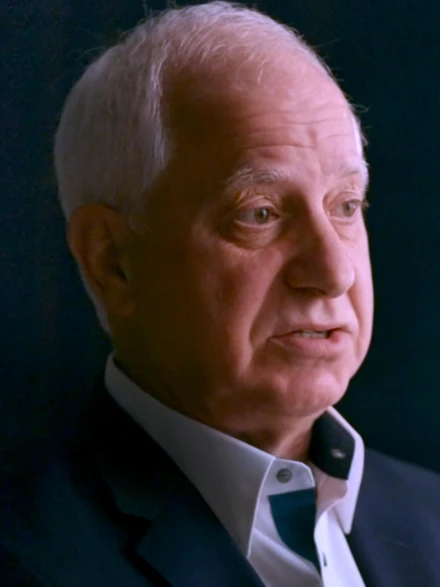
Jim Semivan is an American intelligence-community veteran and disclosure-era UAP figure best known as a co-founder and operational executive of To The Stars Academy of Arts & Science (TTSA). In ufology, Semivan is associated with the late-2010s shift toward national-security framing of UAP and the emergence of organizations that blended entertainment distribution with claims of insider access.
Background
Semivan’s professional background includes senior-level work within the U.S. intelligence environment. In public-facing UAP discourse, this experience functions as a credibility signal, frequently invoked to suggest familiarity with classified processes, organizational cultures of secrecy, and the bureaucratic mechanics of information control.
Ufology Career
Semivan’s ufology role is primarily institutional and interpretive. He is less commonly presented as a traditional investigator of sightings and more often as an organizer, adviser, and commentator who emphasizes how intelligence-style reasoning and compartmentalization could shape UAP secrecy and public misunderstanding.
Early Work (Pre-2017)
Before TTSA’s founding, Semivan’s UAP relevance was largely indirect—deriving from his professional background and private interest. As “disclosure culture” grew in the mid-2010s, he became part of a network of former officials and adjacent figures whose participation suggested a widening acceptance of UAP discussion outside fringe communities.
Prominence (2017–2020)
Semivan’s prominence peaked during TTSA’s early years. As a co-founder and operations executive, he contributed to public narratives that UAP represented a real, unresolved issue with potential implications for defense and policy. TTSA’s media outputs elevated the salience of military encounters, and Semivan’s presence supported the organization’s posture that it was not merely entertainment but also engaged with serious questions.
Later Work (2021–Present)
In later years, Semivan remained a recognizable voice in UAP circles, often appearing in interviews and discussions that broadened beyond conventional nuts-and-bolts UFO questions into themes of experiencer testimony, psychological effects, and spiritual or consciousness-adjacent interpretations. This placed him within a strand of modern ufology that treats the phenomenon as multidimensional or culturally transformative.
Major Contributions
- Organizational “credibility scaffolding” for TTSA: helping the group present itself as process-driven and security-aware.
- Disclosure-era messaging: reinforcing UAP as a national-security topic rather than purely a folklore or hobbyist domain.
- Interpretive expansion: participation in a shift toward experiencer narratives and broader, less strictly materialist hypotheses.
Notable Cases
Semivan is chiefly linked to TTSA’s portfolio of U.S. military encounter narratives and the organization’s claim that institutional dynamics—not lack of evidence—were central obstacles to clarity.
Views and Hypotheses
Semivan’s public posture generally treats UAP as real and under-discussed, while also acknowledging complexity in interpretation. His later commentary often reflects a view that the phenomenon may not be adequately explained by straightforward hardware-and-pilots models alone.
Criticism and Controversies
Critics argue that Semivan’s intelligence pedigree can be used rhetorically to imply evidentiary strength without providing testable claims, and that expanded interpretive frames may dilute falsifiability. Supporters contend that his value lies in understanding institutional barriers and in validating the seriousness of witness experience.
Media and Influence
Semivan’s influence is strongest inside the disclosure-era ecosystem: podcasts, long-form interviews, and insider-themed documentaries where credibility is communicated through biography, association, and confidence in institutional critique.
Legacy
In modern ufology, Semivan is remembered as an architect of TTSA’s “ex-official disclosure” posture and as a contributor to the post-2017 expansion of acceptable UAP discourse—particularly the blending of security framing with wider cultural interpretations.