Introduction
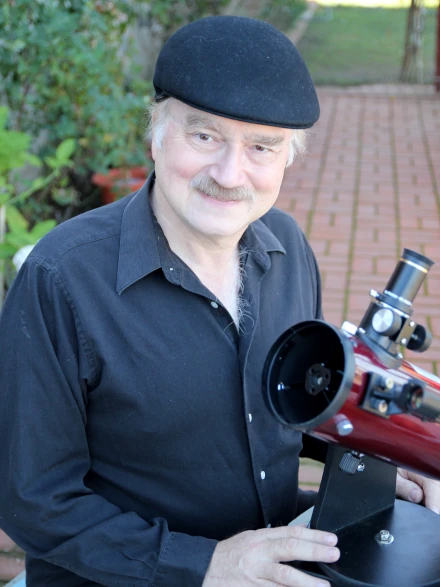
Robert Sheaffer is an American skeptical author and commentator known for his sustained critiques of UFO claims. While not a “ufologist” in the proponent sense, he is a central figure in UFO discourse because he engaged the field’s best-known cases with a forensic reading style—tracking provenance, identifying narrative drift, and challenging the rhetorical move from “unexplained” to “extraterrestrial.” His work helped professionalize the skeptical side of UFO studies by treating ufology as a literature with sources that can be audited rather than as a gallery of mysteries to be curated.
Background
Sheaffer’s public identity is rooted in skeptical inquiry and science-adjacent criticism. He is associated with the tradition that treats extraordinary claims as requiring robust documentation and prefers prosaic explanations unless evidence forces a more exotic conclusion. This background positioned him to argue that the UFO field often mistakes the emotional impact of stories for evidentiary weight.
Ufology Career
Sheaffer’s “ufology career” is adversarial and methodological: he participates by challenging claims, not by collecting sightings. He is best understood as a literature critic of ufology—examining how cases are constructed, which versions are quoted, which sources are omitted, and how ambiguity is translated into certainty in popular retellings.
Early Work (1979-1989)
Sheaffer’s early influence emerged during a period of intense public UFO attention and expanding “best cases” catalogs. He positioned himself against case inflation: the tendency for ambiguous evidence to become “proven” through repetition. His early writings focused on prominent claims and on the sociology of belief—how communities form around narratives and how the demand for a compelling mystery can degrade standards.
Prominence (1990-2005)
As UFO media expanded, Sheaffer’s critiques became a recurring reference for skeptics and journalists seeking counterpoints to sensational claims. He became known for arguing that the strongest UFO cases often deteriorate under close reading—witness timelines conflict, supporting documents are missing, or the original report differs sharply from the canonical version repeated later.
Later Work (2006-2025
In later years, Sheaffer’s work retained relevance as new “disclosure” claims revived old debates about evidence thresholds. His posture remained consistent: treat UAP as a legitimate topic of inquiry but resist upgrading it to “nonhuman craft” without verifiable, independently testable evidence.
Major Contributions
- Strengthened skeptical methodology within UFO discourse through source auditing and narrative analysis.
- Provided a persistent counter-narrative to “best evidence” claims used in pro-UFO advocacy.
- Helped journalists and general audiences understand how UFO stories evolve over time.
Notable Cases
Sheaffer is not defined by a single case; rather he is known for critiques across multiple canonical stories and waves, focusing on how evidentiary claims are constructed and maintained.
Views and Hypotheses
Sheaffer generally views UFO reports as a complex mixture of misidentifications, psychological effects, hoaxes, and cultural storytelling dynamics. He typically treats the extraterrestrial hypothesis as unnecessary given the quality of available evidence, while acknowledging that some reports remain unresolved.
Criticism and Controversies
Pro-UFO researchers criticize Sheaffer for being overly dismissive of witness testimony and for emphasizing failure modes rather than unexplained residues. Skeptics view his work as necessary discipline. The enduring controversy is philosophical: whether ufology should prioritize “mystery preservation” or “error correction” as its primary task.
Media and Influence
Sheaffer influenced UFO discourse through essays, interviews, and skeptical publishing channels. His approach shaped how later skeptics present UFO criticism: not merely mocking claims, but systematically tracing how claims are made.
Legacy
Sheaffer’s legacy is as a prominent skeptic who treated ufology as a body of claims requiring audit. In a comprehensive encyclopedia of UFO figures, he represents the skeptical tradition’s strongest form: method over ridicule.