Introduction
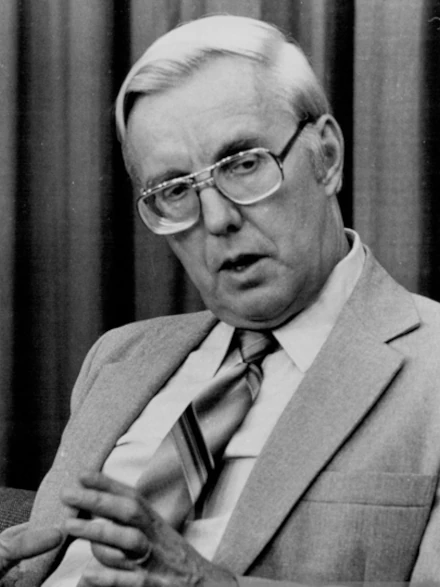
John A. Schuessler is an American engineer and long-standing UFO investigator best known for his leadership in MUFON-affiliated research in the Houston region and for his prominent role in the Cash–Landrum incident’s modern documentation. In ufology, Schuessler represents a pragmatic “organizational investigator” archetype: a figure who builds local investigative capacity, standardizes reporting workflows, and helps transform dramatic witness claims into structured case records intended for technical review.
Background
Schuessler’s technical career in aerospace-adjacent contexts shaped his public credibility and informed his investigative posture. He is frequently presented as applying engineering sensibilities—timelines, geometry, exposure plausibility, and documentary discipline—to witness narratives. This posture appealed to ufologists seeking legitimacy through technical framing.
Ufology Career
Schuessler’s ufology career is closely tied to MUFON-era civilian investigation practices: intake forms, case files, witness interviews, site revisits, and internal peer discussion. He served as a public-facing organizer and spokesman within the Houston UFO research ecosystem, with emphasis on building continuity and institutional memory rather than chasing constant novelty.
Early Work (1970-1980)
In his early UFO research period, Schuessler focused on case documentation and building investigator networks. This was an era when MUFON sought to differentiate itself from contactee sensationalism by foregrounding investigation and record-keeping. Schuessler’s work aligned with that goal: treat reports as data and create repeatable processes for handling them.
Prominence (1981-1995)
Schuessler’s prominence rose alongside the Cash–Landrum case, a Texas close encounter notable for alleged physical effects and injury claims. His role included assembling testimony, managing case continuity, and presenting the incident as a serious challenge to conventional explanations. The case became a centerpiece in debates about whether UFO encounters can produce measurable biomedical or environmental consequences.
Later Work (1996-2025
In later years, Schuessler remained influential as a senior investigator and elder-statesman figure within regional and national ufology networks. His focus continued to emphasize method, documentation, and the long memory of cases—how witness stories evolve, how records are preserved, and how organizations maintain investigative standards across decades.
Major Contributions
- Helped establish and maintain investigator infrastructure in one of the most active U.S. ufology regions.
- Provided long-term stewardship for major “physical effects” cases used in modern UFO argumentation.
- Modeled engineering-style framing for witness-centric reports.
Notable Cases
- Cash–Landrum incident: A central “injury/physical effects” close encounter case in U.S. ufology.
- Houston-region MUFON files: A large body of local casework where Schuessler acted as organizer and reviewer.
Views and Hypotheses
Schuessler’s public stance typically treats a subset of UFO reports as genuinely anomalous and worthy of technical attention. He emphasizes careful witness interviewing, record preservation, and resisting premature closure—while acknowledging that definitive proof is rare and that uncertainty must be managed through disciplined documentation.
Criticism and Controversies
Critics argue that many “physical effects” cases depend on incomplete medical records, retrospective interpretation, and uncontrolled exposure variables. Skeptics also contend that engineering framing can give a witness narrative the sheen of technical certainty without delivering independently verifiable measurements. Supporters respond that physical effects cases are precisely where ufology has its strongest evidentiary potential, and that the correct response is better documentation, not dismissal.
Media and Influence
Schuessler’s influence is strongest within investigator communities and documentary coverage of major Texas cases. He appears in interviews and programs as a stable authority figure explaining how MUFON-style investigations are conducted.
Legacy
Schuessler is best remembered as a builder of ufology’s civic infrastructure—an organizer-investigator whose long-term focus on documentation kept key cases alive and shaped how later researchers access and interpret earlier records.