Introduction
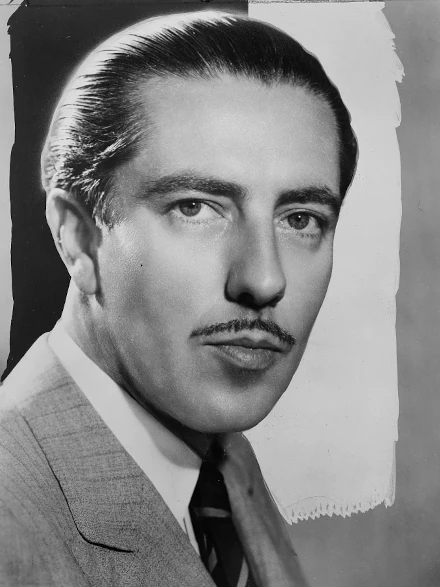
Ivan T. Sanderson was a Scottish-born naturalist, writer, and broadcaster whose public career spanned wildlife education, cryptozoology, and anomalistics. In ufology, he is best remembered as a major popularizer of “occupant” and humanoid encounter reports and as a theorist who resisted simple extraterrestrial-visitor explanations. Sanderson’s UFO significance lies in his insistence that UFOs belong to a broader class of persistent, recurring anomalies that interact with human observers in ways that are not easily reducible to misidentification or folklore. His approach helped normalize the idea that UFO reports might be entangled with biology, psychology, and unknown terrestrial intelligences.
Background
Sanderson developed as a communicator of natural history and science-themed content, building a public profile through writing and broadcasting. His interest in anomalies grew out of a broader Fortean sensibility: unusual reports are not dismissed as “impossible” but treated as signals that established knowledge may be incomplete. This intellectual posture, while attractive to mystery-oriented audiences, also placed him at odds with more conservative scientific and skeptical critics.
Ufology Career
Sanderson’s ufology work was primarily synthetic and archival. Rather than specializing in on-the-ground instrumented investigations, he focused on collecting reports, identifying repeating motifs, and proposing explanatory frameworks that could account for the diversity of UFO-associated phenomena. He was especially interested in close encounters that included entities or occupants, treating them as key data points for understanding the phenomenon’s apparent intentionality and interaction with witnesses.
Early Work (1947-1959)
In the early postwar UFO era, Sanderson’s interests overlapped with the first waves of “flying saucer” publicity and contactee culture. During this period he gravitated toward reports that seemed to exceed conventional misidentification—particularly those involving structured craft, repeated locations, or unusual beings. He began assembling cross-topic files that treated UFOs, cryptids, and other anomalies as potentially related manifestations of an unknown “hidden ecology.”
Prominence (1960-1973)
Sanderson reached peak UFO-cultural prominence in the 1960s and early 1970s, when popular media appetite for mysteries was high and the “humanoid” report category was expanding. He articulated the provocative idea that some UFO entities might be “invisible residents”—co-existing intelligences on Earth or in its near environment—rather than distant interstellar visitors. This stance gave Sanderson a distinctive niche: he was neither a pure “ET visitation” advocate nor a strict debunker, but an anomaly-taxonomist arguing that the phenomenon might be older, stranger, and more locally embedded than commonly assumed.
Later Work (1974-1979
Later treatments of Sanderson’s ufology emphasize his role as a conceptual ancestor to modern “ultraterrestrial” and “interdimensional” interpretations. Even after his death, his occupant-focused compilations continued to circulate and influence writers who treat the phenomenon as a complex interaction with human perception, culture, and possibly nonhuman intelligences rooted closer to home than the stars.
Major Contributions
- Occupant/humanoid emphasis: Helped elevate entity reports as a major category within UFO literature.
- “Invisible Residents” framework: Popularized a non-ET, persistent co-inhabitant interpretation that anticipated later ultraterrestrial theories.
- Cross-domain synthesis: Merged cryptozoology and ufology into a shared “hidden zoology of anomalies” worldview.
Notable Cases
Sanderson is associated more with categories than single canonical cases. His “notable” material includes compilations of:
- Humanoid/occupant encounters reported across Europe and the Americas.
- Close-encounter cases featuring recurrent locations, patterns, and alleged entity behavior.
Views and Hypotheses
Sanderson’s hallmark view is that UFOs should not be prematurely forced into a single explanatory box. He treated the phenomenon as potentially plural—different mechanisms producing superficially similar reports—or as a single intelligence expressing itself through varied appearances. His “Invisible Residents” idea suggests that at least some UFO entities may be terrestrial, subterranean, oceanic, or otherwise local, with long-term presence and motives independent of human technological progress.
Criticism and Controversies
Critics argue that Sanderson’s broad synthesis risks category errors—mixing folklore, hoaxes, misperceptions, and genuinely unexplained reports into a single interpretive soup. Skeptics also contend that occupant narratives are particularly vulnerable to rumor and cultural contamination. Supporters counter that dismissing high-strangeness reports as “too weird” simply filters out precisely the cases that might carry the most diagnostic information.
Media and Influence
Sanderson influenced ufology as a media figure: he helped set the tone for anomaly-friendly broadcasting and popular science writing that treated mysteries as legitimate topics. His cross-topic approach also shaped later documentary styles, where UFOs, cryptids, and conspiratorial histories are presented as a unified “hidden world.”
Legacy
Sanderson’s legacy is that of a boundary-maker and boundary-breaker: he expanded ufology’s imaginative range while also demonstrating how synthesis can outrun verification. For a curated encyclopedia, he is best remembered as an architect of occupant-centered and ultraterrestrial-adjacent thinking.