Introduction
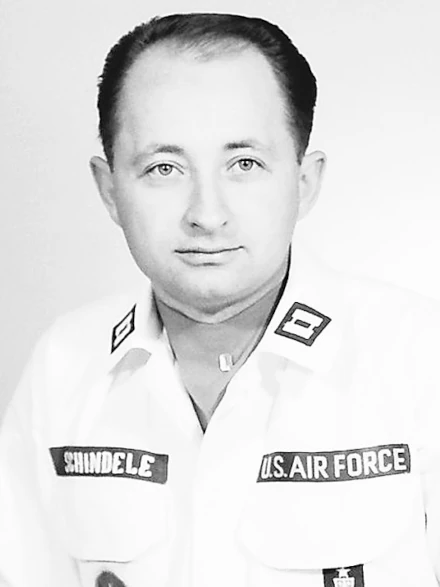
David Schindele is a former U.S. Air Force missile officer whose public significance in ufology stems from his association with Cold War-era reports of anomalous aerial activity near nuclear missile facilities. He is best known as the author of It Never Happened, a book that frames such incidents as historically real, institutionally sensitive, and subject to long-standing suppression. Schindele belongs to a distinct category of UFO figures: the military insider who converts operational experience and witness networks into a public narrative about national security, secrecy, and the limits of official disclosure.
Background
Schindele’s background is rooted in the strategic missile forces environment, where operational reliability, security classification, and command discipline shape what personnel can say and how unusual events are logged. Missile fields are exceptionally structured spaces—heavily monitored, procedurally rigid, and culturally steeped in secrecy. This context is central to Schindele’s ufology identity: he argues that anomalies in such environments cannot be dismissed as casual rumor in the way that ordinary civilian sightings sometimes are.
Ufology Career
Schindele’s ufology career is primarily authorial and advocacy-based rather than organizational. He is associated with the “UFOs and nukes” subfield that focuses on alleged aerial anomalies around nuclear weapons sites, reports of hovering lights, instrument disruptions, and unusual security alerts. His work functions as both testimony and synthesis: personal experience is combined with broader historical claims about documentation, chain-of-command handling, and the motivations for silence.
Early Work (1966-1969)
The formative period for Schindele’s UFO relevance centers on 1960s missile-era events and the memory networks that formed around them. In this early phase, the “career” is not public: it is the experience of working inside a classified system where anomalies—if interpreted as anomalous—would be discussed cautiously, recorded selectively, and insulated from public view. The seed of later ufology emerges when veterans compare recollections and discover recurring patterns across bases and years.
Prominence (2010-2020)
Schindele’s public prominence increased as interest in military witness accounts rose and as the “UFOs and nukes” theme became a recurring element in conferences and online media. His book offered audiences something ufology constantly seeks: a coherent insider narrative that ties witness testimony to a structured secrecy explanation. This approach resonated in an era when UAP discussion increasingly foregrounded national security rather than purely extraterrestrial speculation.
Later Work (2021-2025
In later work, Schindele’s influence persists through interviews and the continuing debate over missile-site cases—especially as official UAP reporting and historical reviews reframe old incidents in new ways. This period has also intensified controversy: as government offices release historical assessments and alternative explanations, advocates and skeptics clash over whether official reinterpretations are clarifying truth or simply repackaging secrecy.
Major Contributions
- Missile-site narrative consolidation: Helped package dispersed veteran testimony into a sustained “cover-up” thesis.
- UFOs-and-nukes amplification: Contributed to making strategic-weapons infrastructure a central topic in modern UAP conversation.
- Witness legitimation strategy: Uses military context—procedures, security, reliability standards—to argue that these reports deserve heightened attention.
Notable Cases
Minot missile field incidents (1966): Reports of unusual aerial phenomena and security events associated with missile infrastructure, often discussed alongside other Cold War-era missile-site cases. Schindele’s work emphasizes that such events, if accurately characterized, imply a long-standing and unresolved national security anomaly.
Views and Hypotheses
Schindele’s framing generally assumes that missile-site incidents were real anomalies and that the Air Force managed them through denial, compartmentalization, and narrative control. He tends to treat institutional silence as an evidentiary clue—arguing that secrecy behavior is itself part of the phenomenon’s footprint. While interpretations vary, his work sits comfortably within a broader “strategic interest” hypothesis: whatever the phenomenon is, it appears interested in or coincident with nuclear capability.
Criticism and Controversies
Critics challenge the leap from anomalous reports to strong conclusions about exotic craft or nonhuman intent. They argue that memory, documentation gaps, and the extraordinary interpretive pressure of nuclear-era secrecy can generate durable legends. Supporters respond that the missile environment is precisely where weak stories should collapse and strong patterns should persist. The controversy remains unresolved because definitive public documentation is limited and because classified context can be invoked by both sides.
Media and Influence
Schindele’s influence is concentrated in podcasts, interviews, and the “UFOs and nukes” circuit where military witness narratives are treated as high-value testimony. His book acts as a media anchor: interviewers can point to a single coherent narrative rather than a scattered set of anecdotes.
Legacy
Schindele’s legacy is as a missile-era witness-author who strengthened the argument that UAP history cannot be separated from Cold War strategic infrastructure. Whether his conclusions are accepted or disputed, his work helps ensure that nuclear-site cases remain central to public demands for transparency.