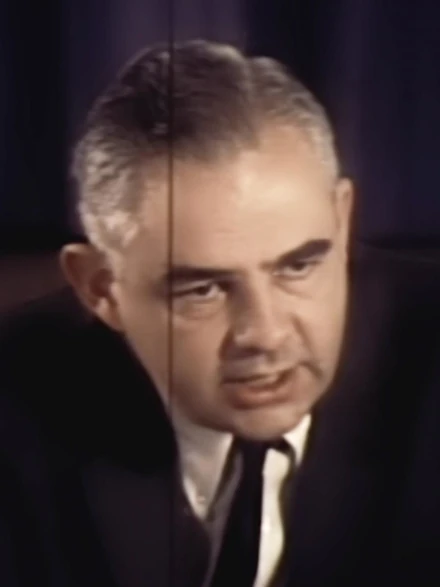
Introduction
David R. Saunders was a psychologist whose lasting significance in UFO history stems from his role in the University of Colorado UFO Project, commonly known as the Condon Committee. Rather than being famous for championing a particular UFO case, Saunders became notable for arguing—after direct participation—that the project’s structure and leadership produced a predetermined outcome. His subsequent critique became a cornerstone of ufology’s long-running claim that official UFO inquiries can be shaped as much by institutional incentives as by evidence.
Background
As a trained psychologist, Saunders brought to UFO study an awareness of human perception, reporting behavior, and the social conditions under which extraordinary claims flourish. In the mid-1960s, the U.S. Air Force sought a scientific study that could address the “UFO problem” in a way that would withstand public scrutiny. The Colorado project promised academic legitimacy. Saunders entered this environment at the intersection of science, politics, and public fascination—an unstable mix that would ultimately define his legacy.
Ufology Career
Saunders’ ufology career is unusual because it begins within an official, university-based project and evolves into public dissent. He is best understood as an “insider whistleblower” figure in ufology: someone who participated in a mainstream scientific study yet later claimed that the study’s conclusions were shaped by bias and reputation-protection. This role made him valuable to ufologists seeking validation from credentialed sources and controversial to those who defended the project’s legitimacy.
Early Work (1966-1968)
Saunders’ early UFO work occurred inside the Colorado project, where case triage, data handling, and methodological decisions were not merely technical choices but also reputational risks. The project operated under intense attention: the Air Force wanted closure, scientists wanted to protect credibility, and the public wanted answers. In such conditions, Saunders’ later critique suggested, subtle bias could be structural—embedded in leadership tone, in which cases were prioritized, and in how ambiguous evidence was interpreted.
Prominence (1968-1970)
Saunders’ prominence surged after the publication of the Condon Report and the ensuing debate over whether the study fairly represented the UFO evidence. His critique—presented in book form with co-authors—was influential because it did not merely argue “UFOs are real”; it argued that the process that dismissed them could be flawed. This distinction allowed his work to resonate beyond committed believers: one could accept his criticism of institutional bias without endorsing extraterrestrial conclusions.
Later Work (1971-2025
In later decades Saunders remained a reference point more than an active public figure. His impact persisted through citation: whenever UFO historians or researchers debated the Condon Report’s credibility, Saunders’ dissent served as a primary source for the “inside critique” position. His work also contributed to a broader narrative that official UFO study has repeatedly served political goals—defusing public interest—rather than maximizing scientific clarity.
Major Contributions
- Insider critique of official UFO study: Helped define the argument that process bias, not evidence strength alone, can determine “official conclusions.”
- Method debate: Elevated discussion of what UFO science would require: transparent case selection, rigorous instrumentation, and neutral framing.
- Institutional skepticism: Became a foundational figure for the view that government-backed studies may be designed to end controversy, not resolve it.
Notable Cases
Saunders is associated less with a single UFO case than with the meta-case of the Colorado project’s handling of many cases—how reports were filtered, classified, and translated into a public-facing conclusion.
Views and Hypotheses
Saunders’ position is best summarized as methodological dissent: he argued that the way the study was conducted and framed undermined confidence in its negative conclusions. This stance does not automatically entail endorsement of extraterrestrials; it entails the claim that the evidentiary question was not settled fairly.
Criticism and Controversies
Critics of Saunders argue that dissent from within a contentious project can be shaped by interpersonal conflict, professional disappointment, or differing expectations of what the project should achieve. Supporters argue that such criticisms evade the core issue: whether leadership posture and institutional incentives distorted scientific neutrality. The controversy remains a core fault line in UFO historiography.
Media and Influence
Saunders influenced ufology through publishing rather than broadcasting. His book-length critique became a long-lived source for writers, lecturers, and skeptics of “official closure.” In the internet era, his role is often summarized as “the Condon insider who said it was rigged,” a shorthand that continues to shape popular understanding of the period.
Legacy
David R. Saunders’ legacy is the enduring controversy over the Condon Committee: whether the most famous official scientific UFO study was an objective inquiry or a reputational and political exercise. His work ensures that the Condon Report remains debated not only on conclusions but on process—an issue central to any future attempt at credible UFO science.