Introduction
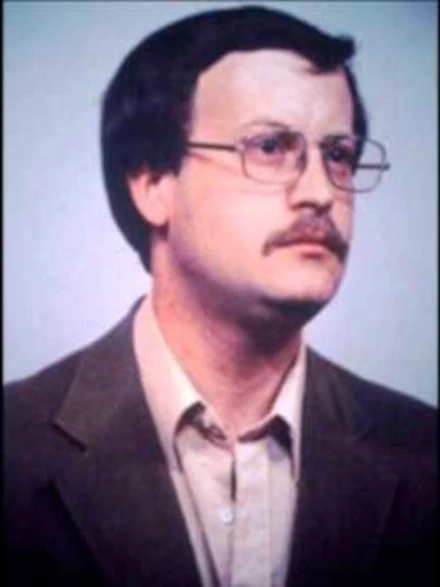
D. Scott Rogo was an American parapsychological researcher and author whose work frequently intersected with ufology through the concept of “high strangeness”—the idea that UFO reports share motifs with other anomalous experiences such as hauntings, poltergeist episodes, altered states, and psi phenomena. Rather than treating UFOs strictly as aerospace mysteries, Rogo framed them as one expression of a wider, poorly understood class of events. His influence is strongest among readers who view ufology as inseparable from consciousness, folklore, and parapsychology.
Background
Rogo’s background in parapsychological literature shaped his approach: he emphasized case comparison, motif tracking, and the limits of conventional explanation. He wrote in an era when UFO culture and “psychic research” audiences overlapped heavily, and he was adept at translating specialized parapsychology topics into accessible narratives for mass readership.
Ufology Career
Rogo’s role in ufology was as a theorist and synthesizer rather than a dedicated UFO field investigator. He treated classic UFO cases—especially those involving contact, missing time, and unusual aftereffects—as data points that looked structurally similar to poltergeist and psi case patterns. In doing so, he contributed to a tradition that challenges the “nuts-and-bolts craft” model, suggesting the UFO phenomenon may be partly psychological, symbolic, or interdimensional in character.
Early Work (Year-Year)
Rogo’s early work built credibility through prolific writing on psychical research topics and through engagement with case material that often included UFO-adjacent elements: apparitions, anomalous lights, and witness experiences that blurred categories. This period established his signature: treat anomalies as a single research landscape rather than isolated curiosities.
Prominence (Year-Year)
Rogo’s prominence rose as his books circulated among both parapsychology and UFO readers, reinforcing the idea that ufology alone might be too narrow to explain the full range of reported phenomena. He became a frequent citation in discussions that connected UFO waves to “flaps” of other anomalies, arguing for shared triggers or shared interpretive mechanisms.
Later Work (Year-Year
Later, Rogo’s influence persisted through his bibliography and through the ongoing popularity of high-strangeness models in UFO culture. In modern UAP discourse, where “consciousness hypotheses” have resurfaced, Rogo is often treated as part of the intellectual genealogy that normalized the idea that witnesses’ mental states and experiences are central data, not peripheral noise.
Major Contributions
- Expanded UFO interpretation by integrating parapsychology frameworks into ufological thinking.
- Helped popularize high-strangeness case taxonomy and motif comparison across anomaly domains.
- Strengthened the “UFOs as part of a larger phenomenon” narrative that continues in modern media.
Notable Cases
Rogo is associated less with a single signature UFO case and more with comparative interpretation. He is often invoked in discussions of close-encounter reports with poltergeist-like aftereffects, and in debates about whether UFO experiences are external events, internal events, or hybrid phenomena.
Views and Hypotheses
Rogo’s hypotheses tended to be pluralistic: UFO cases might involve unknown external agents, but the manner in which they present—symbolic, elusive, and psychologically charged—resembles other anomalous events. He treated this resemblance as a clue: either a shared causal mechanism, or shared human perceptual/interpretive processes activated by ambiguous stimuli.
Criticism and Controversies
Critics argue that high-strangeness synthesis can become unfalsifiable, absorbing any anomaly into a single narrative without clear predictive power. Supporters respond that strict “craft-only” ufology fails to account for the experiential and folkloric dimensions repeatedly reported by witnesses. Rogo’s broader legacy is therefore debated along the same lines as the larger consciousness-oriented UFO paradigm.
Media and Influence
Rogo’s books made him an important bridge figure for audiences moving between UFO content and psychical research. His influence is visible in the way modern UFO documentaries often splice UFO narratives with poltergeist and consciousness themes—an editorial style he helped normalize decades earlier.
Legacy
Rogo remains a key name in the “UFOs + parapsychology” lineage. His work helped establish that ufology can be treated not only as an aerospace mystery but also as a study of human experience and recurring anomalous patterns across cultural categories.