Introduction
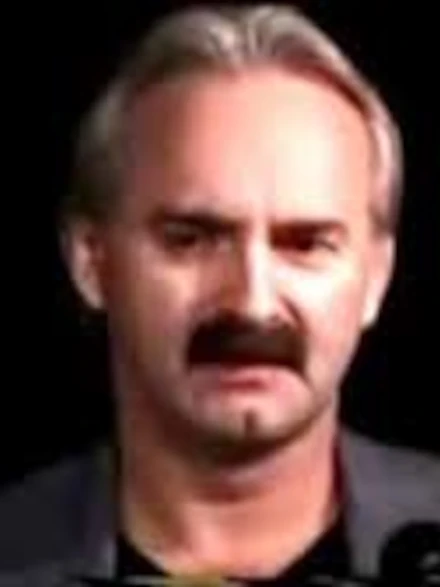
Jonathan Reed is the public name associated with one of the most debated “evidence-forward” alien encounter narratives to emerge in late-1990s North American ufology. The Reed story—popularized through television appearances and a substantial online afterlife—combined several high-impact elements that reliably drive UFO notoriety: a claimed face-to-face encounter with a nonhuman entity, an alleged fatal confrontation, purported physical artifacts, and an ongoing account of intimidation by authorities. Reed’s significance lies less in institutional influence than in how his narrative exemplifies the media era in which “proof” was increasingly performed through video clips, laboratory-name drops, and repeated retellings rather than through controlled-access physical evidence.
Background
Reed’s background is inseparable from controversy because the “Jonathan Reed” identity is widely treated as a constructed public persona. In the UFO community, arguments about his biography—education, professional claims, and personal history—have become part of the case itself, with advocates emphasizing credentials and critics emphasizing inconsistencies. This biographical instability has made Reed a diagnostic figure for how ufology handles identity, authority, and trust when a claimant’s personal narrative is as central as the alleged encounter.
Ufology Career
Reed’s ufology career is best described as “case-centered celebrity.” Unlike researchers who build reputations through multi-case investigation or organizational leadership, Reed’s public standing is anchored to one flagship episode and the artifacts said to derive from it. The career that followed consisted of media appearances, conference presentations, circulated video materials, and a set of evolving claims about tests, custody, and the extraordinary behavior of the alleged device. This pattern places Reed within a tradition of UFO personalities whose influence is generated by story repetition and audience fascination rather than by institutional casework.
Early Work (1996-1998)
The origin phase of Reed’s notoriety begins with the reported encounter itself and the initial assembly of the narrative components: the claimed location and circumstances, the alleged presence of a nonhuman entity, and the retrieval of objects associated with the event. In this period the story formed into a recognizable template common to sensational UFO subculture: a solitary witness, a sudden confrontation, the recovery of physical material, and the quick onset of pressure—either psychological or external—framed as evidence that the event is “real.”
Early dissemination relied on the mechanisms available at the time: syndicated talk media, television segments, and the expanding online UFO ecosystem. The combination of dramatic visuals and the promise of testable objects quickly elevated the story above purely testimonial abduction narratives.
Prominence (1999-2002)
Reed reached peak prominence during the period when UFO television and early internet forums created feedback loops between broadcast exposure and grassroots amplification. In this phase, the alleged bracelet/device became the centerpiece. Reed’s presentations emphasized extraordinary functional claims and referenced interactions with laboratories, specialists, or institutions—an approach designed to signal scientific validation while maintaining control over access to the material.
The same strategy also amplified criticism: in ufology, the promise of definitive physical evidence triggers maximum scrutiny, and the inability of neutral parties to independently examine the object under controlled conditions becomes a central fault line. Consequently, Reed’s prominence was accompanied by rapid polarization—supporters interpreted criticism as part of suppression; critics interpreted narrative evolution as sign of fabrication.
Later Work (2003-2025
In later decades, Reed’s case lived primarily through digital persistence: archived clips, reposted interviews, and recurring debates over the same core questions—identity, provenance, and chain of custody. While Reed’s mainstream visibility diminished relative to newer UAP-era personalities, his story remained a reference point whenever discussions turned to “physical evidence claims that never resolve.”
Within UFO culture, Reed’s later influence also reflects a broader trend: once a case becomes a meme-like narrative package (encounter + artifact + intimidation), it can outlive its original evidentiary basis and function as a cultural object—revisited whenever audiences seek dramatic “best evidence” stories.
Major Contributions
- Media-era case template: Helped define a late-1990s genre of UFO storytelling centered on video artifacts and implied lab validation.
- “Physical evidence” rhetoric: Elevated debate about what counts as proof in ufology—especially chain of custody, controlled access, and independent replication.
- Community stress-test: Became a recurring example used by both believers and skeptics to argue about credibility, suppression narratives, and investigative standards.
Notable Cases
The Jonathan Reed Encounter: The single defining case—typically presented as a close encounter with a nonhuman entity and associated craft, followed by retrieval of anomalous objects. The alleged bracelet/device is treated as the case’s evidentiary keystone, with all major disputes revolving around origin, custody, and verifiable testing.
Views and Hypotheses
Reed’s public framing treats the event as literal contact with a nonhuman intelligence operating via advanced technology. His presentations commonly emphasize that the artifact is not merely symbolic proof but is functionally anomalous—suggesting capabilities beyond conventional materials science. Reed’s narrative also often implies a structured secrecy environment: that authorities recognize the significance and therefore seek to manage or suppress disclosure.
Criticism and Controversies
Reed’s story is controversial for reasons that typically decide the fate of “artifact-driven” UFO cases. The first is identity credibility: disputes over the claimant’s biography erode confidence in testimony. The second is provenance: extraordinary objects demand transparent custody histories and controlled handling, yet the Reed artifact has been presented largely through mediated exposure rather than open scientific access. The third is narrative drift: critics argue that key details have shifted over time, while supporters argue that shifting details reflect trauma, pressure, or partial memory rather than fabrication.
As a result, Reed occupies a stable role in ufology: he is invoked as either a suppressed witness with extraordinary evidence or as a cautionary example of how sensational claims can survive through performance and repetition despite unresolved verification.
Media and Influence
Reed’s influence is primarily media-based. His case circulated widely through television segments, talk radio, and online video distribution, reaching audiences who may not otherwise engage with ufology literature. The Reed story also contributed to the “visual proof” expectation: audiences became conditioned to demand footage, devices, and lab claims rather than purely narrative abduction accounts.
Legacy
Jonathan Reed’s legacy is the endurance of a single, highly dramatic UFO narrative as a long-running controversy. Regardless of one’s conclusions, the case remains instructive for encyclopedic ufology because it shows how modern UFO fame is manufactured: through media staging, the promise of physical evidence, and the creation of a self-protecting narrative in which lack of independent verification is framed as proof of suppression rather than as a methodological failure.