Introduction
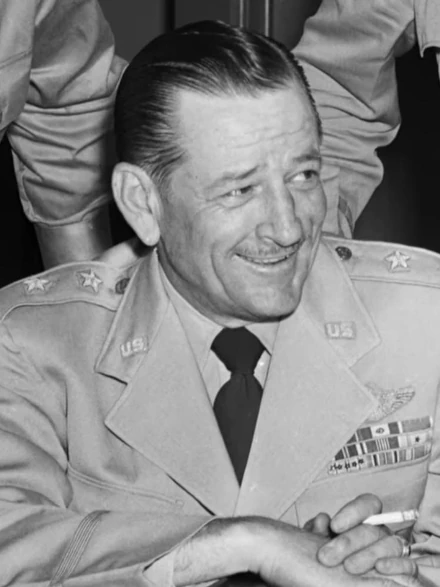
Roger M. Ramey was a high-ranking U.S. Army Air Forces officer whose name became permanently intertwined with the Roswell incident of 1947. In ufological literature, Ramey is discussed less for personal UFO beliefs than for institutional behavior: how military commands responded to a rapidly escalating story of recovered “flying disc” debris. His involvement made him a recurring figure in arguments about whether Roswell represents miscommunication, deliberate cover story, or later mythmaking.
Background
Ramey’s career placed him in positions where operational security, public messaging, and chain-of-command discipline were paramount. By the time of Roswell, he represented a level of command expected to stabilize narratives, prevent rumor-driven operational disruption, and align public statements with official determinations.
Ufology Career
Ramey was not a ufologist; his “ufology career” is a historiographic one—constructed by later investigators around his documented role in a pivotal early UFO controversy. He appears in countless reconstructions of Roswell timelines, press interactions, and the subsequent evolution of explanations offered by military authorities.
Early Work (Year–Year)
Ramey’s early relevance to UFO history begins and largely centers on the immediate Roswell aftermath. As accounts proliferated, the need to reframe or clarify the initial “flying disc” claim became urgent. The steps taken during this window—and the documented public-facing presentation of debris—formed the cornerstone of later dispute.
Prominence (Year–Year)
Ramey’s prominence in ufology expanded decades later as Roswell became the flagship case of modern UFO mythology. Investigators parsed photographs, witness recollections, and institutional incentives, turning Ramey into a symbolic figure for “the moment the story changed.” In this phase, Ramey’s actions were interpreted through opposing lenses: routine correction of a mistaken claim versus active management of a sensitive recovery story.
Later Work (Year–Year)
In later decades, Ramey’s name persisted through secondary debates: the origin of the debris, the motivations for narrative reversal, and claims about what materials were displayed or withheld. Roswell’s expansion into a cultural phenomenon ensured that Ramey’s role remained a fixed reference point even as new theories (and new alleged witnesses) emerged.
Major Contributions
- Institutional case study: how military commands communicate amid ambiguous or rapidly changing information.
- Central node in Roswell’s evidentiary disputes (especially around press handling and photographic interpretation).
- A foundational example in ufology of “narrative reversal” and the birth of long-term conspiracy frameworks.
Notable Cases
Roswell (1947) is the defining case. Ramey’s public association with the “weather balloon” explanation is repeatedly contrasted with the initial “flying disc” press release attributed to Roswell Army Air Field channels. This contrast is the engine of Roswell’s enduring controversy.
Views and Hypotheses
Ramey’s personal views are typically treated as secondary; the emphasis is on institutional posture. In mainstream historical treatments, Roswell is framed as misidentification and correction. In pro-ET narratives, Ramey is often positioned as a deliberate architect of the reversal. The persistent gap between these interpretations makes him a lightning-rod figure regardless of what he personally believed.
Criticism and Controversies
Ramey is criticized in UFO literature primarily through allegations of misdirection—claims that the debris displayed publicly did not match what was recovered, or that the public narrative was shaped to defuse a sensitive story. Skeptical and official accounts counter that Roswell’s later mythology is a classic example of retrospective reinterpretation driven by cultural demand for extraordinary explanations.
Media and Influence
Ramey’s influence is largely symbolic: he represents the institutional pivot point in the most famous UFO case in American history. His name appears in documentaries, books, and debates about disclosure, cover-ups, and the credibility of early-era military statements.
Legacy
Ramey’s legacy within ufology is inseparable from Roswell’s legacy. He remains one of the most cited military figures in UFO history—less as an investigator than as a durable emblem of the moment when an extraordinary claim entered—and was then forced back out of—official reality.