Introduction
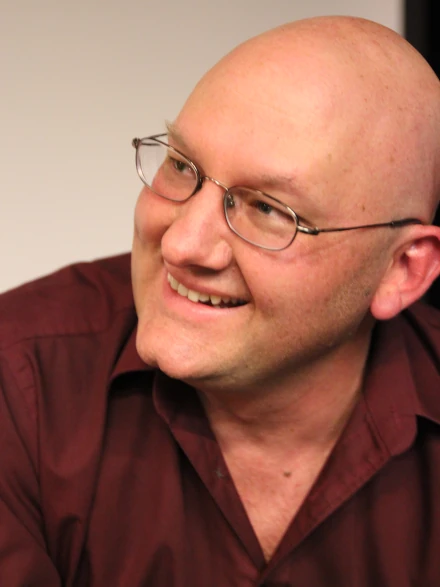
Benjamin Radford is an American writer and scientific paranormal investigator associated with organized skepticism. Within the UFO discourse, Radford is best known for treating UFO reports as a subset of broader anomalistics—claims that can be examined through observation, documentation standards, and the sociology of belief. His role in ufology is primarily adversarial and methodological: he argues that many celebrated cases persist because they are narratively powerful, poorly documented, or insulated from falsification, not because they survive rigorous evidentiary testing.
Background
Radford’s public identity has been shaped by science-communication and investigative writing aimed at a general audience. He typically emphasizes media literacy—how stories mutate as they are retold—and the limitations of eyewitness testimony. This background positions him as a critic of “case-building” cultures that prioritize compelling testimony over physical traces and repeatable measurements.
Ufology Career
Radford is not a “nuts-and-bolts” UFO field investigator in the classic sense; rather, he is a commentator and investigator of extraordinary claims whose work repeatedly intersects with ufology. His writing treats UFO belief as an ecosystem involving folklore, entertainment, commercial incentives, and community identity. He frequently contrasts “claims that sound scientific” with what he considers the practical requirements of science: documentation, replication, and transparent methods.
Early Work (Year–Year)
Radford’s earliest visibility in UFO-adjacent debates emerged through skeptical reporting on paranormal and unexplained claims, where UFO narratives served as recurring examples of how ambiguous evidence becomes “confirmed” through repetition. In this period, he developed a recognizable pattern: establish what is claimed, isolate what is actually evidenced, then compare those two lists.
Prominence (Year–Year)
As his publication volume grew, Radford became a familiar name in skeptical responses to mainstream UFO waves. He increasingly focused on the reliability of sources, chains of custody for photographs and videos, and the sociology of extraordinary-claim communities—how believers and skeptics each form “in-groups,” and how reputations of cases can become self-sustaining independent of new evidence.
Later Work (Year–Year)
In later work, Radford’s UFO commentary generally situates UAP/UFO narratives within a continuum of modern mythmaking, emphasizing the speed with which unverified claims propagate online and the difficulty of correcting early misinformation once a story has become identity-relevant for a community. His approach remains consistent: he argues that ufology’s strongest claims still hinge disproportionately on testimony and imagery of uncertain provenance.
Major Contributions
- Popularization of “evidence audits” for sensational UFO claims (what is asserted vs. what is demonstrably supported).
- Method-focused critique: documentation standards, witness reliability limits, and incentives that shape UFO storytelling.
- Cross-pollination between skeptical investigation of folklore/cryptids and the analysis of UFO case narratives.
Notable Cases
Radford is less associated with a single signature UFO case than with recurring categories: alleged crash debris, alien autopsy-style media events, dubious photo/video claims, and “celebrity witness” narratives. He tends to prioritize cases where the public story substantially outruns verifiable documentation, using them to illustrate what he views as systemic weaknesses in ufology.
Views and Hypotheses
Radford’s working hypothesis for most UFO reports is that they arise from misidentification, perceptual error, folklore dynamics, hoaxes, or institutional ambiguity rather than extraterrestrial visitation. He treats extraordinary conclusions as the endpoint of a chain that must be exceptionally strong at each link—witness competence, documentation quality, custody of evidence, and independent corroboration.
Criticism and Controversies
Critics within ufology often argue that Radford and similar skeptics “over-normalize” anomalies, dismissing genuine unknowns by presuming mundane explanations. They also contend that skepticism can become performative, rewarding debunking narratives regardless of nuance. Supporters counter that Radford’s standards reflect the minimum required for extraordinary claims to be taken seriously.
Media and Influence
Radford’s influence on ufology is indirect but significant: his writing is frequently used by skeptical communities and journalists seeking a counterweight to sensational narratives. He also functions as a gatekeeping reference point—ufologists anticipate skeptical critiques like his and sometimes pre-emptively structure their presentations around the kinds of evidentiary challenges he raises.
Legacy
Radford’s legacy in UFO culture is as a sustained advocate for strict evidentiary standards and media literacy. Whether viewed as a corrective or an antagonist, he represents a durable institutional voice arguing that ufology should be judged by the same documentation demands applied to other extraordinary-claim domains.