TL;DR Claim(s) to Fame
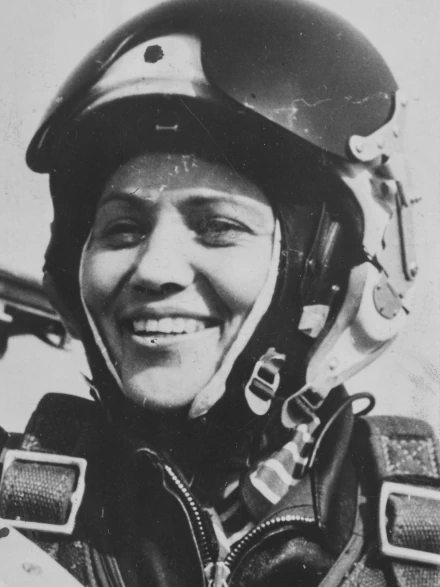
Marina Popovich was a celebrated Soviet aviator and test pilot who became a recognizable public voice in Russia’s UFO discourse. Her ufology relevance rests on social authority: as an elite pilot, she represented the archetype of a technically trained witness presumed less likely to confuse ordinary aerial objects for extraordinary ones. In post-Soviet media ecosystems, Popovich’s public interest in UFOs and willingness to discuss anomalous phenomena contributed to broader cultural acceptance of the idea that some aerial events may not be easily reducible to misidentification.
Popovich’s aviation career placed her within a milieu where unusual aerial observations were a practical concern: pilots regularly encounter rare optical effects, unfamiliar aircraft silhouettes, and atmospheric conditions that can distort perception. This background made her later statements about anomalous phenomena especially salient to audiences seeking “credible witnesses.” Her transition into UFO commentary also occurred during an era when Soviet secrecy was loosening and public appetite for previously taboo topics was rising.
Popovich’s ufology career was primarily public-facing and interpretive rather than investigative. She advocated for taking UFO reports seriously, framed certain accounts as potentially nontrivial, and participated in media that treated UFOs as a legitimate topic of discussion. Her contributions often centered on credibility politics: arguing that the consistency of pilot and military witness reports indicates a phenomenon worth study, even when physical evidence is absent or inaccessible.
Her early UFO-related visibility grew alongside the late-Soviet and early post-Soviet opening of discourse on anomalous phenomena. In this period, the UFO subject moved from rumor and underground circulation into semi-mainstream publishing and television, creating space for authoritative figures to speak publicly.
Popovich’s prominence in UFO culture increased as her celebrity and aviation reputation were leveraged in interviews, lectures, and writings. In Russian-language ufology, her voice served to normalize the idea that UFO reports are not merely folk tales, but potentially contain a residue of genuinely puzzling observations.
In later years Popovich remained a symbolic figure for “pilot testimony” arguments. The strongest lasting effect of her UFO involvement was reputational: she became a recurring citation in discussions emphasizing that skilled observers have reported anomalous objects under controlled, professional conditions.
Popovich is referenced more for her general stance and reported familiarity with multiple accounts than for a single definitive case file. Her “notable cases” are typically those presented in media as pilot/military observations rather than civilian sightings.
Her public posture is commonly summarized as: some UFO reports likely have conventional explanations, but the persistence of credible aviation and military testimony suggests an unresolved core phenomenon. She is often portrayed as open to extraordinary possibilities while emphasizing seriousness and technical respect for the witness.
Critics argue that professional prestige does not substitute for documentation, and that extraordinary interpretations require physical evidence and reproducible analysis. Supporters argue that UFO research is often constrained by secrecy and fleeting observation, making credible testimony a key data source even when imperfect.
Popovich’s influence is strongest in Russian UFO culture and in international discussions of pilot testimony. She is frequently invoked as an example of how elite technical professionals can become part of UFO belief landscapes.
Marina Popovich’s ufology legacy is as a credibility icon: a celebrated pilot whose public openness to UFO questions strengthened the cultural legitimacy of aerial-anomaly discussion in Russia and beyond.