Introduction
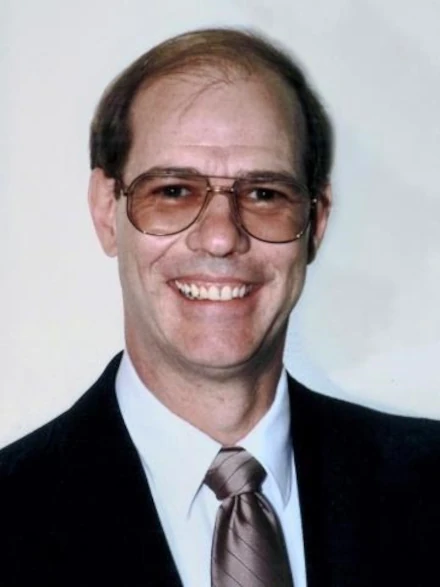
Robert Oechsler was an American UFO investigator and media personality whose work is closely associated with late-20th-century ufology’s most visible “photographic evidence” controversies. He became widely known for involvement in cases where imagery—photographs, video, and televised presentations—played an outsized role in shaping public belief. In an era when UFO culture increasingly relied on broadcast media, Oechsler functioned as both investigator and promoter, helping bring certain cases to national attention while also becoming a lightning rod for criticism over evidentiary standards.
Background
The 1980s and early 1990s saw an explosion of UFO media: television specials, tabloid coverage, and the rising importance of photo claims as “proof.” Investigators who could interpret imagery, interface with producers, and maintain case narratives gained prominence. Oechsler emerged within this environment, where the incentives of entertainment and belief often outran the slow, documentary rigor of traditional field investigation.
Ufology Career
Oechsler’s career in ufology centered on investigating and advocating for cases he considered compelling, especially those supported by imagery and recurring witness testimony. He became associated with the Gulf Breeze controversy—one of the best-known American “UFO photo waves”—and with the broader effort to present such images as credible evidence of structured craft. His role included gathering testimony, evaluating photographs, coordinating with other researchers, and participating in media productions that framed the cases for mass audiences.
Early Work (1975-1986)
Oechsler’s early period is characterized by entry into UFO investigation networks and developing a reputation for case involvement. Like many researchers of the period, he operated in a hybrid mode: private investigation and public advocacy often intertwined.
Prominence (1987-1996)
His prominence rose sharply during the Gulf Breeze era and the peak of UFO television. In this period, Oechsler became a recognizable name to the UFO-interested public, serving as an on-camera interpreter and advocate for cases that were actively debated within the UFO community.
Later Work (1997-2010
Later work occurred in the shadow of unresolved controversies. As skepticism about certain photo cases grew, the cultural meaning of Oechsler’s work shifted: supporters saw persistence in the face of ridicule; critics saw unwillingness to concede evidentiary weakness. His media-era archive continued to circulate as older UFO programs were rebroadcast and digitized.
Major Contributions
- Case popularization: Helped move certain regional cases into national awareness.
- Image-centered ufology: Embodied the era’s focus on photographs as key evidence.
- Media translation: Served as a bridge between UFO investigation and television narrative.
Notable Cases
Oechsler is most strongly associated with the Gulf Breeze UFO controversy and other image-driven claims from the late-20th-century American UFO wave. These cases remain famous not only for the claims themselves but for how they demonstrate the tension between public persuasion and forensic verification.
Views and Hypotheses
Oechsler generally presented a pro-authenticity stance toward the cases he supported, treating some photo and witness material as indicative of genuinely anomalous craft. His posture aligned with “nuts-and-bolts” ufology that assumes a physical phenomenon generating observable evidence.
Criticism and Controversies
The central controversy is evidentiary: critics argue that many photo-driven cases of the era were vulnerable to hoaxing, misinterpretation, and narrative escalation, and that Oechsler too often accepted contested material. Supporters counter that strict skepticism can become dismissive and that some contested cases remain unresolved due to incomplete documentation rather than definitive debunking.
Media and Influence
Oechsler’s influence is inseparable from media. He helped set the template for image-based UFO persuasion on television, shaping how audiences evaluate “proof” through visual claims—often without the technical controls needed to establish authenticity.
Legacy
Robert Oechsler’s legacy is that of a quintessential media-era UFO investigator: influential in popularizing headline cases, and emblematic of the credibility battles that arise when ufology relies heavily on photographs and entertainment-driven presentation.