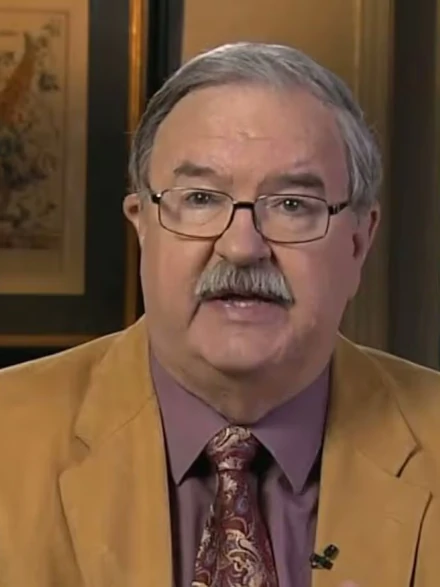
TL;DR Claim(s) to Fame
James Oberg is an American spaceflight analyst and writer best known in UFO discourse for arguing that a substantial fraction of high-profile “space-related” UFO claims can be resolved through careful reconstruction of astronomical and aerospace events. Although not a ufologist in the tradition of field investigation of terrestrial sightings, Oberg became one of the most prominent skeptically oriented commentators on astronaut narratives, satellite misidentifications, rocket-launch optical phenomena, and the recurring claim that NASA conceals evidence of extraterrestrial craft. His work occupies a distinct niche: the forensic analysis of sightings where orbital mechanics, flight timelines, and optical effects in the upper atmosphere provide strong explanatory power.
Oberg’s authority in UFO debates is rooted in spaceflight literacy—knowledge of how spacecraft appear to observers, how reentries and launches generate persistent luminous effects, and how public misunderstandings of space operations create fertile ground for legend-building. In the space age, UFO narratives often latch onto ambiguous imagery or anecdotal accounts from credible-seeming sources. Oberg positioned himself as a translator between aerospace reality and public perception, emphasizing that unfamiliar but ordinary phenomena can appear extraordinary.
Oberg’s ufology career is principally a skeptical intervention in UAP mythology. He built a body of commentary focused on identifying the “mechanisms of misinterpretation” in space-related cases: how camera artifacts, reflections, ice particles, thruster firings, and perspective confusion can produce the impression of structured craft; how rocket exhaust illuminated at twilight can look like vast glowing entities; and how media retellings can distort technical context into sensational narrative. He became especially associated with disputes over “astronaut testimony,” arguing that many allegedly definitive NASA UFO stories originate from misquotes, third-hand reporting, or misunderstanding of what was observed.
Oberg’s early prominence emerged as spaceflight became central to modern culture and as UFO proponents increasingly framed astronaut accounts and space imagery as privileged evidence. In this period he developed a style of argument based on event reconstruction: matching sighting times to launch and reentry logs, identifying astronomical bodies, and explaining optical effects unique to high-altitude exhaust and orbital debris.
During these decades, Oberg became a widely cited skeptical authority in English-language UFO discourse. His analyses circulated through articles, interviews, and online forums, where he challenged headline claims about “mysterious objects” in NASA footage and disputed the idea of a coherent pattern of NASA concealment. As the internet accelerated UFO legend transmission, he increasingly addressed viral claims and “NASA whistleblower” narratives.
In the modern UAP era, Oberg’s role remained stable: he continued to emphasize that UAP interest does not negate the long history of misidentification, especially when observations involve complex aerospace contexts. He remained influential as a reference point in debates where the strongest “mystery” claims involve rocket launches, starlink trains, satellite flares, and other orbital phenomena that can mislead observers unfamiliar with modern sky traffic.
Oberg is most associated with repeated analysis of astronaut-related legends, NASA footage controversies, and sightings later attributed to launches/reentries and satellite phenomena. Rather than a single signature case, his “notable cases” are the recurring viral episodes where space imagery or astronaut anecdotes are reinterpreted as alien proof.
Oberg’s core view is that the UFO subject cannot be meaningfully addressed without robust domain knowledge of what the sky can do under unusual conditions. He tends to treat “unidentified” as a temporary category that often collapses with better data, and he argues that NASA secrecy narratives frequently reflect misunderstanding of bureaucratic behavior rather than evidence of extraterrestrial contact.
Believers often accuse Oberg of motivated debunking and of underestimating the credibility of astronaut witnesses. Critics also argue that some of his tone and certainty can appear dismissive. Supporters counter that his work demonstrates the necessity of technical competence in resolving aerospace-context sightings and that many “NASA UFO” stories rely on low-grade sourcing that collapses under scrutiny.
Oberg’s influence is strongest in skeptical ufology and among scientifically inclined audiences. He has shaped a generation of online UFO discussion by supplying a vocabulary for spaceflight misinterpretations and by making rocket-launch optics and orbital debris phenomena part of the standard explanatory toolkit.
James Oberg’s legacy in UFO discourse is that of the definitive spaceflight skeptic: a figure who made aerospace context central to evaluating claims and who helped reduce a large class of “space UFO” narratives to problems of perception, media distortion, and technical misunderstanding.
UFOs and Outer Space Mysteries (1982)
https://www.amazon.com/dp/0898651026/