Introduction
Ning Li (1943–2021) was a Chinese-American physicist whose name became widely associated with late-20th-century “gravity control” proposals involving superconductors. Best known for a series of theoretical papers in the early 1990s and subsequent claims about the feasibility of producing measurable gravitomagnetic fields in condensed-matter systems, Li occupied a rare position at the intersection of mainstream academic affiliation and highly speculative propulsion-related ideas. Although her proposals attracted bursts of media attention and limited institutional interest, they did not mature into publicly demonstrated technology, leaving her legacy defined as much by controversy and interpretation as by established scientific results.
Background
Li was educated in physics in China and later emigrated to the United States in the early 1980s. She worked in Huntsville, Alabama, in proximity to an aerospace and defense research environment that historically supported interest in unconventional propulsion concepts. During the 1990s she held a research position at the University of Alabama in Huntsville (UAH), where she was connected to research groups operating within a space-science and plasma-physics context. That institutional setting—close to NASA’s Marshall Space Flight Center and defense-adjacent communities—helped shape both the reception and the mythology around her work.
Ufology Career
Li was not a “ufologist” in the traditional sense of investigating UFO sightings. Her relevance to ufology and UAP culture emerged indirectly: claims of gravity modification and “anti-gravity” devices became entangled with broader narratives about exotic aerospace technology, secrecy, and potential non-conventional propulsion. As her ideas circulated in popular science venues and later in online communities, she became a recurring reference point in discussions about whether advanced propulsion might be feasible through nonstandard physics.
Early Work (1991–1993)
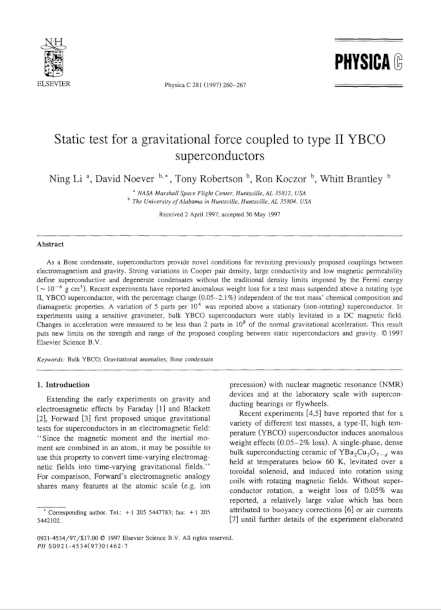
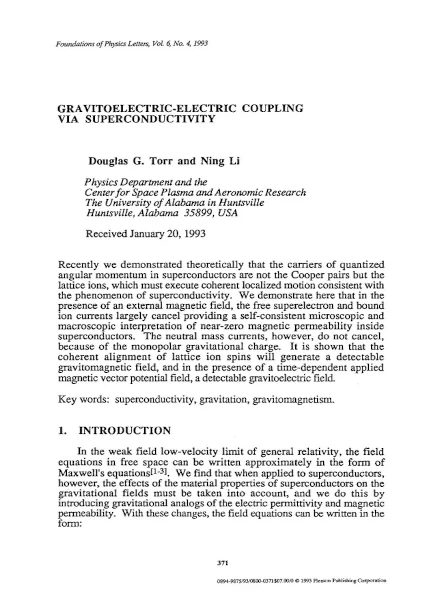
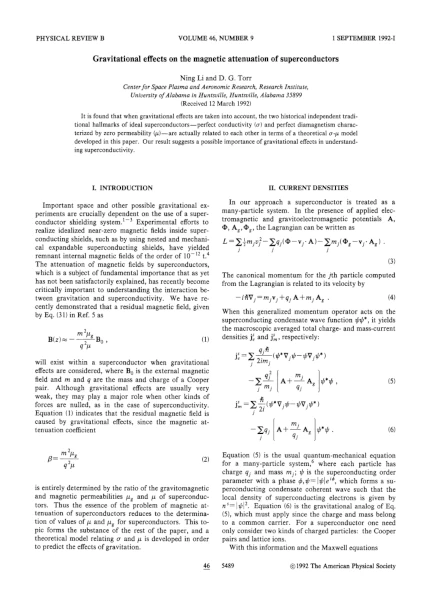
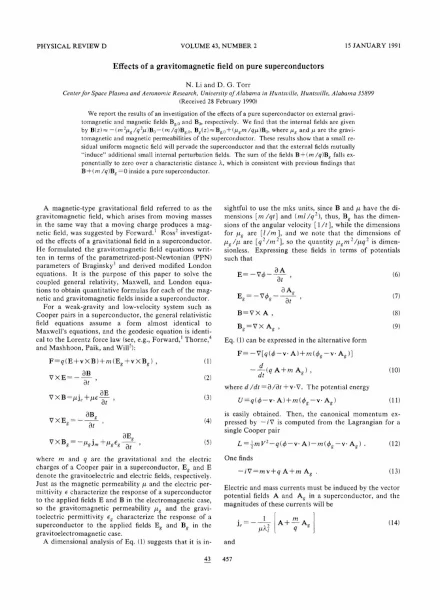
Li’s early prominence arose from papers co-authored with Douglas Torr that explored the relationship between superconductivity and gravitomagnetism. The work drew on general relativity’s frame-dragging concept (gravitomagnetic effects produced by moving mass/energy) and proposed that, under special conditions, aligned angular momentum carriers in a superconducting lattice might yield an enhanced gravitomagnetic field. In simplified terms, she argued that if a large number of ions or angular-momentum carriers could be coherently aligned—often discussed in connection with superconducting states—then rotation might produce a field strong enough to generate detectable forces, potentially including apparent weight reduction or lift.
This theoretical framing connected to a broader 1990s fascination with rotating-superconductor anomalies. Even where Li’s work remained primarily theoretical, it was frequently discussed alongside claims that rotating superconductors could produce measurable gravitational effects. The combination of technical vocabulary, ambitious implications, and limited public experimental confirmation became the signature dynamic of her early reputation.
Prominence (1994–2003)
During this period, Li’s work entered a wider public and semi-technical discourse. Reports described interest from aerospace and defense circles and portrayed her ideas as potentially transformative for launch systems and propulsion. At UAH, her work was discussed as part of unconventional research that could, if validated, change the economics of accessing space. At the same time, internal institutional constraints—laboratory access, funding, and prioritization—contributed to friction about pace and direction.
In 1999, Li left UAH and formed AC Gravity LLC to continue development in a commercial or defense-contractor style setting. The move was widely interpreted as a shift from academic theorizing toward applied work. In 2001, AC Gravity received a U.S. Department of Defense grant to support continued research. In 2003, Li presented “Measurability of AC Gravity Fields” at a MITRE conference, framing the work in terms of detecting and characterizing the hypothesized fields.
Later Work (2004–2021
After the early-2000s window of attention, Li largely disappeared from public scientific discourse. No widely recognized peer-reviewed replication of dramatic gravity-modification effects associated with her proposals emerged in open literature, and AC Gravity did not produce publicly verifiable demonstrations. This quiet period became central to later narratives: to skeptics, it signaled that the ideas failed to translate into real-world physics; to supporters, it suggested that work may have moved into classified channels or non-public development.
Li’s later life included serious health challenges. She suffered a major accident in 2014 that reportedly caused lasting neurological damage, and she died in 2021. The combination of her earlier visibility, later silence, and the broader culture of secrecy narratives surrounding advanced propulsion contributed to ongoing speculation about what she accomplished and what became of her research materials.
Major Contributions
- Gravitomagnetism-in-matter proposal: Articulated a framework in which superconducting systems might amplify or coherently manifest gravitomagnetic-like effects beyond normally expected magnitudes.
- Bridge between domains: Became a prominent example of how speculative propulsion concepts can circulate between academia, defense interest, and popular “anti-gravity” discourse.
- Measurement emphasis: Focused attention on the problem of detectability—how one would operationally measure any hypothesized “AC gravity fields” if they existed.
Notable Cases
Li is most often discussed in relation to the broader rotating-superconductor anomaly tradition rather than a single definitive experimental “case.” Her name is frequently paired with debates about whether any reported weight-change effects in superconductor experiments reflect novel physics, measurement artifacts, or uncontrolled environmental factors.
Views and Hypotheses
Li’s central hypothesis was that under special superconducting conditions—often described in terms of coherent alignment and rotation—a system might generate a gravitomagnetic-like field strong enough to create measurable forces. The strongest interpretation of her public-facing proposals implied that engineered materials could produce macroscopic gravity-modification effects. A more conservative interpretation places her work as an exploration of whether condensed-matter systems could exhibit subtle gravitationally relevant couplings that might be measurable with sensitive instrumentation.
Criticism and Controversies
Li’s work has been criticized primarily on evidentiary and replication grounds. Claims of large, practical gravity-modification effects have not achieved broad acceptance in mainstream physics, where extraordinary effects require robust experimental confirmation and independent replication. The absence of widely available demonstrations, the difficulty of reproducing related rotating-superconductor claims, and the tendency of popular accounts to amplify implications beyond the published record all contributed to controversy.
A secondary controversy concerns narrative drift: as her name entered online subcultures, it became increasingly associated with secrecy claims and speculative interpretations not anchored to open scientific publication. This dynamic has made her a polarizing figure—invoked both as a symbol of suppressed breakthrough research and as an example of how extraordinary claims can persist without decisive public proof.
Media and Influence
Li’s influence is disproportionate to her formal publication footprint because her work became a recurring reference point in discussions of exotic propulsion. She is frequently mentioned in UFO/UAP-adjacent media as an example of a scientist whose ideas, whether correct or not, align with popular conceptions of “anti-gravity” technology. Over time, her story has functioned as a cultural node linking gravity-control speculation, defense secrecy narratives, and the enduring allure of breakthrough propulsion.
Legacy
Ning Li’s legacy is contested. Within mainstream physics, she is remembered chiefly for speculative theoretical work that did not culminate in widely verified experimental results. Within ufology-adjacent and alternative propulsion communities, she is remembered as a rare academic figure whose ideas appeared to offer a mechanism—however controversial—for gravity modification. Her continuing visibility reflects not only what she proposed, but also the broader cultural appetite for explanations that connect advanced physics, aerospace secrecy, and the possibility of technologies beyond current public engineering.