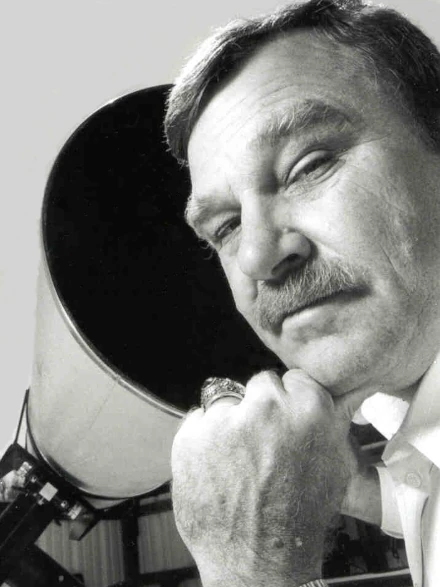
Introduction
James McGaha is a UFO skeptic and commentator whose background in aviation and military contexts has made him a credentialed voice in critical analysis of UFO claims. In the broader discourse, McGaha represents an important counterpoint: the idea that trained observers can still misinterpret, and that extraordinary interpretations require strong evidence beyond testimony and ambiguous imagery.
Background
In UFO debates, aviation credentials are often treated as a credibility trump card. McGaha’s skepticism uses the same credential logic in reverse—arguing that training can also provide a better understanding of how illusions, lights, and misperceptions occur in the sky.
Ufology Career
McGaha’s ufology career is primarily public commentary and critical evaluation rather than field investigation or archival compilation. He is frequently referenced in skeptical discussions that aim to reduce extraordinary UFO claims through conventional explanations.
Early Work (Year-Year)
Early work typically involves participation in skeptical networks and the development of a public identity as an aviation-informed critic of UFO narratives.
Prominence (Year-Year)
Prominence is tied to high-visibility debates and cases where witnesses claim unusual aerial behavior. McGaha is used as a voice to emphasize that perception can be misleading and that interpretive caution is necessary.
Later Work (Year-Year
Later work continues in the same vein: critique of prominent claims, media appearances, and reinforcement of skeptical frameworks focused on misidentification and methodological rigor.
Major Contributions
- Credentialed skepticism: Provided aviation-informed rebuttals to witness-based arguments.
- Perception emphasis: Highlighted how trained observers can still be fooled by conditions.
- Debate role: Functioned as a counterbalance voice in a credibility-driven discourse.
Notable Cases
McGaha is often linked to prominent debated sightings where aviation/physics explanations are applied. His case association is typically interpretive rather than investigative discovery.
Views and Hypotheses
He generally argues that UFO reports rarely require extraordinary explanations and that most cases can be resolved with better understanding of observational conditions, aircraft, astronomical objects, and human cognition.
Criticism and Controversies
Believers often criticize skeptics like McGaha for allegedly dismissing credible witnesses too quickly or for choosing explanations that cannot be fully proven from limited data. Skeptics defend such critique as necessary conservatism given the history of misidentification and hoaxes.
Media and Influence
McGaha’s influence exists mainly within skeptical ufology and debunking discourse, especially in venues that value credentialed counter-testimony to extraordinary claims.
Legacy
His legacy is as an example of “aviation credential skepticism,” illustrating that expertise can be deployed both to support and to undermine extraordinary UFO interpretations.