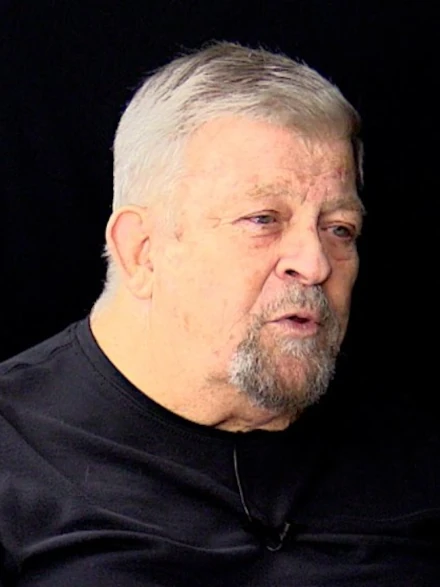
Introduction
Joseph McMoneagle is an American former U.S. Army intelligence officer widely known for his association with remote viewing—claims that individuals can perceive distant or hidden targets through anomalous means. While remote viewing is not inherently ufology, McMoneagle became a significant crossover figure because remote-viewing narratives often intersect with UFO mythology, including alleged hidden bases, non-human intelligences, and classified knowledge inaccessible through conventional channels.
Background
McMoneagle’s importance rests largely on the combination of intelligence-community affiliation and extraordinary claims. Within UFO culture, that combination creates a powerful credibility effect: official proximity implies access, while paranormal capacity implies a route around secrecy.
Ufology Career
His ufology relevance is primarily indirect—through interviews, books, and conference appearances where remote viewing is discussed alongside alleged UAP programs and non-human topics. He is invoked in broader arguments that “the phenomenon” includes consciousness components and that classified reality can be accessed through nontraditional means.
Early Work (1978-1985)
McMoneagle’s early prominence centers on remote viewing claims in an intelligence context. The UFO overlap began when audiences interpreted remote-viewing targets as related to non-human activity, hidden facilities, or historical mysteries with UFO connotations.
Prominence (1986-2005)
Prominence increased as remote viewing became a staple of paranormal media and as UFO culture increasingly embraced “woo” or consciousness-adjacent frameworks. McMoneagle became a frequently cited “insider” who supported the idea that anomalous perception is real and relevant to classified subjects.
Later Work (2006-2025
In later years, McMoneagle remained a recurring figure in long-form interviews and documentaries about remote viewing and classified mysteries, continuing to serve as a bridge between parapsychology and UFO discourse.
Major Contributions
- Consciousness crossover: Reinforced a worldview where UAP intersects with psi phenomena.
- Insider credibility effect: Used as an example that intelligence communities explored nontraditional methods.
- Disclosure mythology support: Often cited as corroborative texture for hidden-program narratives.
Notable Cases
McMoneagle is associated with remote-viewing “targets” rather than standard UFO cases. Notable references often involve alleged perceptions of non-human sites or historical/planetary targets later discussed in UFO-adjacent contexts.
Views and Hypotheses
His public posture generally supports the reality of anomalous perception and suggests that remote viewing can access meaningful information. In UFO contexts, this is interpreted as implying the phenomenon has consciousness-accessible components beyond purely physical observation.
Criticism and Controversies
Critics argue remote viewing lacks robust controlled replication and that results can be explained by cueing, inference, and selective memory. Supporters argue formal control is difficult in intelligence settings and that repeated anecdotal successes indicate an anomalous effect.
Media and Influence
McMoneagle’s influence is strongest in paranormal media ecosystems and in UFO circles that emphasize consciousness, psi, and “hidden reality” frameworks.
Legacy
His legacy in ufology is as a high-profile crossover figure who helped normalize the idea that UAP may require mind-based or nontraditional approaches to understand.