Introduction
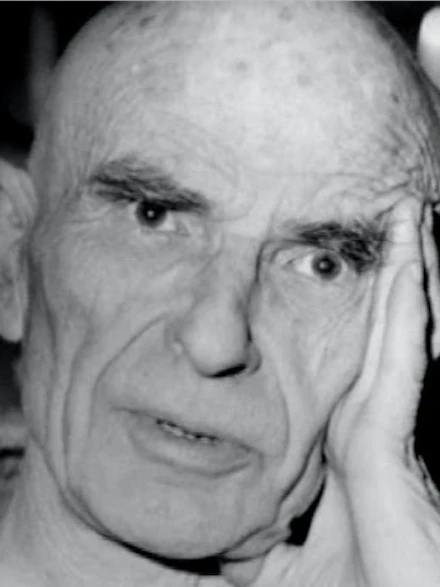
Aimé Michel was a French writer and ufologist whose work helped shape European approaches to UFO reports as patterned phenomena. Rather than treating sightings as isolated curiosities, Michel emphasized waves, geographic distributions, and the possibility that UFO events exhibit structure. His concept of “orthoteny” became one of the best-known attempts to extract hidden order from the sprawling, inconsistent UFO report record.
Background
Michel emerged within a postwar European environment where UFO reports became culturally salient and where intellectuals sought systematic approaches that could differentiate signal from rumor. His writing style combined philosophical reflection with pattern-seeking analysis, appealing to readers who wanted ufology to feel analytical rather than sensational.
Ufology Career
Michel’s ufology career focused on synthesis and theory-building. He treated the UFO record as a dataset whose distribution might reveal intelligence, strategy, or unknown natural regularities. His work became foundational for later European analysts interested in waves, clusters, and structured recurrence.
Early Work (1954-1958)
Michel gained attention through analysis of the French UFO wave era and the argument that reports were not random. He began assembling case catalogs and mapping them to explore spatial and temporal structure.
Prominence (1959-1975)
His prominence increased as orthoteny and related ideas circulated widely. Michel became a major reference in discussions of whether UFO events might display planning or control. This era also made him a target for methodological critique, as skeptics argued that patterns can emerge from selective sampling and reporting bias.
Later Work (1976-1992
Later work expanded philosophical and interpretive dimensions, often emphasizing that UFO phenomena might not conform to simple physical categories. Michel remained influential as a historical pillar of European pattern-based ufology.
Major Contributions
- Orthoteny: Proposed that sightings align along straight lines, implying structure.
- Wave analysis: Treated UFO flaps as meaningful distributions rather than random panics.
- European systematic ufology: Helped establish a model of ufology as mapping and synthesis.
Notable Cases
Michel is associated with large-scale wave contexts (not one signature close encounter). His “notable cases” are often those used to illustrate structured alignments or clustered distributions during French and European flap periods.
Views and Hypotheses
Michel’s work implies that UFO phenomena may reflect intelligence, monitoring, or a structured “control” behavior pattern. He often argued that the phenomenon might operate at the boundary of physical reality and human perception, making simplistic mechanical explanations inadequate.
Criticism and Controversies
Critics argue orthoteny is vulnerable to cherry-picking, reporting bias, and the human tendency to see patterns in noise. Supporters argue that even biased datasets can reveal meaningful regularities if analyzed carefully and that Michel’s work opened new methodological possibilities.
Media and Influence
Michel influenced generations of European ufologists and is frequently cited in discussions of wave dynamics, geographic clustering, and “UFO as structured phenomenon” schools of thought.
Legacy
Aimé Michel’s legacy is that of a foundational pattern-theorist in ufology—one of the most influential European voices arguing that the UFO record may contain hidden structure worth systematic study.