Introduction
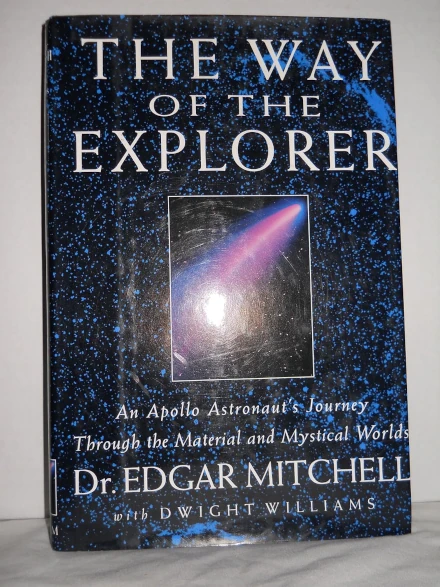
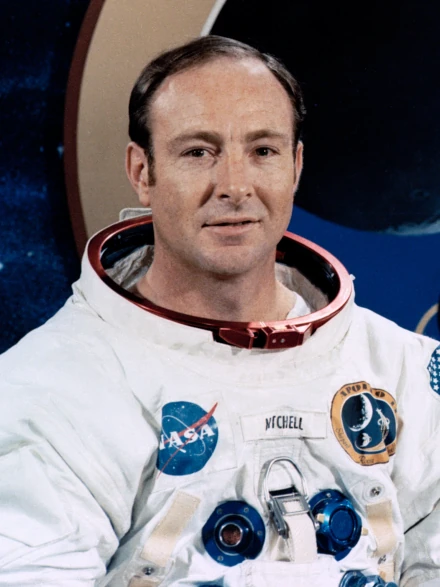
Edgar Mitchell was an American astronaut and Apollo moonwalker whose later-life advocacy made him one of the most prominent “astronaut voices” in modern ufology. Mitchell’s importance lies in the cultural weight of his background: a spaceflight hero publicly asserting that UFOs were real and that secrecy had shaped public understanding. His post-NASA career positioned him as a bridge between mainstream institutional legitimacy and the disclosure movement.
Background
Mitchell’s career in space exploration shaped his public credibility and helped create an audience predisposed to treat his statements as unusually authoritative. His later intellectual interests also expanded into consciousness studies, creating a thematic overlap with ufology’s “mind and phenomenon” interpretations.
Ufology Career
Mitchell’s ufology career was largely advocacy-driven: interviews, public statements, and participation in disclosure-adjacent networks. He frequently stressed that credible witnesses existed and that institutional secrecy prevented open scientific study. His role was not primarily as a case investigator but as a high-profile legitimizer of the topic.
Early Work (1971-1995)
After NASA, Mitchell gradually shifted into broader public intellectual roles, with increasing openness to anomalous phenomena and consciousness questions. This period laid the groundwork for later explicit UAP advocacy.
Prominence (1996-2016)
Mitchell’s prominence in ufology rose as he made direct public claims about UFO reality and advocated for transparency. His astronaut status ensured extensive media attention and made him a recurring reference point whenever “astronauts and UFOs” were discussed.
Later Work (2016-2016
Mitchell’s later influence continued posthumously through repeated citation in disclosure discourse and documentaries that emphasize the significance of astronaut testimony.
Major Contributions
- Legitimization effect: Elevated public tolerance for UAP discussion through astronaut authority.
- Disclosure advocacy: Reinforced the idea that secrecy is central to the UFO story.
- Consciousness crossover: Encouraged integration of mind/consciousness themes into ufology discourse.
Notable Cases
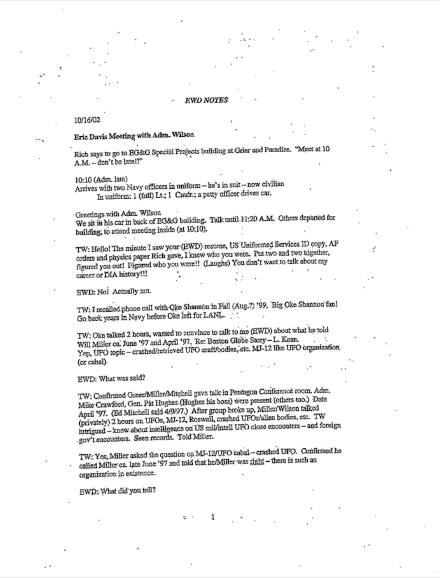
Mitchell is not most associated with a single personal sighting case. Instead, his “notable cases” are the broader claims he endorsed—stories of UFO reality and alleged secrecy—often framed as informed by conversations with insiders and historical narratives rather than direct first-person evidence.
Views and Hypotheses
Mitchell frequently suggested that UFOs represented a real phenomenon and that governments possessed deeper knowledge than publicly admitted. He often treated the issue as compatible with a larger worldview that included consciousness research and expanded human understanding.
Criticism and Controversies
Critics argue Mitchell leaned too heavily on secondhand accounts and that his astronaut status could be used to amplify claims without new verifiable evidence. Supporters argue that insiders and classification barriers make indirect testimony unavoidable and that Mitchell’s credibility should not be dismissed simply because he advocated uncomfortable questions.
Media and Influence
Mitchell remains a central figure in documentaries and interviews about UFO disclosure, frequently presented as a key example of “elite witness credibility” supporting the seriousness of the subject.
Legacy
Edgar Mitchell’s legacy in ufology is enduring: an astronaut who helped normalize disclosure discourse and made it easier for mainstream audiences to treat UAP as a legitimate topic of concern.