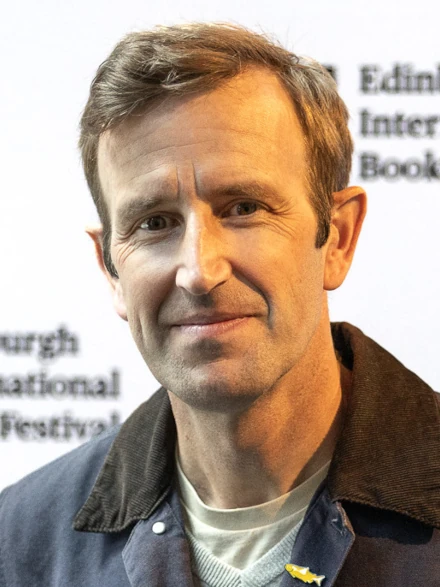
Introduction
Robert Macfarlane is primarily known as a literary writer on landscape, place, and cultural memory, but he is sometimes invoked in ufology-adjacent “high strangeness” discussions because his work takes the uncanny seriously as a human experience embedded in environment and story. In these circles, Macfarlane functions less as an investigator of UFO events than as an interpretive guide for how unusual experiences become meaningful—how they attach to geography, circulate as folklore, and persist as cultural facts even when their ontological status remains uncertain.
Background
Macfarlane’s background in literature and cultural geography shaped an approach that treats narratives of encounter—whether mundane or extraordinary—as artifacts of place and perception. This orientation overlaps with strands of ufology interested in “the phenomenon” as a complex mix of witness testimony, myth-making, and environmental psychology.
Ufology Career
Macfarlane does not have a conventional ufology career. His relevance is episodic and interpretive: he is cited when ufology seeks external cultural legitimacy, or when researchers argue that the UFO subject cannot be fully understood without attention to story, belief, and the landscapes where encounters occur.
Early Work (Year-Year)
Early work established his standing as a leading voice on place-based narrative. This indirectly set the stage for later crossovers, as high-strangeness audiences often seek writers who can articulate the emotional texture of uncanny experience without ridicule.
Prominence (Year-Year)
When referenced in UFO contexts, Macfarlane’s prominence stems from prestige and style: his ability to frame the uncanny as intellectually respectable rather than sensational.
Later Work (Year-Year
Later work continues to reinforce his position as a cultural interpreter of strange experience. In ufology-adjacent usage, his writing is treated as supportive of the idea that “the weird” deserves careful attention even when it resists reduction to simple facts.
Major Contributions
- Cultural framing: Helps articulate why anomalous experiences persist as meaningful narratives.
- Anti-ridicule stance: Contributes to a discourse that treats the uncanny as legitimate subject matter.
- Landscape/folklore lens: Offers tools for interpreting encounter reports as place-linked phenomena.
Notable Cases
Macfarlane is not associated with a signature UFO case. His “notable cases” are thematic: how certain places become charged with stories of encounter and how those stories shape human perception and memory.
Views and Hypotheses
His implicit hypothesis, as used in high-strangeness circles, is that anomalous experience is real as experience even when its cause is unclear. The emphasis is less on proving craft or entities and more on understanding how the uncanny operates in human life.
Criticism and Controversies
Within ufology, the main criticism is categorical: Macfarlane is not an evidence-focused UFO researcher, so using him as “support” for UFO claims can be a category error. Supporters argue that cultural interpretation is necessary because the UFO subject often functions as myth, memory, and meaning as much as it functions as physical report.
Media and Influence
Macfarlane’s influence in UFO-adjacent contexts is indirect, appearing in citations, reading lists, and discussions that seek to elevate “high strangeness” to a culturally serious topic.
Legacy
Macfarlane’s legacy is not ufological in the strict sense, but he remains a useful reference for ufology’s interpretive wing: a writer who legitimizes the uncanny as an object of thoughtful inquiry.