Introduction
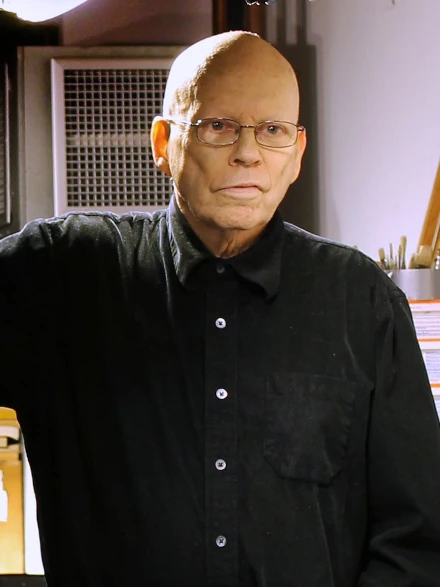
Paul Laffoley was a visionary artist and theorist whose work is ufology-adjacent through its integration of UFO motifs, interdimensional speculation, and elaborate systems-thinking presented in diagrammatic visual form. Rather than investigating sightings, Laffoley treated UFO and contact concepts as components of a broader metaphysical-technical architecture—an interpretive cosmology where consciousness, technology, and hidden dimensions intersect.
Background
Laffoley’s background sits at the boundary of art, philosophy, and esoteric exploration. His “paraphilosophical” stance positioned him outside conventional academic and scientific frameworks, aligning more with visionary art traditions and speculative metaphysics.
Ufology Career
In ufology terms, Laffoley’s role is interpretive and symbolic. He contributed to the “meaning-making” side of the UFO phenomenon, where images and conceptual systems are used to frame the phenomenon as part of a larger cosmic or consciousness-linked reality.
Early Work (Year-Year)
Early work developed his signature method: layered visual diagrams packed with text, icons, and conceptual arrows, treating anomalous phenomena as parts of an interconnected system rather than isolated events.
Prominence (Year-Year)
Prominence grew within niche art and esoteric communities that value dense symbolic synthesis. As UFO culture expanded online, Laffoley’s work gained renewed attention as a striking visual representation of high-strangeness worldview construction.
Later Work (Year-Year
Later influence continued largely through exhibitions, interviews, and ongoing circulation of his works as artifacts of visionary anomaly culture.
Major Contributions
- Visual systems ufology: Created diagrammatic cosmologies integrating UFO themes with metaphysics and technology.
- Meaning-making toolkit: Offered a symbolic framework for audiences who treat UFOs as consciousness-linked.
- Cultural crossover: Bridged visionary art, esotericism, and UFO culture into a unified aesthetic-philosophical genre.
Notable Cases
Laffoley is not case-driven. His “notable cases” are conceptual constructs—visual maps and theoretical narratives—rather than investigations of specific sightings or events.
Views and Hypotheses
His worldview implies that reality may be layered and that UFO/contact phenomena are not merely physical craft sightings but manifestations of deeper structural relationships involving consciousness, hidden dimensions, and advanced systems.
Criticism and Controversies
Criticism focuses on unfalsifiability: symbolic cosmologies can be compelling but cannot be easily tested. Supporters argue that the UFO phenomenon’s “high strangeness” warrants models that are not reducible to conventional materialism.
Media and Influence
Laffoley’s influence is strongest in niche documentaries, art discourse, and long-form interviews that explore the intersection of UFO culture with visionary art and esoteric philosophy.
Legacy
Paul Laffoley’s legacy is as a singular visionary: an artist-theorist whose intricate conceptual diagrams became iconic artifacts of UFO-adjacent high-strangeness culture.