Introduction
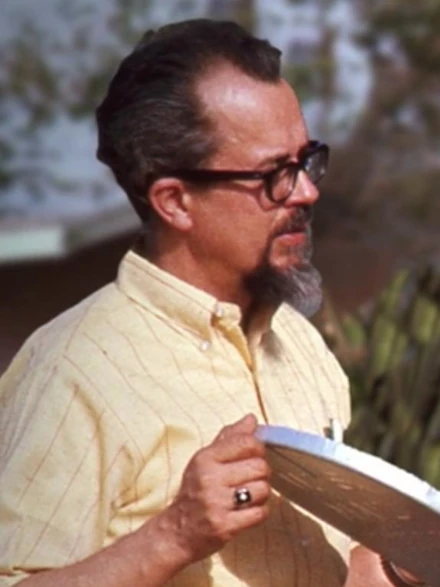
Jim Lorenzen was a key figure in the institutionalization of early civilian ufology in the United States. Associated with major mid-century UFO organization-building, he helped create systems for collecting witness reports, organizing data, and distributing analysis through newsletters and books. In ufology history, he exemplifies the “archivist-organizer” role—less glamorous than celebrity whistleblowers, but essential to the movement’s durability.
Background
Lorenzen’s significance developed in a period when UFO reports surged and many observers felt official explanations were inadequate or dismissive. Civilian groups stepped into this gap, with Lorenzen helping to define the administrative and editorial practices that made those groups functional.
Ufology Career
His ufology career emphasized sustained organizational work: intake of reports, correspondence with witnesses and investigators, editorial decisions about what to publish, and the construction of a case-file legacy that later ufologists mined for patterns.
Early Work (Year-Year)
Early work focused on building reporting pipelines and establishing publication cadence—transforming scattered reports into a continuous “record” that the public could follow.
Prominence (Year-Year)
Prominence grew through organizational visibility and book publishing. Lorenzen became a recognizable name within serious-sounding civilian ufology, particularly among those who valued systematic record-keeping.
Later Work (Year-Year
Later work continued to reinforce the central claim of case-file ufology: that the persistence and volume of reports, especially from credible witnesses, implied a real unresolved phenomenon.
Major Contributions
- Case-file infrastructure: Helped build systems that preserved UFO reports for later generations.
- Editorial shaping: Influenced how UFO incidents were summarized and categorized for audiences.
- Movement durability: Strengthened ufology as an organized, self-sustaining research culture.
Notable Cases
As with many organizer figures, Lorenzen’s “notable cases” are the collections: flaps, recurring report types, and multi-witness events documented in organizational archives.
Views and Hypotheses
Lorenzen’s approach generally treated UFO reports as a serious anomaly, emphasizing systematic compilation as the path to understanding, rather than expecting a single decisive proof event.
Criticism and Controversies
Critics argue that case-file accumulation can create the illusion of strong evidence while individual reports remain ambiguous. Supporters argue that recurrence across contexts and decades is itself informative and cannot be reduced to isolated misperceptions.
Media and Influence
Lorenzen’s influence persists through historical citations and through the institutional templates early ufology used for intake, archiving, and publication.
Legacy
Jim Lorenzen remains an important historical organizer in American ufology, emblematic of the mid-century period when civilian groups built lasting archives and community structures.